
Maintain a louvered pergola by regularly removing leaves and debris, keeping the integrated gutters and drainage outlets clear, and washing the aluminum with mild soap, a soft sponge, and a gentle hose rinse. Inspect the louvers, fasteners, seals, wiring, controls, and drainage after heavy weather, and follow the product manual for any moving-part lubrication or storm position. Charlotte's pollen, summer storms, humidity, and tree cover can make more frequent checks useful, especially in spring and fall.
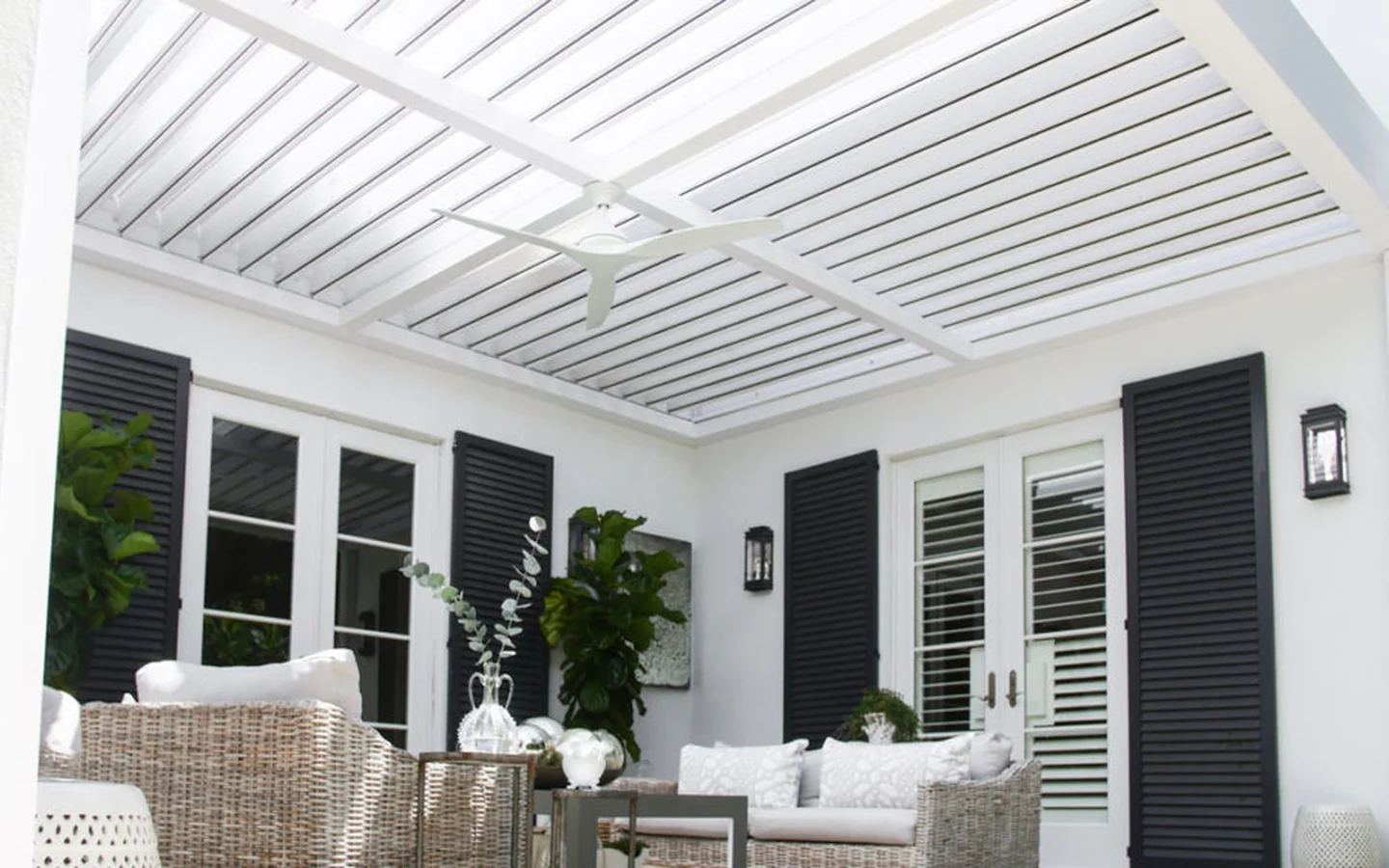
What Routine Care Does an Aluminum Louvered Pergola Need?
Most routine care is straightforward: keep organic debris off the roof, preserve clear drainage, and gently wash exposed aluminum surfaces. Azenco's maintenance guidance calls for a hose, mild soap, and a soft sponge, followed by air drying or a soft cloth. It also recommends disconnecting power before maintenance activities so cleaning does not become an electrical hazard.
Frequency should follow the actual site rather than a rigid calendar. A pergola under mature trees in Huntersville or Matthews may collect leaves and seed pods faster than one in an open yard. Heavy spring pollen, nearby landscaping, birds, and repeated storms can also justify an extra rinse or inspection.
A quick look from the ground every few weeks can catch obvious buildup early. More deliberate seasonal care is a good time to inspect the finish, posts, louvers, visible fasteners, drainage outlets, screens, lighting, and controls without turning routine cleaning into a repair project.
How Should You Clean the Louvers, Frame, and Posts?
Start by switching off power according to the system instructions and removing loose debris safely. Use a gentle garden-hose spray rather than blasting seals, motors, wiring, or the powder-coated finish. Wipe accessible surfaces with mild soapy water and a soft nonabrasive sponge, then rinse away residue.
Do not substitute harsh solvents, abrasive pads, or an aggressive pressure-washer setting. Azenco specifically advises a garden hose or low pressure because strong pressure can damage the aluminum finish and protective coating. Product-specific care instructions should control if they are more restrictive.
Allow the pergola to air dry or use a clean soft cloth where water spots are visible. Never climb onto the louvers or improvise access over a pool, elevated deck, or outdoor kitchen. If safe access requires special equipment, schedule professional service rather than taking a fall risk.
- Disconnect power as directed before cleaning or inspection.
- Remove loose leaves and dirt without forcing debris deeper into channels.
- Wash with mild soap, water, and a soft nonabrasive sponge.
- Rinse gently and keep concentrated spray away from electrical components.
- Air dry or wipe accessible surfaces with a clean soft cloth.
How Do You Keep Pergola Gutters and Drainage Working?
Closed louvers are only one part of rain management. Water also needs an unobstructed path through the roof channels, perimeter gutters, and planned outlets. Leaves or roof grit can slow that flow and create overflow in a place the installation was not designed to drain.
Azenco recommends clearing debris from the roof, gutters, and posts and checking gutter systems regularly, with at least spring and fall cleaning and more frequent attention around trees. After a heavy Charlotte storm, look for standing water, unexpected dripping, staining, or discharge near doors, foundations, stairs, and walking areas.
Do not push a rigid object into concealed drainage channels or dismantle a post to chase a blockage. Note where the symptom appears and ask the installer to diagnose it. For a deeper explanation of how water should move through the system, read our guide to louvered pergola rain drainage.
What Should You Check on Motors, Louvers, and Controls?
Operate the roof from a clear area and watch the full louver field. The movement should look coordinated and the louvers should reach their intended positions without rubbing, hesitation, or a sudden change in sound. Stop and seek service if an obstruction remains, a blade appears out of alignment, or the system repeatedly fails to complete a cycle.
Azenco's general care guidance discusses lubrication of mechanical parts such as louver axles with marine grease. That is not a reason to apply a general-purpose spray anywhere that moves. Follow the manual for the installed model, use only specified products and locations, and let a qualified dealer handle adjustments or internal components.
Test remotes, wall controls, sensors, lighting, and screens as applicable. Replace control batteries when needed, keep electrical enclosures closed, and report moisture intrusion, damaged wiring, tripped circuits, or unreliable sensor behavior rather than bypassing a safety feature.
What Maintenance Matters Before and After Charlotte Storms?
Before severe weather, secure loose furniture and decor so they cannot strike the structure. Use the storm position specified for the exact pergola model; Azenco's published guidance for its systems says to open louvers fully to reduce wind resistance and disconnect power during hurricane or storm preparation, but the installed product manual and dealer instructions remain the source of truth for your system.
After the weather passes, inspect from the ground before operating anything. Look for branches, debris between blades, shifted accessories, bent components, loose trim, blocked outlets, or visible electrical damage. Do not run motorized louvers against an obstruction just to see whether they can push through it.
Freezing conditions are less common in Greater Charlotte than summer storms, but ice can still prevent normal movement. Do not force frozen louvers. Follow the product's cold-weather instructions and wait for safe conditions or professional guidance before operating the roof.
What Is a Practical Charlotte Pergola Maintenance Schedule?
A simple schedule is easier to follow than a long list of occasional chores. Use spring for pollen cleanup and a full drainage check, summer for post-storm inspections, fall for leaf and gutter clearing, and winter for a lighter visual review. Homes under dense tree cover in Cornelius, Concord, Mint Hill, or Fort Mill may need additional debris checks between seasons.
Keep a short note of any service, recurring leak location, control issue, or unusual sound. That record helps distinguish a one-time obstruction from a pattern and gives the installer useful context if a component needs diagnosis.
If you are comparing systems, maintenance access should be part of the design conversation. Unique Patio Concepts can help plan an R-BLADE, K-BANA, or fixed-louver layout with sensible access, drainage discharge, electrical placement, and nearby landscaping in mind.
- Spring: remove pollen and debris, wash surfaces, and check gutters and outlets.
- Summer: inspect after major storms and confirm louvers and controls operate normally.
- Fall: clear leaves and seed pods before repeated rain packs them into drainage paths.
- Winter: check for ice or storm debris and never force obstructed or frozen louvers.
- Any season: stop operation and call for service when movement, drainage, or electrical behavior changes.
Plan a louvered pergola that is easier to enjoy and maintain
Request a Charlotte-area design consultation and project-specific estimate from Unique Patio Concepts.
Request a free estimateFrequently asked questions
How often should I clean an aluminum louvered pergola?
Azenco recommends cleaning at least twice a year, typically in spring and fall, with more frequent care where heavy debris or harsh conditions occur. Charlotte homes under trees or exposed to heavy pollen may benefit from additional light cleanings and drainage checks.
Can I pressure wash my louvered pergola?
Avoid aggressive pressure washing. Azenco advises a garden hose or low pressure because strong pressure can damage the aluminum finish and protective coating. Use mild soap and a soft sponge unless the installed product's care instructions say otherwise.
Should I lubricate the louvered pergola myself?
Only if the installed system's manual identifies the exact lubricant, component, and procedure. Azenco discusses marine grease for certain mechanical parts, but spraying a general lubricant onto motors, seals, or unspecified joints can create problems. Ask the dealer when in doubt.
What should I do if the louvers will not close?
Stop repeated operation and check safely from the ground for visible leaves, branches, or ice. Do not force the blades or reach into a powered system. Disconnect power as directed and contact the installer if the obstruction is not safely removable or the louvers remain misaligned.
How do I know whether a pergola drain is clogged?
Standing water, slow drainage, overflow at a beam, dripping from an unexpected joint, or water discharging near a foundation or doorway can indicate debris or another drainage issue. Clear only safely accessible debris and have concealed channels diagnosed professionally.
Can Unique Patio Concepts service and plan pergolas around Charlotte?
Unique Patio Concepts serves Greater Charlotte and can discuss product selection, site planning, drainage, maintenance access, and project-specific service needs. Request an estimate so the team can evaluate the actual structure and installed system.