
Choose a louvered pergola when you want adjustable sun, airflow, and an open architectural feel. Choose an insulated solid patio cover when dependable full-time shade, rain protection, and heat reduction matter most. For many Charlotte homeowners, the right answer depends on how the space will be used during humid summers, sudden storms, and cooler shoulder seasons.
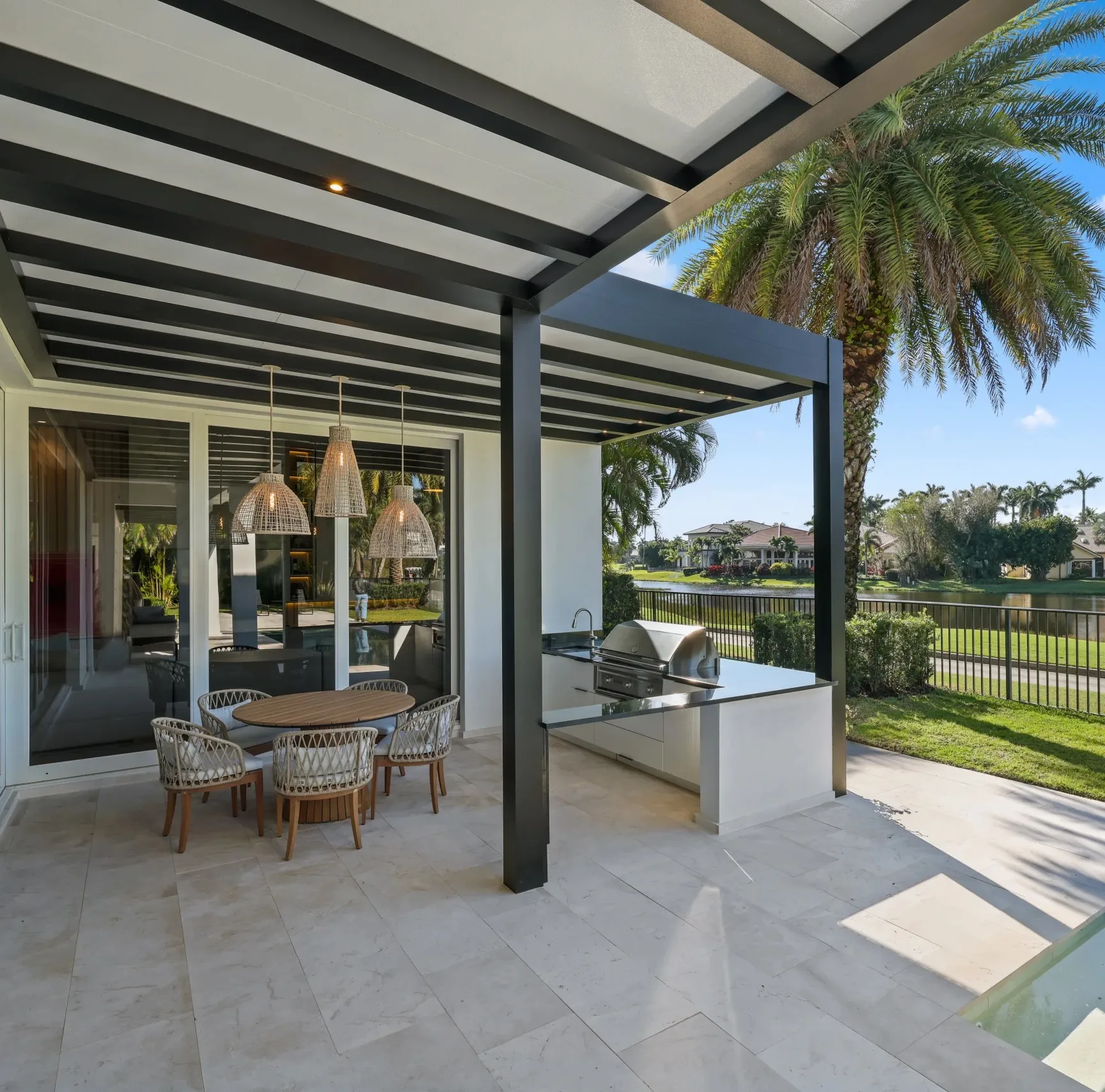
What Is the Main Difference Between a Pergola and a Patio Cover?
A pergola is designed to balance shelter with openness. A modern louvered pergola uses adjustable roof blades that can open for sunlight and airflow, angle for shade, or close when weather moves in. The result feels connected to the sky while giving you far more control than a traditional open-slat pergola.
A solid patio cover uses a fixed roof. An insulated system such as the R-SHADE provides continuous overhead coverage, helping protect the patio from direct sun and rain while creating a more room-like outdoor space.
Neither option is automatically better. The important question is whether your family values flexibility or consistent coverage more.
Which Option Works Better in Charlotte Weather?
Charlotte weather can shift quickly. Summer heat and humidity make shade valuable, while fast-moving thunderstorms make drainage and rain management just as important. Spring and fall bring comfortable days when homeowners may prefer more light and airflow.
A motorized louvered pergola fits changing conditions well because the roof position can change with the day. Open louvers can release rising heat and preserve a breezy atmosphere. Closing them provides overhead protection when rain begins, while integrated gutters direct water away from the living area.
A solid insulated patio cover is the more predictable choice when the goal is reliable shade every afternoon. Its fixed roof also makes furniture placement simpler because the space is always covered. Insulated panels can help reduce radiant heat compared with an uninsulated metal roof.
How Do Shade, Airflow, and Comfort Compare?
Louvered pergolas give homeowners the most control over the character of the space. You can admit morning light, block high afternoon sun, and reopen the roof when temperatures drop. Because warm air can escape through open louvers, the space often feels less enclosed.
Solid patio covers provide deeper, consistent shade. That can be ideal over west-facing patios, outdoor kitchens, dining tables, and seating areas that would otherwise become uncomfortable during the hottest part of the day.
Comfort also depends on orientation, nearby trees, the height of the structure, ceiling fans, retractable screens, and how the home blocks or channels wind. Those site details should be reviewed before choosing a roof system.
Which Gives Better Rain Protection?
A solid patio cover provides uninterrupted overhead protection by design. For homeowners who want to leave an outdoor dining table, grill station, or television area set up through changing weather, that consistency is a major advantage.
A properly designed louvered pergola can also protect the space when its blades are closed. Water is collected and moved through the structure's drainage system. Because the roof is operable, installation quality, pitch, gutter routing, and routine care all matter.
Wind-driven rain can enter from the sides of either structure. Retractable screens, privacy walls, or a more enclosed room may be worth considering when side protection is part of the goal.
Which One Will Look Better With Your Home?
Louvered pergolas tend to create a crisp, architectural focal point. They work especially well around pools, contemporary patios, and outdoor kitchens where the structure is meant to feel like a designed feature rather than a simple roof extension.
Solid patio covers can blend more naturally with homeowners who want the patio to read as an extension of the house. Attached and freestanding layouts can both work, but roofline, column placement, drainage, and finish colors should be coordinated with the existing exterior.
A good design should look intentional from inside the home as well as from the yard. Sightlines through windows and doors are just as important as the view from the patio.
How Should a Charlotte Homeowner Choose?
Start with the daily use of the space. If you want adjustable sunlight by the pool, an open-air lounge, or the ability to change the roof throughout the day, a louvered pergola is usually the stronger fit. If you want constant shade over an outdoor kitchen or a reliably covered family area, a solid insulated patio cover may make more sense.
Then evaluate the property. Measurements, sun direction, attachment points, drainage, utilities, setbacks, and the home's architecture can narrow the options quickly. The structure should be designed for the actual site rather than selected from a photo alone.
Unique Patio Concepts installs louvered pergolas and insulated patio covers across Greater Charlotte. A consultation can compare both systems on your property and turn the decision into a practical layout, finish, and installation plan.
- Choose a louvered pergola for adjustable light and an open-air atmosphere.
- Choose a solid patio cover for dependable shade and continuous roof coverage.
- Consider screens or enclosure options when insects, wind, or side rain are concerns.
- Plan fans, lighting, heaters, and electrical needs before finalizing the structure.
Compare both options at your home
See how a louvered pergola or insulated patio cover could fit your Charlotte-area backyard.
Request a free estimateFrequently asked questions
Is a louvered pergola waterproof when closed?
A properly installed louvered pergola is designed to shed rain when the louvers are closed and route water through integrated drainage. Wind-driven rain may still enter from open sides, so the site and desired level of enclosure should be discussed during design.
Does an insulated patio cover make the space cooler?
An insulated roof blocks direct sun and can reduce radiant heat compared with an uninsulated metal cover. Overall comfort still depends on orientation, airflow, surrounding surfaces, fans, and the time of day.
Can a pergola or patio cover include lights and fans?
Yes. Lighting, fans, heaters, screens, and other accessories can often be integrated, depending on the selected system and electrical plan. These features should be planned before installation rather than added as an afterthought.
Can either structure be attached to the house?
Many projects can be attached or freestanding. The right configuration depends on the home's construction, roofline, drainage, code requirements, setbacks, and how you want traffic to flow between indoor and outdoor spaces.
Do I need a permit for a pergola or patio cover in the Charlotte area?
Permit and review requirements vary by property and jurisdiction. The project location, structure size, attachment method, electrical work, setbacks, and neighborhood rules can all affect what is required. Confirm the project-specific requirements before construction begins.