
Often, yes. A picture-frame border can make a composite deck look more complete by surrounding the field boards with a clean perimeter, covering their cut ends at exposed edges, and tying the decking to stairs, fascia, and railings. It can also divide a long deck into sections with breaker boards so the layout avoids awkward end-to-end joints. The upgrade is not only decorative, though. Border boards change direction relative to the field boards and need their own framing support, fastening surfaces, board profiles, gaps, and corner details. It is most worthwhile when the deck has visible outside edges, broad stairs, more than one activity zone, or a contrasting color that supports the home's design. A simple same-color border is usually the safest choice when the patio is compact or the goal is a quieter look.
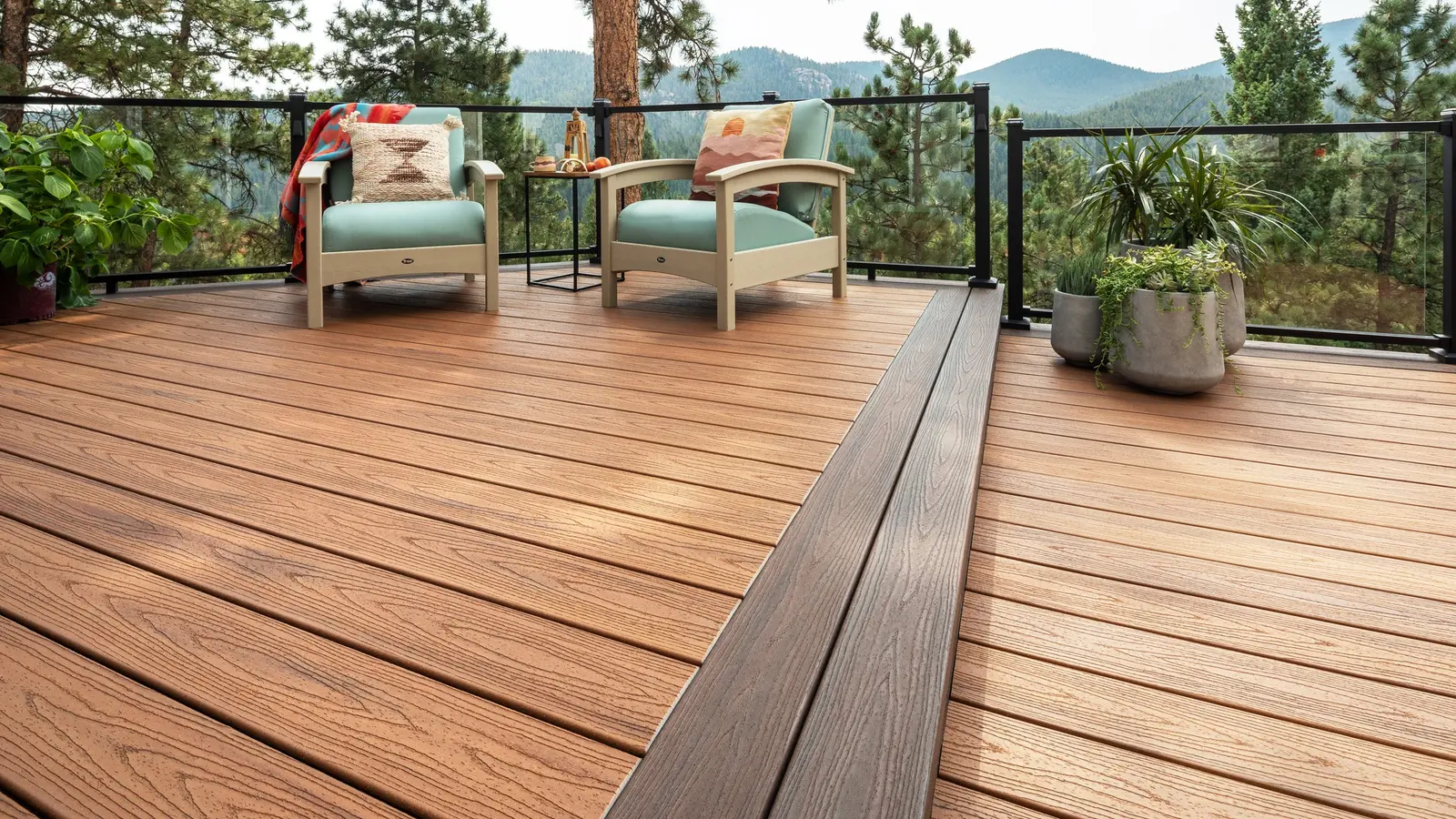
What Does a Picture-Frame Border Change?
A standard deck field usually runs in one direction until the boards reach an outside edge. Without a border, the cut ends may remain visible from the yard or stairs. A picture frame turns one or more boards perpendicular to the field and runs them around the perimeter. That creates a deliberate edge instead of a row of exposed board ends.
The border can match the field for a subtle finish or use a second color to outline the deck. It can also continue around stair openings, landings, or separate levels. On a long deck, an interior breaker board can divide the field into manageable sections. TimberTech notes that borders can reduce the appearance of gapping by avoiding butt joints between long boards, while Trex describes center borders as a way to break up long runs and reduce visible end-to-end joints.
The visual effect is strongest when people can see the deck from the lawn, pool, lower patio, or interior windows. On a small platform mostly covered by furniture, a complex double or triple border may add more visual lines than the space needs. The question is not whether every composite deck should have a frame; it is whether the border improves the specific deck's edges, proportions, and board plan.
When Is the Upgrade Most Worthwhile?
A picture frame earns its place when the deck has a prominent perimeter. Wide stairs, an elevated edge, a curved or angled section, and a view from below all make raw field-board ends more noticeable. A clean border can connect those edges to matching fascia and stair treads so the deck reads as one finished composition.
It is also useful when the surface needs visual organization. A large deck with dining and lounge zones can use a breaker board to create order without adding a physical divider. A border around a bump-out or separate landing can clarify the shape. If boards would otherwise require several butt joints across a long span, a planned breaker board may produce a cleaner repeatable transition.
Contrast should have a reason. A darker border can echo black railing, window trim, or fascia and help define a light field. A same-color border keeps attention on the architecture and furniture. Review full-size samples outdoors because grain, sheen, and color can look different when a board turns ninety degrees and catches light from another angle.
- Consider a border where deck edges and stair openings are visible from common viewpoints.
- Use a breaker board only where it improves board lengths, joints, or activity-zone layout.
- Repeat an existing house, railing, or fascia color instead of adding an unrelated accent.
- Keep compact decks simple when extra lines would make the surface feel busy.
What Has to Change in the Framing Below the Border?
Picture framing must be designed from the framing up. Where a border board runs in the same direction as the joists, it cannot simply float between supports. The border needs a fastening surface, and the cut ends of every field board meeting it need independent support. Trex and TimberTech both show added perimeter joists or blocking for these conditions in their current picture-frame guides.
Corners, railing posts, stair openings, and changes in deck level make the support plan more detailed. A mitered corner needs solid backing on both sides. Posts must remain structurally connected to the deck frame, while the decking is neatly fitted around sleeves or trim. Stair borders and nosing need support that fits the selected decking and stair design rather than copying a detail from the main platform.
This is why adding a border after a deck has already been framed can be inefficient. Retrofitting blocking from above or below may be possible, but access, existing hardware, joist protection, and post locations can limit the cleanest layout. Decide on single, double, or no border before the framing plan and material order are finalized.
- Support the full length of border boards and the ends of adjoining field boards.
- Provide solid backing at miters, breaker boards, stairs, rail posts, and level changes.
- Keep added framing in plane so the finished boards do not rise, dip, or rock.
- Coordinate flashing or joist tape so the denser perimeter framing can still drain and dry.
Do Border Boards Use Different Boards or Fasteners?
They often do. Grooved composite boards are commonly used in the field with hidden clips, but a visible outside edge should not expose a clip groove. Manufacturers therefore offer square-edge or square-shoulder boards for borders, stair treads, and other exposed conditions. The border may use color-matched face screws or a plug system approved for that exact decking line.
Spacing is product-specific. Side gaps, end gaps, fastener locations, predrilling, overhangs, and miter details can differ between composite and PVC lines and can change with installation temperature. A measurement copied from another brand, collection, or old guide is not a safe default. Use the current installation instructions for the exact board and fastening system in the proposal.
Miters deserve realistic expectations. Composite and PVC boards move as temperatures change, while the wood frame below also changes with moisture. A crisp corner on installation day can show a small seasonal gap later. Proper support, approved fastening, accurate cuts, and the manufacturer's required spacing improve the result, but decorative trim should not be sold as a permanently invisible joint.
Should You Choose a Single Border, Double Border, or Breaker Board?
A single perimeter board is the most versatile choice. It finishes the edge without taking much floor area and can be repeated at stairs or landings. Using the same color as the field keeps the detail quiet; using a contrasting color gives the outline more emphasis.
A double border creates a stronger band and can help a large deck feel proportional, but it also uses more surface area, material, cuts, fasteners, and supporting framing. On a narrow deck, that band can crowd the field. A triple border or patterned layout should be reserved for a deck large enough to support the extra geometry without competing with furniture and traffic.
A breaker board is different from a wider perimeter. It crosses the interior field to divide board runs or deck zones. It can eliminate a line of butt joints and create a deliberate transition between sections. Its location should follow framing, board lengths, doors, stairs, railing posts, and the activity plan—not simply the mathematical center of the deck.
- Single border: clean finish with the least added visual weight.
- Double border: stronger outline for a larger deck or two-color scheme.
- Breaker board: organized transition for long runs, multiple sections, or deck zones.
- Complex pattern: appropriate only when framing, proportions, waste, and furniture all support it.
How Does Picture Framing Affect the Project Scope?
The added scope comes from more than a few border boards. The project may need extra joists or blocking, square-edge boards, face fasteners or plugs, more precise cuts, corner fitting, stair coordination, and additional layout time. Contrasting colors can also affect material ordering because the border and field may come from separate bundles or lengths.
Waste depends on the deck dimensions and available board lengths. A border that is only slightly longer than a standard board may require the next length up, while a well-placed breaker board can sometimes divide the surface into efficient runs. Plan the frame dimensions and board schedule together instead of choosing the border after quantities are calculated.
Ask for the proposal to show the surface pattern, border width, breaker-board locations, stair treatment, fascia color, fastener appearance, and any added framing. That makes it possible to compare a basic straight field with the finished border design rather than accepting an unexplained upgrade allowance.
A Greater Charlotte Picture-Frame Deck Checklist
Start by viewing the proposed deck from the back door, main interior windows, yard, and any lower patio. Mark every edge that will be visible, then place rail posts, stairs, doors, outdoor-kitchen equipment, furniture, and future shade structures. A border should strengthen those sightlines without shrinking important walking or seating areas.
Next, choose the exact decking collection and review its current installation guide. Confirm available square-edge profiles and board lengths, approved fastening methods, gapping, stair requirements, joist spacing, and support details. Color samples should be checked outdoors beside the home's siding, brick, trim, railing, and patio materials at more than one time of day.
Finally, confirm that the deck structure, guards, stairs, attachment, foundations, and permits are designed for the complete project. Decorative decking choices do not replace structural review. Unique Patio Concepts can help Greater Charlotte homeowners compare a simple field, single picture frame, contrasting border, and breaker-board layout around the actual home and how the deck will be used.
- Identify which outside edges, stairs, and landings are visible.
- Draw the field direction, border, breaker boards, rail posts, and stairs on one plan.
- Verify square-edge board availability, lengths, colors, fasteners, and current installation rules.
- Include all added blocking and end support in the framing plan.
- Review samples in sun and shade and from both inside and outside the home.
- Confirm address-specific permits, HOA rules, structure, and stair or guard requirements.
Compare composite deck border layouts for your home
Request a Greater Charlotte deck consultation from Unique Patio Concepts to plan the field boards, border, stairs, railings, framing, and material details together.
Request a free estimateFrequently asked questions
What is a picture-frame border on a deck?
It is one or more deck boards installed around the perimeter, usually perpendicular to the interior field boards. The border creates a finished edge and can match or contrast with the main decking.
Does a picture-frame border hide composite deck-board ends?
Yes, when the layout places the field-board ends against the perimeter border. The visible outside edge is then a square-edge border board rather than many cut board ends. Fascia and stair details still need their own coordinated finish.
Does picture framing require extra deck framing?
Usually. Border boards that change direction need full fastening support, and the ends of field boards meeting the border need support too. Corners, breaker boards, rail posts, and stairs can require additional blocking or joists.
Should the picture frame match the deck or use a contrasting color?
Both can work. A matching border creates a quieter finished edge. A contrasting border outlines the deck and can connect to railing, fascia, or house trim. Review full-size outdoor samples because board direction changes how color and sheen appear.
What is a breaker board on a composite deck?
A breaker board crosses the interior field and divides the decking into sections. It can organize activity zones, accommodate board lengths, and replace a line of end-to-end joints with one intentional transition.
Will mitered composite-deck corners stay perfectly tight?
Not necessarily. Deck boards and the frame move with temperature and moisture. Accurate cuts, proper support, approved fasteners, and manufacturer-required gaps help, but small seasonal changes can remain visible at mitered corners.