
Composite decking is often the practical choice for Greater Charlotte homeowners who want consistent color and less routine refinishing. Wood still makes sense when natural grain, the ability to sand and refinish, and a lower initial material cost matter more. Neither is automatically better. Sun exposure, tree debris, moisture, ventilation, board color, framing, fasteners, stairs, railing, and any future pergola all affect the result. Compare complete project specifications and long-term care—not one sample board or the lowest square-foot price.
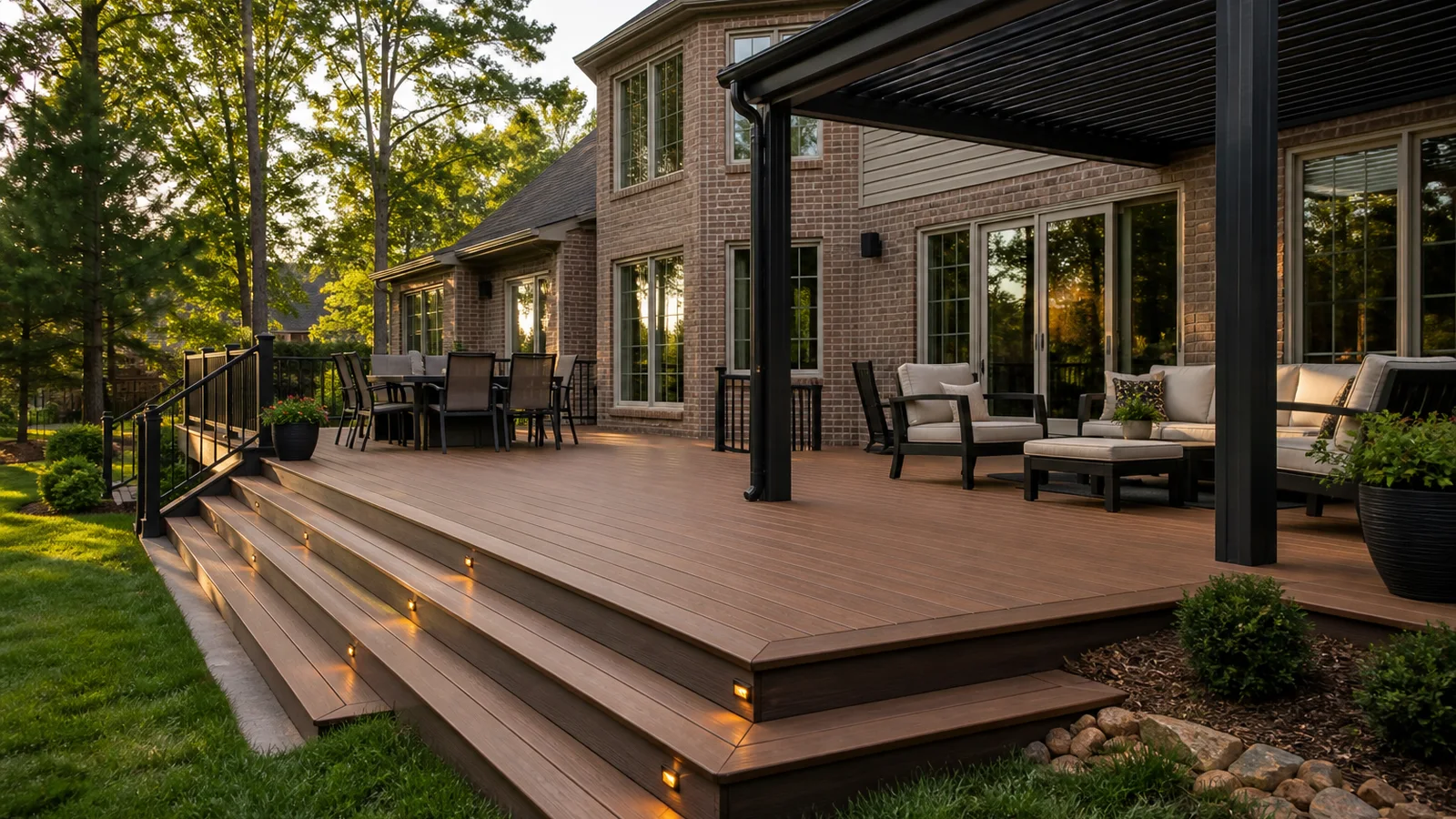
What Is the Biggest Difference Between Composite and Wood Decking?
The everyday difference is the care cycle. Most modern composite decking uses a manufactured core with a protective surface designed to provide a consistent finish. It still needs cleaning, but it does not rely on repeated staining in the same way that exposed wood typically does. That appeals to homeowners who would rather wash the deck than schedule another refinishing weekend.
Wood is a natural material. Grain, knots, color variation, and weathering are part of its character, and damaged areas can sometimes be sanded, refinished, or replaced with familiar carpentry methods. The tradeoff is movement and ongoing care. Boards can check, cup, splinter, fade, or hold stains when water, sun, fasteners, ventilation, and finish maintenance are not handled well.
Neither label tells the whole story. Composite product lines differ in core, cap, profile, fastening, span limits, heat response, slip feel, and installation instructions. Wood species and grades differ too. Compare the exact board and written installation requirements, not simply “composite” against “wood.”
How Do Charlotte Sun, Humidity, and Storms Affect a Deck?
A Charlotte deck can move from strong afternoon sun to heavy rain, high humidity, pollen, leaf litter, and occasional freezing weather. The deck needs to dry after all of it. Good board spacing, airflow below the structure, properly detailed flashing, and a clear drainage route help both composite and wood perform as intended.
Wood absorbs and releases moisture, so installation moisture, end treatment, board spacing, finish, and ventilation deserve attention. Composite does not behave exactly like wood, but it still expands and contracts with temperature according to the product. Required end gaps, side spacing, fasteners, breaker boards, and perimeter details should come from the current manufacturer instructions.
Trees add shade, but they also drop sap, pollen, leaves, and twigs that can hold moisture against the deck. A low deck over damp soil presents a different challenge from an elevated deck with open airflow. The material decision should follow a site review instead of assuming one board solves a drainage or ventilation problem.
Does Composite Decking Get Too Hot in a Charlotte Summer?
Any deck surface can become uncomfortable in direct summer sun. Color, surface texture, board composition, exposure, wind, and time of day all matter. Darker boards usually absorb more solar energy than lighter ones, but a tiny showroom sample under indoor lighting will not tell you how a full west-facing deck feels at five o'clock in July.
Take full-size samples outdoors. Place them on the proposed deck area, let them sit through the afternoon, and compare them barefoot only when it is safe. Also look at glare, color beside the home's brick or siding, and how the sample appears in shade. A board that looks perfect under the porch may read much warmer or redder in open sun.
Shade planning can be more useful than choosing material by heat alone. Trees, an attached roof, or a properly designed louvered pergola can reduce direct exposure over the main seating area. Decide where dining, grilling, walking, and bare feet will happen, then coordinate board color and shade around those zones.
Which Deck Material Is Easier to Maintain and Repair?
Composite usually asks for less finish maintenance. Sweep away debris, clean spills before they set, keep gaps and drainage paths open, and use only cleaners and methods approved for the exact product. Pressure, harsh chemicals, metal shovels, and abrasive scrubbing can damage surfaces, so “low maintenance” does not mean “use anything on it.”
A wood deck needs its own care rhythm. The schedule depends on species, exposure, finish, and product instructions rather than one universal number of years. Watch for peeling finish, splinters, soft areas, raised fasteners, loose rails, trapped debris, and places where water lingers. Cleaning and refinishing before severe deterioration is easier than waiting until boards need widespread replacement.
Repairs are different, too. A wood board can often be matched, worked, and refinished, although an old weathered deck may not accept a visibly identical new board. Composite boards cannot be sanded like solid wood, and discontinued colors can complicate a future replacement. Keeping the product name, color, lot information, fastener details, care guide, and a few spare boards can save a headache later.
How Should You Compare Deck Cost Without Missing the Structure?
Start with the complete installed scope. Board price alone leaves out framing, footings, ledger or freestanding design, flashing, hardware, stairs, landings, guards, lighting, demolition, access, permits, and drainage. A complicated stair layout or difficult backyard can influence the total more than the difference between two board collections.
Composite often carries a higher upfront material cost than common pressure-treated wood, while its appeal is reduced routine refinishing. Premium wood species can change that comparison. Ask each proposal to identify the board, fastening system, framing assumptions, railing, stair details, warranty source, maintenance expectations, and exclusions so the numbers describe the same project.
Do not value-engineer away the parts that keep the deck safe and dry. Flashing at the house, compatible fasteners, proper support spacing, lateral connections, guard details, and footings belong to the structure. Charlotte-area permit and review requirements vary by address and project scope, so confirm the current path before construction begins.
What If You Want a Pergola or Outdoor Kitchen on the Deck?
Say so before the deck is designed. A pergola transfers weight, wind, and connection forces into specific posts, beams, footings, or the house. An outdoor kitchen, hot tub, screen system, heater, or roof can add concentrated loads, power, plumbing, gas, drainage, and clearance requirements. Decorative decking does not prove the frame beneath it can carry those additions.
Early coordination lets the design place footings where future posts belong, keep them clear of doors and stairs, reserve electrical routes, and manage roof water without cutting through finished boards later. It also protects useful deck space. A beautiful pergola in the wrong location can crowd the dining table or turn a main walkway into an obstacle course.
Unique Patio Concepts can help Greater Charlotte homeowners compare deck materials and plan the deck, shade structure, railing, stairs, and future features as one outdoor room. Bring photos, a survey if available, rough furniture dimensions, and the short list of features you may want now or later.
- Compare exact board samples outdoors at the property's sunniest time.
- Review cleaning and maintenance instructions before choosing a color or finish.
- Confirm framing spans, gaps, fasteners, ventilation, flashing, and drainage for the selected product.
- Map furniture, grill clearances, doors, stairs, railing, lighting, and traffic paths.
- Identify future pergola, kitchen, spa, screen, heater, fan, or roof loads before framing.
- Verify address-specific permits, engineering, HOA rules, and inspections before work starts.
Choose the deck around the way you will use it
Request a Greater Charlotte site consultation and project-specific deck and outdoor living estimate from Unique Patio Concepts.
Request a free estimateFrequently asked questions
Is composite decking better than pressure-treated wood in Charlotte?
Composite is often better for homeowners who prioritize consistent appearance and less routine refinishing. Pressure-treated wood may fit homeowners who prefer real wood, want more repair flexibility, or need to manage initial material cost. Site conditions, product quality, installation, and upkeep can outweigh the category alone.
How long does composite decking last compared with wood?
There is no honest universal lifespan. Product, framing, installation, exposure, drainage, ventilation, cleaning, use, and maintenance all affect service life. Review the current written warranty and care guide for the exact board, but do not treat a warranty term as a promise that every part of the deck will last that long.
Does composite decking need to be sealed or stained?
Most capped composite products are sold without a routine staining or sealing requirement, but care instructions vary. Use the exact manufacturer's cleaning guidance and avoid applying coatings or chemicals that are not approved for that board.
Is wood decking slippery when wet?
Wood and composite surfaces can both become slippery when water, algae, pollen, grease, or leaf residue builds up. Texture and product testing matter, but regular cleaning, drainage, lighting, handrails, and sensible stair details are also important. Compare the exact products rather than assuming one material can never be slick.
Can a louvered pergola be installed on a composite deck?
Potentially, but the pergola must connect to framing, footings, or another structure designed for its loads. The composite boards themselves are not a structural foundation. It is easiest to coordinate post locations and supports before the deck is built.
Do I need a permit to replace deck boards in Charlotte?
Requirements depend on the address and scope. A surface-only replacement is different from changing framing, stairs, guards, size, attachment, footings, or adding a pergola. Check the current requirements with the authority responsible for the property before work begins.