
Neither roof type is universally better. A retractable fabric pergola is the stronger fit when you want the canopy to gather away and reveal a broad opening to the sky, plus a softer ceiling appearance when extended. A motorized louvered pergola is usually better when you want to angle rigid aluminum blades for graduated shade and airflow without fully opening the roof. Both can provide shade and manage rain when properly configured, but they use different roof materials, movement, drainage, controls, and weather procedures. For a Greater Charlotte patio, compare the exact site's sun direction, tree debris, storm exposure, house attachment, drainage route, electrical needs, and how often you want full sky versus filtered light before choosing.
What Is the Main Difference Between the Two Roofs?
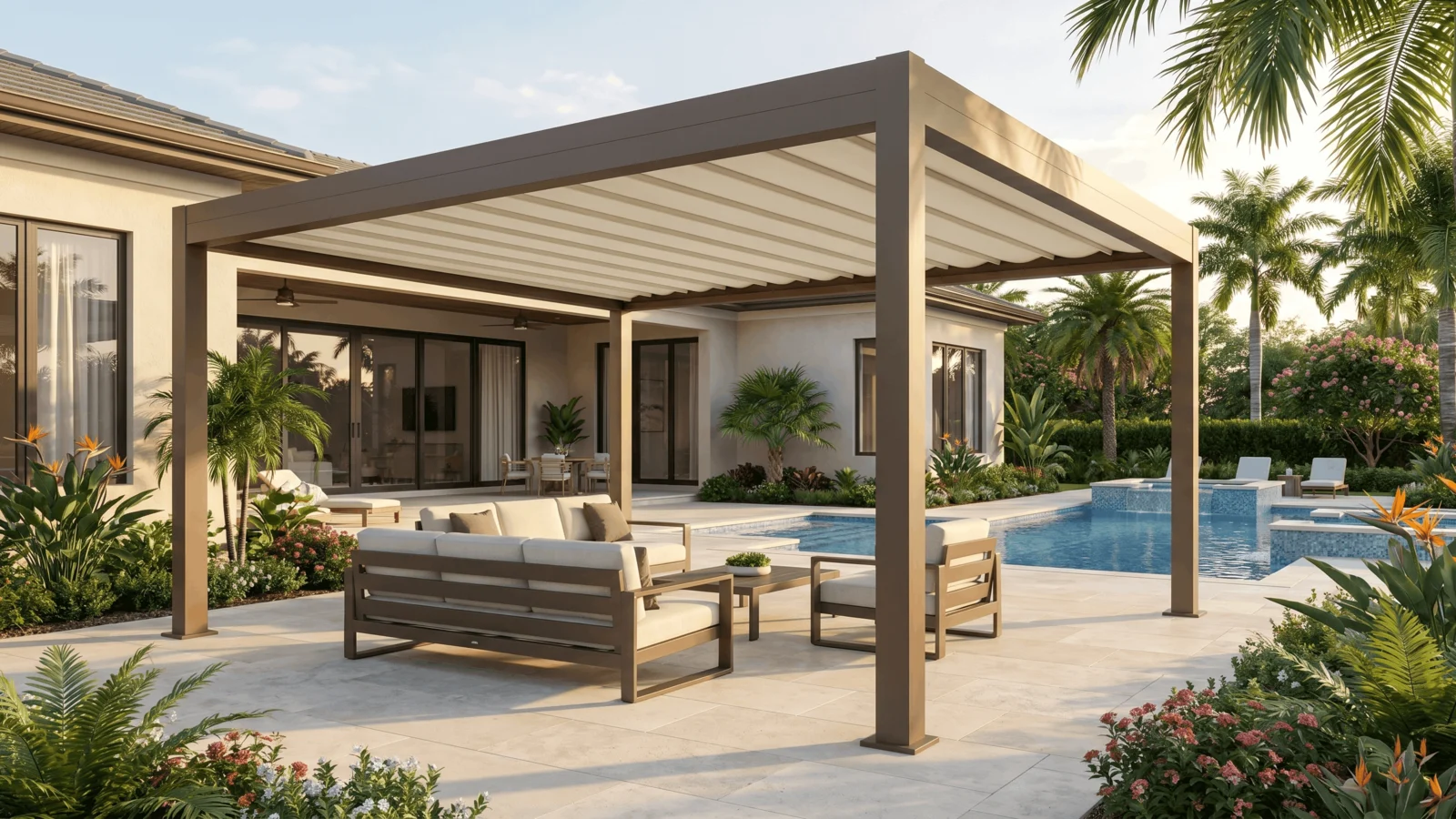
A retractable fabric roof changes coverage by extending or gathering a tensioned canopy along the pergola frame. When the canopy retracts, most of the roof opening can be exposed. When it extends, the fabric creates continuous overhead shade and, on a system designed for it, rain protection. The result feels closer to a movable architectural canopy than a roof made from individual rigid panels.
A louvered roof uses a series of rigid aluminum blades. On a motorized system such as Azenco's R-BLADE, those louvers rotate to change the angle of light and air, then close together for rain protection. Opening the blades does not make the roof frame disappear; it creates repeated slots to the sky. That difference is central to the decision: fabric prioritizes a large reveal, while louvers provide more incremental control.
Do not confuse a framed retractable fabric pergola with a wall-mounted retractable awning. Azenco describes R-WEAVE as a pergola with its own extruded-aluminum structure, motorized fabric roof, and integrated gutter system. The foundations, frame, attachment, drainage, electrical plan, and approvals still need to be designed as a permanent outdoor structure.
Which Roof Gives Better Control of Sun, Shade, and Airflow?
A louvered roof offers the finer adjustment between open and closed. Tilting the blades can block a high or low sun angle while leaving gaps for light and warm air to escape. That is useful when a patio changes from morning sun to afternoon glare, or when you want shade over seating without making the roof feel completely closed.
A retractable fabric roof makes a broader choice. Retract it for a largely open view of the sky, extend it for continuous shade, or stop it at an intermediate position only when the specific system permits that operating position. The extended canopy creates a softer, more uniform ceiling than metal blades. Homeowners who value an open-sky pool or garden view may prefer that visual change even if it offers less blade-by-blade light control.
The patio's direction matters more than a showroom demonstration. Low west sun can pass under either roof edge, while reflected heat from brick, glass, pavers, and pool decking can affect comfort even with full overhead shade. Map sun on the actual patio in the morning, midday, and late afternoon. Side screens, privacy panels, landscaping, roof height, and furniture placement may solve an edge-glare problem more effectively than changing roof type.
- Prioritize louvers for graduated light and ventilation control.
- Prioritize retractable fabric for a broad open-sky reveal and continuous soft shade.
- Check low-angle sun at the hours the patio will actually be used.
- Keep screens and privacy features from blocking the breeze you want to preserve.
- Judge ceiling appearance from the seating position, not only from outside the structure.
How Do Rain, Drainage, and Storms Change the Choice?
Both roof families can be designed to manage rain, but the water follows different surfaces. Azenco describes R-WEAVE with a waterproof upper fabric layer, an engineered fabric profile, an integrated gutter, and water routing through internal posts. R-BLADE closes rigid dual-wall louvers above an integrated gutter system. Those product descriptions explain the intended path; they do not guarantee that every patio stays dry at every edge during wind-driven rain.
The site still needs a safe discharge point. Water leaving a pergola should not collect at the house foundation, cross a doorway or main walking path, wash soil away from a footing, spill onto a lower patio, or overload an existing drainage problem. On an attached layout, the transition at the house also needs coordinated structure and flashing. On a freestanding layout, post and downspout positions should work with the slab, deck framing, pool deck, grade, and landscaping.
Weather ratings and automatic responses are product- and configuration-specific. Azenco currently presents R-BLADE as its more robust option for projects needing advanced environmental resistance, while R-WEAVE emphasizes retractability, shade, and a softer architectural character. Do not transfer a wind number, snow capacity, sensor behavior, or storm position from one system to the other. Follow the approved drawings, installed manual, dealer instructions, and current weather guidance for the exact roof.
- Ask where roof water enters the gutter and where each post or downspout discharges it.
- Keep drainage clear of door thresholds, foundations, stairs, pool equipment, and neighboring property.
- Confirm the required roof position for rain, high wind, freezing conditions, and loss of power.
- Specify sensors only after confirming what they control and how manual override works.
- Keep the operating instructions accessible after installation.
Which System Is Easier to Operate and Maintain?
Both choices add moving roof components, controls, and drainage that need routine attention. A fabric system adds a tensioned outdoor membrane and the guides, rollers, or carriers that move it. A louvered system adds multiple rotating blades, pivots, seals, and linkages. The better maintenance fit depends on nearby trees, pollen, roof access, drainage exposure, frequency of operation, and the service instructions for the selected model.
Charlotte-area pollen, leaves, seed pods, and storm debris can affect either roof. Ground-level visual checks and gentle cleaning that follows the manufacturer are safer than climbing on the structure, forcing a jammed roof, or probing concealed gutters. If movement sounds different, the fabric loses tension, a louver does not align, or water no longer drains normally, stop and use the installed troubleshooting or service process rather than repeatedly cycling the motor.
Controls should fit everyday use. Confirm wall-control and remote locations, app or smart-home requirements, sensor behavior, power-loss operation, and access to the motor and electrical components. If the patio will also include lighting, motorized screens, heaters, receptacles, speakers, or a television, coordinate the complete electrical load and controls before beams and roof components are installed.
Do Fans, Screens, Heaters, or an Outdoor Kitchen Favor One Roof?
Accessories can change which system fits, but compatibility must come from the designed structure rather than the product category. Azenco lists lighting, motorized screens, heaters, and ceiling fans among possible R-WEAVE enhancements and offers similar outdoor-living options for R-BLADE. The exact beam, mount, clearance, wiring path, moisture exposure, and roof movement still have to work together.
A fan needs an approved fixed structural mounting location with safe blade clearance; it should never attach through moving fabric or rotating louvers. Retractable screens need straight openings, compatible side tracks, room for housings, and operating limits suited to the exposure. Heaters need manufacturer-required clearances from fabric, louvers, screens, furniture, and people. Cooking equipment needs its own ventilation, heat, grease, and combustible-clearance plan.
Start with a furniture and circulation plan. Mark the back door, grill, dining table, lounge seating, pool route, stairs, screen openings, and maintenance access. Then place posts, controls, downspouts, lights, and accessories. A roof that looks ideal in isolation can become awkward if a post blocks the pool path or a screen cassette competes with the outdoor-kitchen opening.
- Use only manufacturer-approved fan beams or fixed mounting zones.
- Keep heaters and cooking appliances within their exact clearance and ventilation requirements.
- Coordinate screen tracks, doors, posts, gutters, and furniture before final dimensions are set.
- Preserve access to motors, controls, drains, lights, and other serviceable parts.
- Choose outdoor-rated electrical equipment for the actual damp or wet exposure.
A Greater Charlotte Decision Checklist
Begin with the experience you want. If fully revealing the sky is the priority, put a retractable fabric roof on the shortlist. If you expect to make smaller light and airflow adjustments throughout the day, compare motorized louvers first. Then test that preference against the home's roofline, attachment height, patio or deck structure, sun direction, trees, drainage, storm exposure, accessory plan, and view from inside the house.
Ask for a product-specific proposal rather than a generic pergola quote. It should identify the exact roof family, size and zones, attached or freestanding configuration, finishes, controls, sensors, drainage route, foundations, electrical scope, accessories, and responsibility for permits or engineering. Product availability and approved options can change, so confirm what is currently offered and supported for the project instead of relying on an older brochure or another installation.
Unique Patio Concepts can help Greater Charlotte homeowners compare an adjustable louvered pergola with other shade and roof approaches around the real site. The goal is not to declare one mechanism the winner. It is to choose the roof movement, weather plan, drainage, and structure that match how the patio will be used.
- Decide whether full sky or fine shade control matters more in daily use.
- Measure doors, windows, eaves, gutters, deck framing, pool edges, utilities, and grade.
- Document sun, tree debris, prevailing storm exposure, and existing drainage problems.
- List every desired screen, light, fan, heater, appliance, and control.
- Compare current operating manuals, weather instructions, service access, and supported options.
- Confirm address-specific zoning, setbacks, easements, HOA review, engineering, permits, and inspections.
Compare adjustable roof options for your patio
Request a Greater Charlotte outdoor-living consultation from Unique Patio Concepts.
Request a free estimateFrequently asked questions
Is a retractable fabric pergola the same as a retractable awning?
No. A framed retractable fabric pergola has its own structural post-and-beam system and an integrated moving roof. A typical retractable awning projects from a wall without the same complete pergola frame. Foundations, drainage, controls, engineering, and permits should be evaluated for the exact product.
Which roof opens more: fabric or louvers?
A fully retractable fabric canopy generally exposes a broader uninterrupted opening to the sky. Open louvers remain distributed across the roof frame, but they provide finer control of blade angle, filtered light, and ventilation.
Do both roof types keep rain out?
Systems designed for rain can provide overhead protection when closed or extended and correctly installed, but wind-driven rain can still enter open sides and edges. The exact fabric or louver profile, seals, gutters, slope, drainage, and operating instructions determine performance.
Which pergola is better for high wind?
Use the engineered rating and required storm position for the exact model and configuration. Do not assume a rating from one louvered pergola applies to a fabric roof, or vice versa. Azenco currently positions R-BLADE as the more robust choice in its line for demanding environmental resistance.
Can a fan go under a retractable fabric or louvered pergola?
It may be possible when the system includes an approved fixed structural fan mount, suitable outdoor electrical equipment, and safe clearances from the moving roof, screens, lights, heaters, and occupants. Never attach a fan directly through fabric or rotating louvers.
Does an adjustable pergola need a permit in Greater Charlotte?
It may. Permanent structures, foundations, house attachments, decks, electrical work, zoning, setbacks, easements, and HOA rules can all affect approvals. Confirm the current requirements for the exact address and complete scope before ordering or construction.