
For a Charlotte-area four-season sunroom, double-pane low-E glass is usually the best place to begin because it can limit heat transfer while managing solar heat through a room with a large amount of glazing. Do not choose from the words low-E or double-pane alone. Compare the whole window system's U-factor, solar heat gain coefficient, visible light, air leakage, frame and thermal-break details, operable-window plan, and safety-glazing requirements. A west-facing room may need stronger solar control and exterior shade, while a shaded north-facing room may place more emphasis on insulation and winter comfort. Three-season rooms can have different priorities, including ventilation and a larger operable opening area. Match the glass package to the room's orientation, intended seasons of use, roof, wall system, and comfort plan.
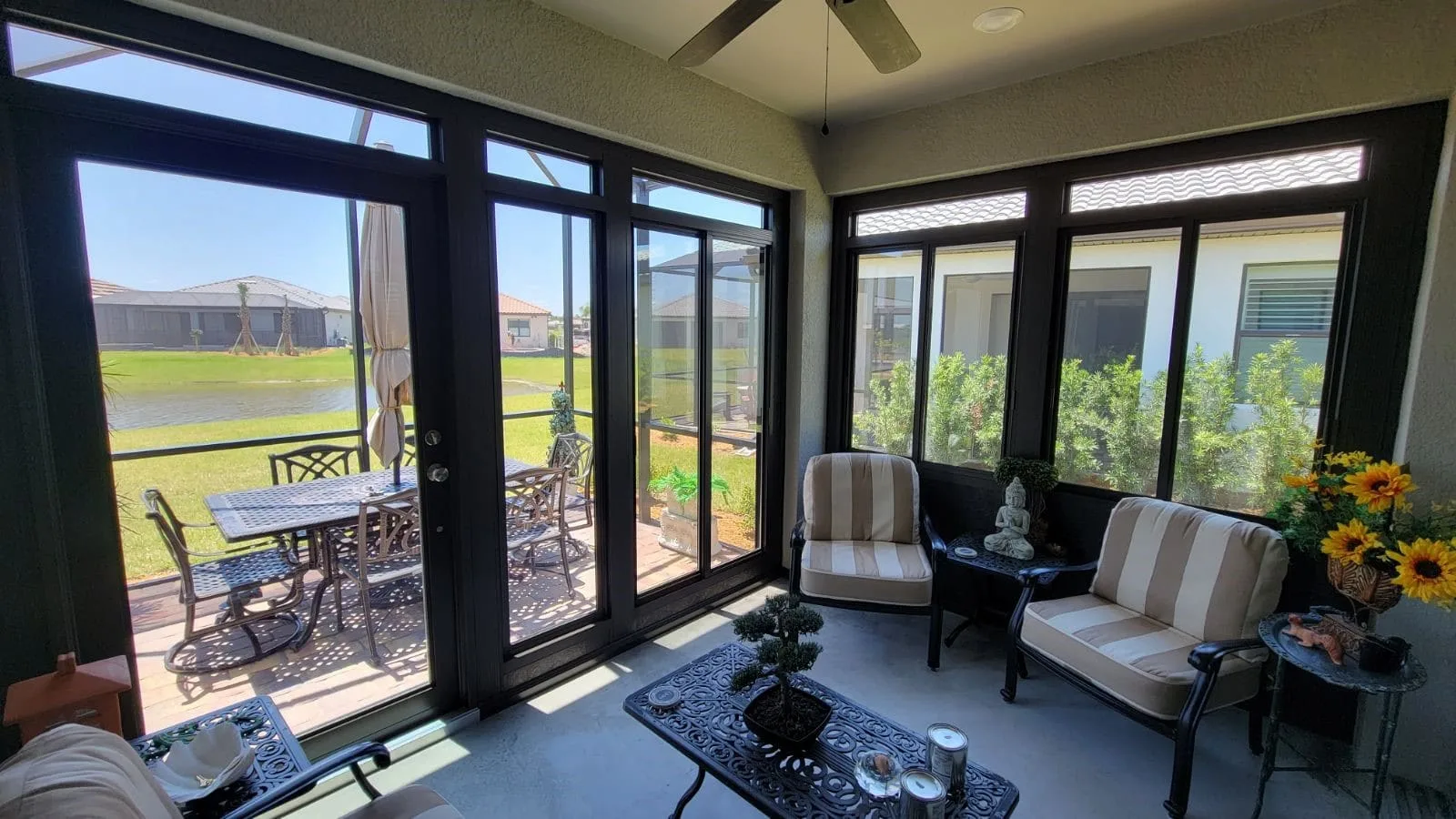
What Is the Best Starting Point for a Four-Season Sunroom?
For most four-season sunrooms in the Charlotte area, begin by comparing double-pane low-E window systems. Two panes create an insulating space, while a low-emissivity coating is designed to reduce radiant heat transfer. TEMO currently describes high-performance options that include double-pane and low-E glass, and its Vista View system uses low-E glass as part of a year-round comfort package.
That does not mean every low-E unit performs the same way. Coating type, pane spacing, gas fill when used, spacer, sash, frame, seals, and installation all affect the completed window. Ask for ratings for the exact configuration being quoted rather than relying on a broad product label.
The window package also has to fit the room classification and comfort plan. A three-season room that will be opened frequently may prioritize operable panels and screens. A conditioned four-season room needs the windows, insulated roof, thermal breaks, wall system, air sealing, foundation, and HVAC strategy to work together. Better glass cannot compensate for an incomplete enclosure plan.
Which Window Ratings Matter Most?
U-factor describes how readily heat passes through the complete window assembly. Lower values indicate less heat flow. Solar heat gain coefficient, usually shortened to SHGC, describes how much solar heat enters through the window; lower values admit less solar heat. Visible transmittance describes how much visible light comes through. These numbers answer different questions, so one number should not be used as shorthand for overall quality.
ENERGY STAR bases residential window criteria on ratings certified by the National Fenestration Rating Council and varies its criteria by climate zone. Even when a particular sunroom wall system is not being represented as ENERGY STAR certified, the same vocabulary is useful for comparing exact products. Ask to see the current performance documentation and identify whether a number applies to the glass alone or the entire window.
Air leakage matters in a room with many seams and operable units. Frame design and thermal breaks also matter because aluminum is durable but can conduct heat unless the system interrupts that path. Review glass, frame, seals, weep paths, and installation details as one wall system.
- U-factor: heat transfer through the complete window assembly.
- SHGC: solar heat admitted through the window.
- Visible transmittance: daylight admitted through the glass.
- Air leakage: unwanted air movement through the assembly.
- Safety rating: whether the glazing is approved for the location where it will be installed.
How Should Orientation Change the Glass Choice?
Charlotte sunrooms have to manage both summer cooling and winter comfort. A west-facing glass wall receives low afternoon sun when outdoor temperatures are often highest. ENERGY STAR advises that east- and west-facing windows generally benefit from lower SHGC or effective shade, with west-facing glass deserving particular attention. Roof overhangs alone may not block that low-angle sun.
A south-facing room can receive strong seasonal sun, but the actual result depends on roof depth, trees, neighboring buildings, shades, and the amount of glass. North-facing walls receive less direct sun and may make insulating performance more important than aggressive solar control. Mixed orientations may justify different glass or shading decisions on different walls rather than one blanket choice.
Walk the site in the morning and late afternoon. Mark where direct sun reaches the proposed glass, where mature trees provide seasonal shade, and whether neighboring walls reflect heat and glare. Exterior shade, interior shades, roof design, window area, and glass selection should be decided together.
How Much of the Sunroom Glass Should Open?
Fixed glass can maximize the view, but a room with no practical ventilation can become uncomfortable during mild, sunny weather. Operable windows and screened openings let homeowners release heat and use outdoor air when humidity and temperature cooperate. The right amount depends on room size, furniture placement, prevailing breezes, door locations, and whether mechanical heating and cooling will serve the space.
Plan openings where people can reach them without climbing over furniture. Cross-ventilation usually works better when air can enter on one side and leave on another. Screens, locks, handles, and window-cleaning access are part of the choice, not afterthoughts.
Do not assume opening every panel is automatically better. More operable units add frames, seals, hardware, and maintenance points. A balanced plan can use fixed glass for clear views and operable sections where they provide useful airflow.
- Show furniture before fixing handle and sash locations.
- Create a believable inlet and outlet path for cross-ventilation.
- Keep screens removable and reachable for cleaning.
- Check that doors and windows can open without colliding.
- Preserve emergency egress where the room design or adjacent house opening requires it.
Where Do Safety Glass and Impact Resistance Fit?
Large glass panels can fall within locations where safety glazing is required, especially near doors, floors, stairs, walking surfaces, and other hazardous areas. The exact requirement depends on panel size, height, location, product listing, and the adopted code for the project. Confirm the glazing schedule on the permit drawings instead of assuming every panel needs the same treatment.
Tempered safety glass and impact-resistant glass solve different problems. Tempered glass is designed to break in a safer pattern when it fails. Impact-resistant assemblies are intended for specific windborne-debris or security conditions and include more than a thicker pane. TEMO lists impact-resistant glass among its available high-performance options, but Charlotte-area projects should use it only when the site, code, product approval, or homeowner priorities justify that assembly.
Ask how replacement glass, seals, rollers, screens, and hardware are serviced. A technically strong glass package should still allow practical cleaning, drainage, and future maintenance without dismantling the room.
What Should You Confirm Before Ordering Sunroom Windows?
Start with how the room will actually be used. List the months, times of day, furniture, view, privacy needs, and temperature expectations. Then map each glass wall by orientation and shading. This turns a vague request for energy-efficient glass into a room-specific window plan.
Request the exact window and wall-system documentation with the proposal. Record pane count, coating, U-factor, SHGC, visible transmittance when available, frame and thermal-break design, safety-glazing locations, operable units, screens, locks, color, cleaning access, and replacement-part path. Keep manufacturer labels and product information with the project records.
Unique Patio Concepts can help coordinate the sunroom footprint, TEMO wall and roof system, glazing, ventilation, doors, foundation, drainage, and comfort strategy for a Greater Charlotte home. The best glass is not a universal upgrade; it is the package that fits the room's orientation and intended use without creating avoidable glare, heat, drafts, or maintenance problems.
- Define three-season or four-season use before comparing glass packages.
- Map morning and afternoon sun on every proposed glass wall.
- Compare whole-window U-factor, SHGC, and air-leakage information.
- Mark fixed, operable, screened, tempered, and door-adjacent panels on the drawing.
- Coordinate shades, roof overhangs, HVAC, electrical, and furniture with the glazing plan.
- Confirm product-specific engineering and address-specific permit requirements before ordering.
Plan the whole sunroom window system
Request a Greater Charlotte sunroom consultation from Unique Patio Concepts to compare glass, ventilation, roof, wall, and comfort options for your home.
Request a free estimateFrequently asked questions
Is low-E glass worth it for a sunroom in Charlotte?
It is usually worth comparing for a four-season room because a sunroom has a large glazed area and must manage summer solar heat as well as winter heat loss. Compare the exact low-E system's whole-window U-factor and SHGC rather than assuming every low-E coating performs the same way.
Is double-pane glass enough for a four-season sunroom?
Not by itself. Double-pane low-E glass can be an important part of the enclosure, but the roof, frames, thermal breaks, seals, foundation, doors, installation, shade, and heating or cooling plan also determine comfort.
Should west-facing sunroom windows have a low SHGC?
West-facing glass often benefits from stronger solar control or effective shade because low afternoon sun arrives during a hot part of the day. The right SHGC still depends on the complete room, surrounding shade, glass area, and winter priorities.
Does every sunroom window need to open?
No. A mix of fixed and operable windows can preserve views while providing practical ventilation. Plan enough reachable openings for airflow, then account for screens, furniture, door swings, locks, and cleaning access.
Does a sunroom need tempered glass?
Some panels may require safety glazing based on their size and location near doors, floors, stairs, or walking surfaces. The exact glazing schedule should be confirmed for the product and address under the project's adopted requirements.
Is impact-resistant glass required for a Charlotte sunroom?
Not universally. Impact-resistant glass may be selected for a specific product approval, exposure, code condition, or homeowner priority. Confirm the requirement for the exact property and do not treat it as interchangeable with ordinary tempered safety glass.