
Solar roller shades are often the best starting point for a sunroom when the goal is to soften glare and preserve the outdoor view. Cellular shades are usually the stronger choice when nighttime privacy and added insulation matter more. Adjustable blinds can redirect light, while lined drapery can add softness and a second privacy layer. The best plan may use different treatments on different walls because morning sun, low western sun, neighboring sightlines, operable windows, and furniture all create different needs. Choose the glass and window system first, then select coverings that fit its frames, handles, screens, ventilation, and approved mounting locations.
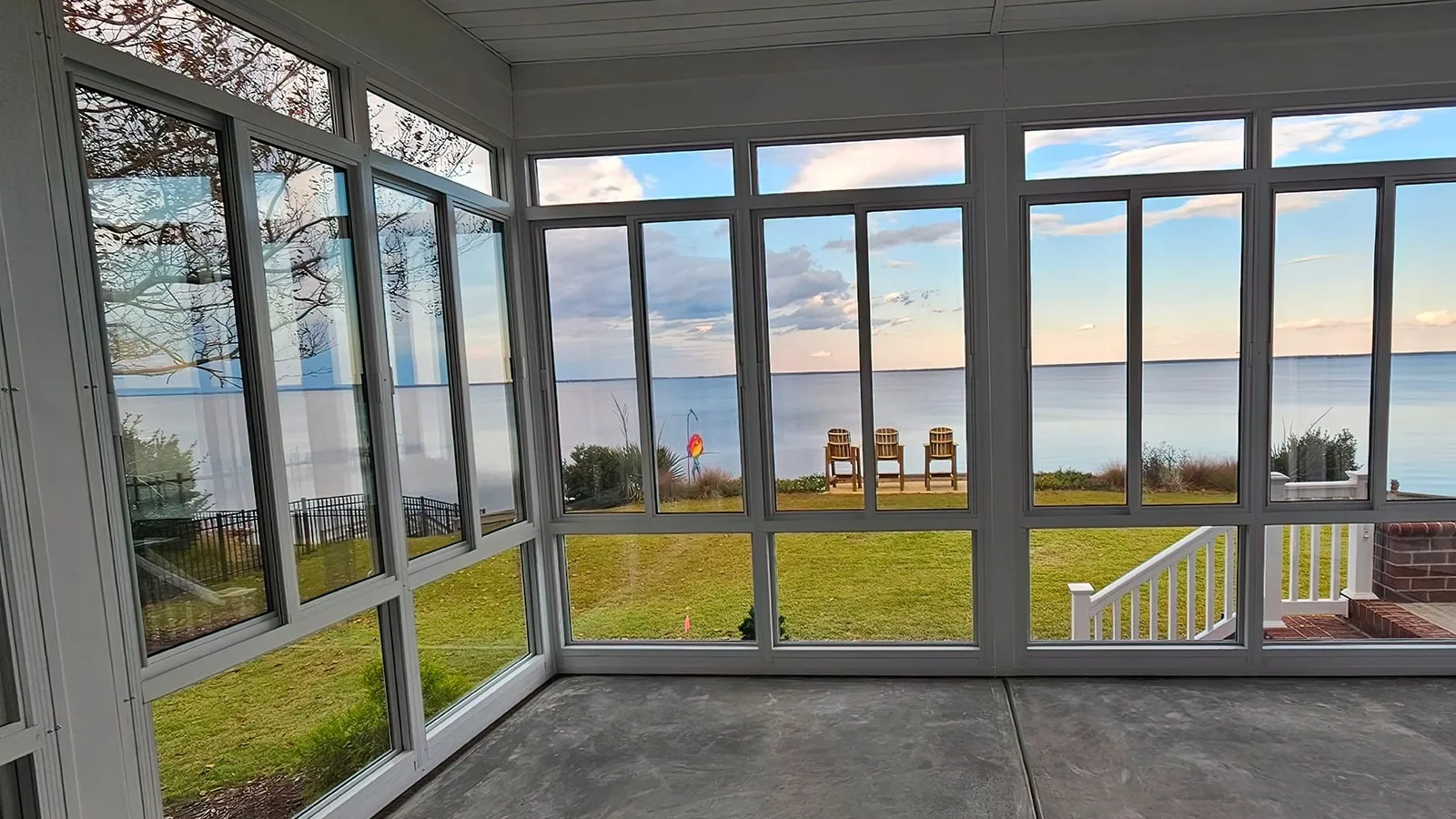
Start With the Problem You Want the Treatment to Solve
A sunroom does not need one universal blind for every pane. One wall may create television glare at 9 a.m., another may receive low afternoon sun, and a third may face a private yard where no covering is needed. Begin by observing the room when you plan to use it. Note where direct sun lands, which seats feel exposed, whether screens or windows need to open, and when neighboring homes can see inside.
Separate glare, heat, privacy, insulation, and room darkening. They overlap, but they are not the same problem. A sheer solar fabric may make a laptop easier to see while preserving the landscape, yet still offer little privacy after dark. A cellular shade may create better privacy and a useful insulating air layer, but it blocks more of the view when closed.
The U.S. Department of Energy recommends using operable window coverings differently by season: close them to reduce unwanted summer heat gain, and open sunlit coverings on suitable winter days when solar warmth is useful. That operating pattern is especially valuable in a glass-rich room where the sun changes by wall and time of day.
- Glare: identify the exact windows and hour that create reflected light on screens or glossy surfaces.
- Privacy: check sightlines in daylight and again after dark with the interior lights on.
- Comfort: distinguish direct solar heat from drafts, air leakage, underinsulated surfaces, or an undersized comfort system.
- View: decide which panes should remain visually open most of the day.
- Operation: note every moving sash, door, handle, screen, lock, vent, and furniture conflict.
Which Type of Sunroom Shade or Blind Fits Each Goal?
Solar roller shades use a woven fabric that filters direct light and reduces glare while retaining some view through the material. They suit seating areas, dining spaces, and home-office zones where you want visual connection to the yard. Because view-through fabric responds to the brighter side, it should not be assumed to provide nighttime privacy when lights are on inside.
Cellular shades contain folded pockets that trap air between the room and glass. Department of Energy guidance identifies tightly installed cellular shades as one of the more effective interior window-covering options for reducing heat transfer. They make sense where privacy, winter comfort, or a softer light level matters more than an uninterrupted view. Light-filtering fabric usually fits a sunroom better than automatically making every opening blackout-dark.
Adjustable horizontal or vertical blinds can redirect light without fully covering the glass, but they offer less insulation than a well-fitted cellular shade and can look busy across many narrow panels. Drapery can soften the room and provide evening privacy, but its stack must not block windows, doors, registers, or the main view. In many rooms, a simple roller or cellular system on the problem walls works better than layering heavy treatments across every pane.
- Solar roller shade: best starting point for glare control and daytime view preservation.
- Cellular shade: best starting point for insulation, diffused light, and privacy.
- Adjustable blind: useful for redirecting light while keeping flexible partial views.
- Lined drapery: useful as a secondary layer for softness and evening privacy when wall space allows.
- Exterior shade: worth discussing when direct sun should be intercepted before it reaches the glass and the sunroom system can accept it.
Should Every Window Wall Use the Same Treatment?
Usually not. East-facing glass receives stronger morning light, while west-facing glass can create low-angle glare late in the day when outdoor and indoor temperatures are already high. South-facing glass may receive long periods of sun that change substantially by season and roof overhang. North-facing walls often need less solar control and may need coverings mainly for privacy or nighttime insulation.
The Department of Energy notes that vertical glazing is easier to shade than sloped glazing and generally creates less warm-weather heat gain than overhead glass. That makes wall-by-wall shades practical in many sunrooms. Roof glass, specialty shapes, tall transoms, and narrow corner panes may need dedicated hardware or may be better left uncovered if the room's glazing and exterior shade already manage the exposure.
Keep the room visually coordinated without forcing identical performance everywhere. You can use the same cassette, hardware color, or fabric family while selecting different openness or light-filtering levels for separate walls. Separate controls also let you lower the west wall without closing the shaded side and losing the entire view.
- Observe the room in the morning, at midday, in late afternoon, and after dark.
- Group windows by exposure and use rather than ordering one setting for the whole room.
- Preserve uncovered glass where the view is private and direct sun is not a problem.
- Consider separate control zones for tall walls, doors, and hard-to-reach transoms.
- Plan around the actual furniture layout so a lowered shade does not land behind a sofa or table.
How Do Window Treatments Fit an Aluminum Sunroom System?
Sunroom window walls often have narrower mullions, deeper handles, screens, transoms, and more adjacent units than ordinary bedroom windows. Measure each opening rather than assuming repeated panes are identical. Confirm the available mounting depth, where the shade roll or headrail will sit, how far handles project, and whether the bottom rail can clear furniture and sill hardware.
Do not drill into aluminum framing, insulated roof members, window tracks, or wall-system components based only on appearance. The framing may contain fasteners, drainage paths, thermal breaks, wiring, or structural connections. Ask the sunroom manufacturer or installer for approved mounting locations and fastener requirements before attaching hardware.
Keep operable windows usable. A shade should not prevent a sash from sliding, block a screen from being removed, cover a lock, or stop ventilation when the room needs it. The same applies to French doors and sliding doors: door-mounted or side-guided treatments must stay controlled when the door moves and must not interfere with handles or egress.
- Measure width and height at multiple points for every opening.
- Record frame depth, handle projection, screen removal path, and sash travel.
- Confirm approved attachment points before drilling into proprietary aluminum components.
- Keep weep paths, tracks, locks, outlets, switches, registers, and returns clear.
- Use suitable cordless or controlled-cord systems and follow current product safety instructions.
Do Shades Replace Low-E Glass or Fix an Uncomfortable Sunroom?
No. Shades are one layer of light and comfort control; they do not turn inefficient glazing into a complete high-performance enclosure. Glass type, solar heat gain, U-factor, frame construction, roof insulation, air sealing, ventilation, orientation, and the heating and cooling plan still matter. TEMO describes its sunroom systems as using energy-efficient glass, insulated roof systems, and thermal breaks, and it also recognizes interior shades or solar screens as options for privacy and glare control.
If the room is uncomfortable in every season, diagnose the enclosure before buying decorative treatments for every window. Look for air leakage, failed seals, condensation patterns, blocked air paths, an uninsulated floor or roof, and a comfort system that was never designed for the added room. Window coverings can improve a well-designed space, but they should not hide an unresolved water, glass, or HVAC problem.
Be cautious with applied film. Film can change how solar energy is absorbed by a sealed glass unit. Before applying it, identify the exact glass and coating and ask the window-system manufacturer whether that product and installation method are approved. A removable interior shade is easier to change seasonally and does not alter the glass itself.
A Practical Sunroom Window-Treatment Checklist
Before ordering, live with the room long enough to see its real light pattern. Tape temporary paper markers beside the windows that create glare, photograph the room at the problem hour, and test full-size fabric samples against the glass. A small swatch viewed under showroom lighting does not show how transparent a solar shade will look toward a bright yard or how much a light-filtering fabric will glow at night.
For Greater Charlotte's mix of humid summers, bright shoulder seasons, and cool winter nights, flexibility is usually more useful than permanent darkness. Choose treatments you will actually raise and lower. Motorization can be helpful for tall or numerous windows, but controls, power, wiring, limits, and manual override should be planned before the room is finished.
Unique Patio Concepts can help homeowners plan the sunroom window layout, operable units, glass, electrical needs, furniture zones, and likely shade locations as one design. The goal is not to cover as much glass as possible. It is to keep the room bright and connected to the outdoors while giving you control when glare, privacy, or seasonal comfort requires it.
- Define the main goal for each wall: glare, privacy, insulation, view preservation, or room darkening.
- Check daylight and nighttime sightlines before selecting fabric transparency.
- Confirm the exact glass, window, screen, and frame system.
- Test samples at the real problem hour and from your usual seated position.
- Plan power and controls early if motorized shades are likely.
- Get approved mounting guidance for the installed sunroom system before ordering hardware.
Plan the glass, comfort, and shade together
Request a Greater Charlotte sunroom consultation from Unique Patio Concepts.
Request a free estimateFrequently asked questions
Are solar shades or cellular shades better for a sunroom?
Solar shades are usually better when glare control and preserving the daytime view are the priorities. Cellular shades are usually better when privacy and added insulation matter more. Different walls may benefit from different types.
Do solar shades provide privacy at night?
Do not assume they do. When the room is lit and it is dark outside, view-through solar fabric can allow people outside to see in. Test the selected fabric after dark or add a separate privacy layer where needed.
Should every sunroom window have a shade?
Not necessarily. Treat the windows that create glare, excess sun, or unwanted sightlines, and leave comfortable private views open. Grouping controls by exposure often works better than closing the entire room at once.
Can blinds or shades be mounted directly to an aluminum sunroom frame?
Only at locations and with fasteners approved for the exact system. Aluminum frames can contain drainage paths, thermal breaks, wiring, fasteners, and structural connections, so do not drill based on appearance alone.
Can I put window film on sunroom glass?
Possibly, but identify the exact insulated glass and coating first and obtain the window-system manufacturer's approval for the film and installation method. Applied film changes the glass assembly's solar behavior and is not interchangeable with a removable shade.
Will window treatments keep a sunroom comfortable year-round?
They can improve glare, privacy, and seasonal heat control, but they do not replace efficient glass, insulated framing and roofing, air sealing, ventilation, and a suitable heating and cooling plan. Persistent discomfort deserves an enclosure-level review.