
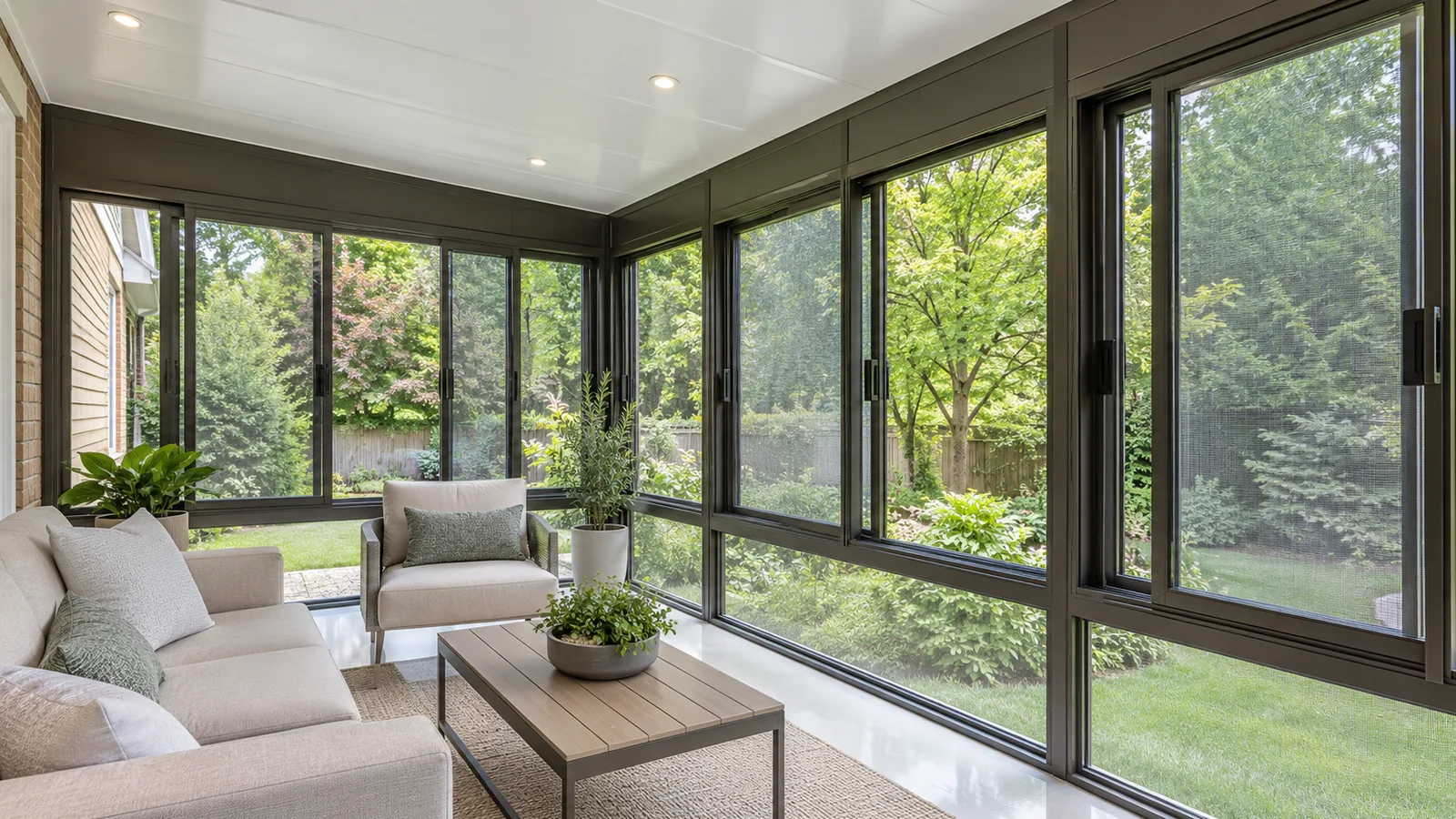
Most Greater Charlotte sunrooms benefit from operable windows with screens, but every panel does not need to open. Opening windows provide fresh air during mild weather and a way to release heat that builds up on sunny days. Fixed glass can preserve an uninterrupted view, simplify hard-to-reach areas, and fit portions of the wall or roof where ventilation is not useful. The right mix depends on the selected sunroom system, room orientation, window-wall layout, furniture, privacy, insect protection, cleaning access, and whether the space will use heating or cooling. Choose the operating pattern wall by wall, and confirm the exact window sizes, screens, hardware, and approved configurations before the room is ordered.
Why Do Operable Sunroom Windows Matter?
A sunroom receives more solar energy than a conventional room because so much of its wall area is glass. On a mild Charlotte morning, opening screened windows can release warm air and bring in a breeze without opening the room to insects. That flexibility can make the space feel more connected to the yard during spring and fall.
TEMO’s current window-wall information describes full screens with both its 206 and 406 window-wall systems. Its Premier View system uses large double-sliding glass windows with full screens and emphasizes broad ventilation. Those are product-specific examples, not a rule that every wall must use the same amount of operable glass. The available pattern depends on the selected room and window system.
An opening window works only when air has somewhere to go. One small opening on a sheltered wall may make little difference. Openings on more than one wall, or an opening paired with a properly planned door, can create a clearer air path. Nearby fences, landscaping, house walls, and prevailing breezes affect how that path feels in the completed room.
How Many Sunroom Windows Should Be Operable?
There is no universal percentage. Start with how the room will be used and which walls can actually move air. A dining or sitting room may need several easy-to-reach openings around the occupied zone. A room with one wall facing a close neighbor may place more operable area toward the private backyard instead.
Draw the proposed window-wall elevations and mark each panel as fixed or operable. Then test at least two ventilation paths. Ask what happens when only one window is open, when windows on opposite or adjacent walls are open, and when the exterior door is open. This simple exercise is more useful than ordering identical units around the room without considering airflow.
Balance ventilation with wall strength, posts, doors, transoms, knee walls, furniture, and the manufacturer’s approved modules. A large glass wall may contain several visual bays while only selected sections operate. The room should still look composed when windows are closed, partly open, or fully open.
- Mark the direction of likely breezes and the walls protected by the house or landscaping.
- Create an air path through the occupied part of the room rather than only across one corner.
- Keep operating handles and locks within comfortable reach.
- Confirm that screens cover the actual opening area.
- Review the wall elevation with windows shown both open and closed.
When Does Fixed Glass Make More Sense?
Fixed glass can be useful where the main goal is a clean, uninterrupted view or where a panel would be awkward to operate. High transoms, narrow fillers, glass beside a door, or portions of a custom wall may contribute daylight without becoming practical ventilation openings. The exact choices depend on the engineered room system rather than a field decision made after installation.
Access matters. A window hidden behind a deep sofa, built-in cabinet, or dining table may technically open but rarely be used. A high panel that requires a stool is not a sensible daily vent. In those locations, fixed glazing may be the more honest choice while reachable wall sections handle ventilation.
Fixed does not mean unimportant. Its glass specification, frame, seals, drainage, safety requirements, cleaning access, and relationship to the surrounding aluminum system still need to be resolved. Do not select fixed panels only to reduce visible hardware if doing so leaves the room with poor ventilation or difficult exterior cleaning.
How Should Screens, Hardware, and Cleaning Affect the Plan?
Every operable window adds tracks, rollers or guides, locks, handles, seals, and screens that must remain accessible. Ask to operate a sample before approving the room. The sash should move smoothly, latch clearly, and stay within the approved track. Screens should fit the opening without gaps and be removable or serviceable according to the product instructions.
Furniture can turn a good window into an unusable one. Leave room to reach handles without leaning over a sofa or moving a dining table. Keep plant leaves, cords, and shades out of the travel path. If window treatments are planned, show their mounting and stack-back area on the wall elevation so they do not cover locks or prevent a sash from opening.
Cleaning access deserves the same attention. Large glass areas show pollen, fingerprints, and rain marks, especially in a bright room. Confirm which surfaces can be reached safely from the floor, how screens are removed, and how exterior glass will be cleaned without climbing on furniture or the roof. Follow the installed product’s care instructions rather than using abrasive tools or high-pressure washing on frames, screens, seals, or glazing.
- Operate the proposed window style before final selection.
- Check handle and lock locations against furniture and window treatments.
- Confirm how screens are removed, cleaned, and replaced.
- Preserve access to tracks, weep paths, seals, and serviceable hardware.
- Plan safe interior and exterior glass-cleaning routes.
Can Opening Windows Replace HVAC or Moisture Control?
No. Operable windows are useful for natural ventilation when outdoor temperature and humidity are comfortable, but they do not guarantee year-round comfort. During hot, humid, cold, smoky, or high-pollen conditions, opening the room may make it less comfortable. The roof, glazing, insulated panels, air sealing, orientation, shade, and any heating or cooling system determine how the room performs when it is closed.
Window ventilation also does not solve every condensation problem. Moisture may come from outdoor humidity, air leakage, wet plants, damp materials, an unvented appliance, or differences between indoor surfaces and air temperature. Opening windows can help in some mild conditions, but persistent condensation needs the source and complete room assembly evaluated rather than a standing instruction to leave windows open.
Decide whether the room is intended for seasonal use or more consistent year-round use before choosing the wall system. TEMO currently distinguishes single-pane three-season 206 window walls from thermally broken 406 walls with insulated glass. That manufacturer distinction shows why ventilation, glazing, insulation, and comfort goals should be chosen together instead of treating every sunroom as the same type of space.
What Should Greater Charlotte Homeowners Confirm Before Ordering?
Begin with a measured room plan and a window-wall elevation for every side. Include the house wall, proposed roof, doors, knee walls, posts, furniture, views, privacy concerns, shade, nearby trees, grade, drainage, and outdoor equipment. Mark each fixed and operable panel, the direction it moves, its screen, and the reach needed for operation and cleaning.
Mecklenburg County explains that residential additions and alterations can require building and trade permits, particularly when work affects load-bearing elements, roofing, electrical, mechanical, or plumbing systems. Requirements vary by address and across nearby North Carolina and South Carolina jurisdictions. Confirm the approval path for the complete room, including any comfort system or electrical work, before ordering manufactured components.
Unique Patio Concepts can help Greater Charlotte homeowners compare window-wall layouts, views, ventilation, furniture, glass, roof style, doors, and comfort goals as one room. The best design is not the one with the most opening windows. It is the one that provides useful fresh-air options while keeping the room easy to furnish, operate, clean, and enjoy.
- Choose the room’s intended seasonal use before selecting the window-wall system.
- Map fixed and operable panels on every wall elevation.
- Test at least two realistic ventilation paths through the furnished room.
- Confirm screens, locks, handles, tracks, shades, and cleaning access.
- Coordinate glazing, roof, insulation, electrical work, and any heating or cooling plan.
- Verify product-specific engineering and address-specific approvals before ordering.
Plan the airflow before the window walls are ordered
Request a Greater Charlotte sunroom consultation from Unique Patio Concepts to coordinate operable windows, screens, views, furniture, and comfort as one room.
Request a free estimateFrequently asked questions
Do all sunroom windows need to open?
No. Most sunrooms benefit from some operable screened windows, but fixed glass can work well for high transoms, hard-to-reach areas, or walls where the view matters more than ventilation. The right mix depends on the selected room system and the complete airflow plan.
Are sliding windows a good choice for a sunroom?
They can be. Sliding windows do not need an inward or outward swing area and can pair with full screens, but the exact opening area, tracks, locks, cleaning method, and available sizes vary by system. Operate a sample and review the wall elevation before ordering.
Where should operable windows go in a sunroom?
Place them where they can create a useful path for air and remain easy to reach. Favor occupied areas and walls that receive a breeze, while accounting for privacy, furniture, doors, screens, landscaping, and the manufacturer’s approved wall modules.
Will opening sunroom windows keep the room cool in summer?
Sometimes during mild weather, but not reliably in Charlotte heat and humidity. Summer comfort also depends on glass, roof insulation, shade, orientation, air sealing, and any planned heating or cooling system. Open windows are one tool, not a complete cooling strategy.
Should high sunroom windows be operable?
Only when the selected system provides a safe, practical operating method. A high window that cannot be reached from the floor may not be useful for daily ventilation. Fixed glass may make more sense unless approved controls and service access are part of the design.
Does changing sunroom windows affect permits in Charlotte?
It can affect the submitted room design, structure, safety glazing, ventilation, electrical layout, or comfort system. Residential additions and related trade work may require permits, and the path varies by address and jurisdiction. Confirm the complete project requirements before ordering.