
Usually, yes. Most Greater Charlotte winter days are workable for building an aluminum patio cover, louvered pergola, or similar structure, and North Carolina's residential code lists a relatively shallow 12-inch frost line depth. The weather limits show up in specific steps rather than the whole project. New concrete footings or slabs need protection when temperatures are expected to fall to 40°F or below, sealants and coatings have minimum application temperatures on their labels, frozen or saturated soil can delay digging, and ice, sleet, or heavy rain can push installation days and inspections. Plan the permit, HOA review, utility locates, and product lead time first, then let the crew schedule weather-sensitive steps around the forecast.
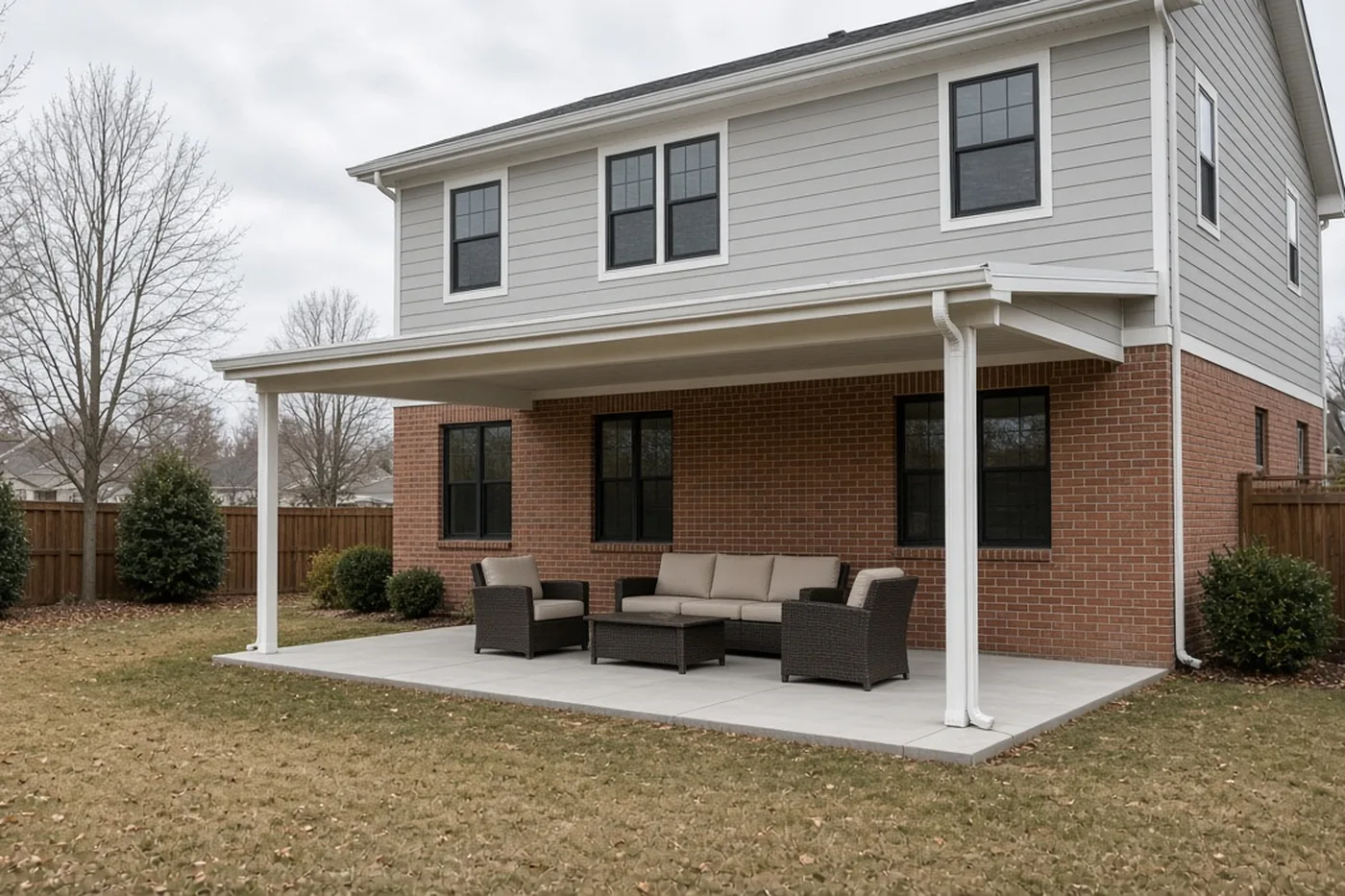
Why Winter Is Usually Workable in Greater Charlotte
Charlotte-area winters bring cold nights, occasional ice or snow, and plenty of chilly rain, but long stretches of deeply frozen ground are uncommon. That matters because the most weather-sensitive part of a patio cover or pergola is usually what happens at and below grade: digging footings, placing concrete, and anchoring posts. The aluminum frame, beams, roof panels, and louvers are factory-made components that are assembled on site, so cool air alone is not a reason to postpone the whole project.
North Carolina's residential code lists a 12-inch frost line depth in its climatic design table, and footings are required to extend at least that deep. Approved plans for a specific structure can call for deeper or larger footings based on loads, soil, and product engineering, so the frost line is a minimum reference, not the design. The point for homeowners is simpler: the local climate does not normally force the long winter shutdowns that colder regions plan around.
What winter does change is the number of good working days. Short daylight, wet soil after several days of rain, and the occasional ice event can all slow progress. A realistic schedule leaves room for those interruptions instead of assuming every weekday is available.
Footings and Concrete Are the Main Cold-Weather Step
Many patio covers and pergolas sit on new concrete footings, a new slab, or anchors set into an existing slab that has been evaluated for the load. Concrete is the part of the project that cares most about temperature. The American Concrete Institute's cold-weather guide describes cold-weather concreting conditions as existing when the air temperature has fallen to, or is expected to fall below, 40°F during the protection period. In those conditions, fresh concrete needs to be protected from freezing and allowed to cure properly.
That does not mean concrete cannot be poured in December or January. ACI notes that properly protected and cured concrete placed in cold weather can perform well. It does mean the pour should be timed to the forecast, protected with methods such as insulated blankets when needed, and not loaded with posts and roof weight until it has gained the strength the plans or manufacturer require. Concrete should not be placed on frozen ground or into a hole holding ice or standing water.
Soil conditions are part of the same decision. Footing holes dug into saturated clay after a week of rain can soften or collapse at the edges. Sometimes the best move is to wait a few dry days, re-check the hole, and then pour rather than force the schedule.
- Confirm footing size and depth from the approved plans, not a general rule of thumb.
- Schedule pours around forecast lows, not just the daytime high.
- Protect new concrete from freezing for the time the mix and conditions require.
- Wait for the specified strength before setting posts or loading the structure.
- Ask whether the footing inspection must happen before the pour and plan that visit into the schedule.
What About the Frame, Roof Panels, and Sealants?
Assembling an aluminum frame, setting beams, and installing insulated roof panels or motorized louvers is largely mechanical work. Cold weather mainly affects crew safety and handling: wet or icy surfaces, wind, and slick roof panels can make a day unsafe for lifting and fastening overhead. A reputable installer will reschedule rather than work on frosted panels or in gusty conditions.
Sealants, adhesives, flashing tapes, touch-up finishes, and similar products are a different story. Each one has a minimum application temperature and surface condition listed by its manufacturer. A flashing detail where a patio cover meets the house is a good example. If the product needs a dry surface above a certain temperature, that detail may wait for a milder afternoon even when the rest of the frame is complete.
Composite decking that is part of the same project follows its own temperature guidance. Trex's installation guide, for example, specifies a larger end-to-end gap for boards installed below 40°F than above it, because the boards move slightly with temperature. Ask your installer how the specific products in your project are adjusted for cold-weather installation.
Permits, HOA Review, and Utility Marking Do Not Pause for Winter
Much of the time between saying yes to a design and seeing a finished structure has nothing to do with weather. A patio cover attached to the house, a louvered pergola with electrical work, or a structure on new footings often needs a building permit, and some projects also need electrical permits and inspections. Requirements depend on the address, the jurisdiction, the structure, and the scope. Mecklenburg County Code Enforcement, Union County, and other local offices each run their own processes.
Many neighborhoods also require HOA architectural approval before work starts. Review boards may meet on a set schedule, and holidays can affect when an application is heard. Submitting drawings, finishes, and placement details early helps avoid a finished design sitting idle while approval catches up.
Before anyone digs, North Carolina law requires notice to the NC 811 Notification Center at least three full working days before excavation begins. Utility operators then mark their lines in the requested area. Weekends and holidays do not count as working days, so a request made right before a holiday weekend takes longer to clear.
- Ask which permits and inspections apply to your specific address and scope.
- Submit HOA paperwork with drawings, colors, and the exact location on the lot.
- Allow time for NC 811 marking before footing work begins.
- Plan electrical work for lights, fans, heaters, or motorized louvers with the permit set.
- Keep the approved plans on site for inspections.
Why Late Fall and Winter Can Be a Smart Time to Plan
Many homeowners start thinking about shade in May, when the patio is already too hot to use. By then, design, approval, and product lead time can push completion into the middle of summer. Starting the conversation in late fall or winter gives every step room to happen without a deadline pressing on it.
Dormant lawns and bare trees can also make it easier to see the yard as it is. You can judge how winter sun reaches the house, where water collects after rain, and how the patio connects to doors and walkways without summer foliage hiding the details. Those observations are useful when choosing between an insulated solid roof, adjustable louvers, or a combination.
Winter planning also leaves time to coordinate related work, such as electrical circuits, drainage corrections, landscaping repairs, or a future screen or enclosure option, before construction locks in the layout.
A Practical Checklist for a Winter Patio Cover or Pergola Project
Use this list to keep the schedule realistic and the conversation with your installer specific. It does not replace the approved plans, product manuals, or local requirements for your address.
- Choose the structure type and approximate size, then confirm it fits the house, roofline, and yard.
- Ask whether the design uses new footings, a new slab, or an existing slab, and how each will be verified.
- Confirm permit, inspection, and HOA steps for your address before setting a start date.
- Ask how pours and sealant work will be scheduled around cold or wet forecasts.
- Plan electrical needs for lighting, fans, heaters, or motorization now rather than after the roof is installed.
- Discuss gutters, downspouts, and where roof water will go before the posts are placed.
- Build schedule flexibility for rain, ice, and holiday weeks into your expectations.
Plan now so your patio is ready for spring
Request a Greater Charlotte outdoor-living consultation from Unique Patio Concepts to talk through the structure, approvals, and a realistic winter or early-spring schedule for your home.
Request a free estimateFrequently asked questions
Is it too cold to pour concrete footings in Charlotte in winter?
Not usually. Concrete can be placed in cold weather when it is protected from freezing and cured properly. The American Concrete Institute treats conditions as cold weather when air temperature has fallen to, or is expected to fall below, 40°F during the protection period. Installers time pours to the forecast and use protection such as insulated blankets when needed.
How deep do pergola or patio cover footings need to be in Charlotte?
Footings must meet the approved plans for the specific structure. North Carolina's residential code lists a 12-inch frost line depth and requires footings to extend at least that far below grade, but loads, soil, and product engineering can require deeper or larger footings.
Does winter weather delay patio cover installation?
It can. Rain, ice, wind, and saturated soil can postpone digging, pours, overhead work, and sealant application. How much depends on the forecast and the step involved, so a realistic winter schedule leaves room for interruptions.
Do I still need a permit if the project is built in winter?
Season does not change permit requirements. Whether a permit is needed depends on the structure, attachment to the house, electrical work, footings, and your jurisdiction. Confirm with the local permitting office and your HOA before construction starts.
Can a louvered pergola be installed in winter?
Generally yes, as long as footings, anchoring, electrical work, and any temperature-sensitive products are handled within their requirements. Operating instructions for motorized louvers in freezing weather come from the installed product's manual, so review that guidance once the system is in place.