
Usually not. Inside the City of Charlotte, the drainage rules say buildings, additions, accessory structures, and other permanent structures are not allowed in a recorded storm drainage easement unless the Stormwater Administrator approves them, and a deck, pergola, or patio cover set on footings is the kind of structure those rules describe. The workable path is to find the easement's exact limits on your recorded plat or a survey, design the project fully outside them, keep footings and roof runoff away from the drainage path, and ask Charlotte-Mecklenburg Storm Water Services before you place anything in or right next to the easement. Towns and counties outside the city set their own rules, and the wording of your recorded easement still matters.
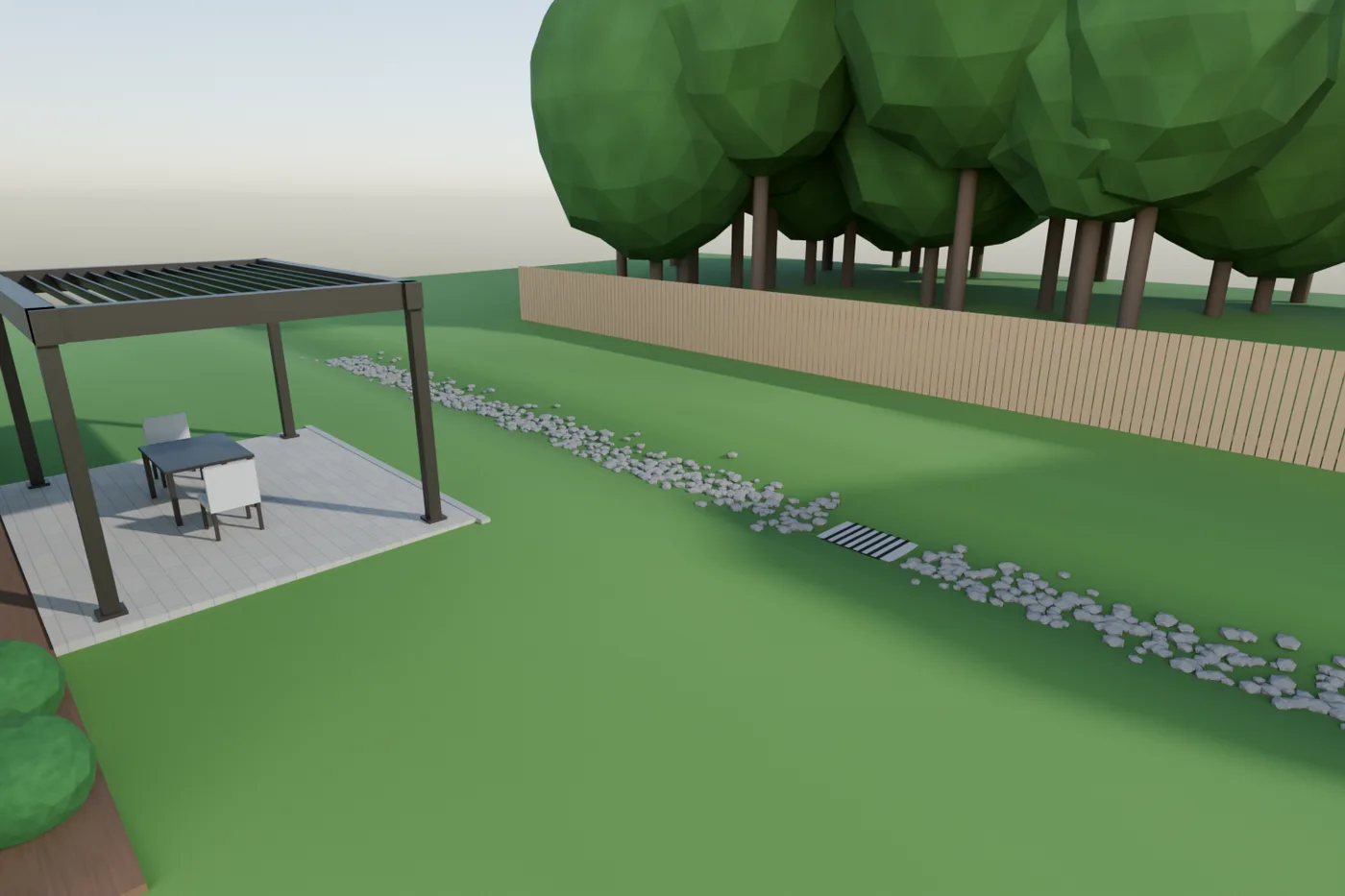
What a Storm Drainage Easement Means for Your Backyard
A storm drainage easement is a recorded legal document that gives a drainage system, and usually a public agency, rights over a strip of your lot. Charlotte-Mecklenburg Storm Water Services explains that an easement does not take the land away from you. You still own it, and you still mow it. What changes is how you can use it: water has to keep flowing through it, and the agency needs to be able to reach the pipes, inlets, and channels for repairs.
In Greater Charlotte subdivisions, these easements often run along side or rear lot lines, where a grassy swale, a yard inlet, or a buried pipe carries water from the street and neighboring lots toward a creek or a larger system. They are easy to forget because most of the time they just look like lawn.
Charlotte's ordinance groups several types together as stormwater-related easements, including storm drainage easements, public storm drainage easements, and conservation easements recorded with the Mecklenburg County Register of Deeds. A plat might label them SDE or PSDE. If your lot has one, it belongs at the very start of a deck, pergola, or patio cover plan, before anyone picks a size or a post layout.
What Charlotte's Rules Say About Building in a Drainage Easement
Article 24 of Charlotte's Unified Development Ordinance is direct. Unless the Stormwater Administrator approves otherwise, buildings, additions, accessory structures, and other permanent structures, including swimming pools, retaining walls, and brick walls, are not allowed within a stormwater-related easement. The same article makes it unlawful to obstruct or interfere with drainage in an easement, allows the city to require the owner to remove an obstruction, and lets the city remove it and charge the cost back if needed.
Storm Water Services' own easement guidance points the same way. It says any improvement within an easement, or near its boundaries, must be reviewed and approved. Fences of most types, trees that do not threaten the pipes, and ordinary plantings are the kinds of additions that may be approved. Sheds and other buildings, pools, anything that blocks the flow of water, and permanent structures not intended to be moved, such as brick, block, or concrete walls, are listed as not permitted.
A deck on posts and footings, an aluminum pergola anchored to concrete, or an attached patio cover is permanent construction. The safe planning assumption is that it does not belong inside the easement. If you believe your situation is an exception, the question goes to Storm Water Services before design, not after the footings are dug.
Distances That Can Apply Even Outside the Easement Lines
Staying just outside the drawn easement is not always enough. Charlotte's ordinance also says structures are not allowed within 7.5 feet of the centerline of a storm drainage pipe that carries runoff from a public street, or within 10 feet of the centerline of a ditch, swale, or channel that carries runoff from a public street, unless the Stormwater Administrator approves otherwise.
For pipes, the ordinance adds that deep pipes, foundation loads that could bear on a pipe, or other engineering and maintenance concerns can lead the city to require more distance or a deeper footing. That matters for pergola and patio cover posts, which put concentrated loads into small footings. A post that looks comfortably clear on a sketch might still need a closer look if a pipe runs nearby.
These drainage distances are separate from zoning setbacks, lot coverage limits, building permits, and HOA rules. A project has to satisfy each of them. The deck and pergola permit guides linked below cover the building and zoning side.
How to Find the Easement Before You Design Anything
Start with the recorded plat for your subdivision. On Mecklenburg County's Polaris property map, the legal description for a parcel usually includes the map book and page of the plat, which you can pull from the Register of Deeds. The plat shows labeled easements and their widths. Your deed and closing documents may reference other recorded easements, and a boundary survey can locate the easement lines on the ground.
Look at the yard, too. A square inlet grate in the lawn, a concrete headwall where a pipe empties, a swale that carries water across several lots, or manholes along the back of the yard all suggest a drainage system and possibly an easement. They do not tell you where its edges are, so treat them as reasons to check the plat, not as substitutes for it.
Before any footing is dug, North Carolina law requires notice to NC811 at least three full working days ahead. Know the limits of that, though. NC811's homeowner guide says water, sewer, and storm drain lines are marked only within the right of way or to the meter, not on private property. A private storm pipe crossing your backyard may need a private locator or the drainage plans to find.
Design Options When an Easement Takes Part of the Yard
An easement shrinks the buildable area, but it rarely ends the project. The usual answer is to fit the outdoor living space into the part of the yard that remains and let the easement stay open lawn or planting bed.
Because water flows through the easement during heavy rain, the design should also keep new runoff from the deck, patio, or roof from dumping straight into the swale in a way that causes erosion or ponding near your structure. Gutters, downspout locations, and grading are part of the plan, not an afterthought.
- Shift the structure toward the house and away from the swale or pipe.
- Shorten the depth of a deck or pergola and use the width of the yard instead.
- Change the footprint, for example an L-shaped deck or a rectangular pergola turned parallel to the easement.
- Attach a patio cover to the house where the roofline allows, keeping posts on the side away from the easement.
- Place posts and footings with the easement and any pipe distances marked on the site plan.
- Direct gutter and downspout outlets so water does not pond against posts or erode the swale.
- Keep grills, kitchens, and other heavy fixed features on the structure side, not out in the drainage path.
Outside Charlotte: Other Towns, Creek Buffers, and HOAs
The rules quoted above are the City of Charlotte's. Towns elsewhere in Mecklenburg County, and Union County communities such as Monroe and Indian Trail, adopt their own ordinances and review processes. Their limits on structures in drainage easements, and their approval steps, can differ from Charlotte's. The recorded easement document itself can also contain restrictions, so read its wording, not just the plat label.
If the drainage path behind your house is a creek rather than a swale or pipe, stream buffer rules may apply as well. The Charlotte-Mecklenburg buffer guidelines describe zones next to streams where new structures are generally not allowed, with narrow exceptions. That is a separate question from the drainage easement, and both can apply to the same lot.
Neighborhood HOAs often add their own review on top of public rules. An HOA approval does not override a drainage easement, and an easement clearance does not replace HOA approval.
A Drainage Easement Checklist Before Your Consultation
Gathering these items before a design meeting makes it much easier to lay out a deck, pergola, or patio cover that works on the first try.
- A copy of the recorded plat with any SDE, PSDE, or conservation easement labeled.
- A boundary survey if you have one, or a note that you may need one.
- Photos of inlets, swales, headwalls, and where water flows during a heavy rain.
- The jurisdiction your address falls in: the City of Charlotte, another town, or an unincorporated county area.
- Any HOA architectural guidelines that apply to decks, pergolas, or covers.
- Your list of must-have features, so the design can decide what fits outside the easement.
- A plan to contact Storm Water Services or your town's stormwater staff if the project comes close to the easement.
Plan your outdoor space around the drainage
Request a Greater Charlotte consultation with Unique Patio Concepts and bring your plat or survey. We will talk through deck, pergola, and patio cover layouts that fit the usable part of your yard and keep the drainage path open.
Request a free estimateFrequently asked questions
Can I put a fence in a drainage easement in Charlotte?
Sometimes. Charlotte-Mecklenburg Storm Water Services lists most fence types as additions that may be approved in its easements, but not permanent stone, block, or concrete walls, and nothing can block the flow of water. Improvements in or near the easement need review and approval, so ask before you build.
Can I build a paver patio in a drainage easement?
Do not assume so. Pavers change the grade and surface, and Charlotte requires approval for land disturbance that changes existing drainage features or patterns. Ask Storm Water Services, or your town's stormwater staff, before placing a patio in or along a drainage easement.
What if my existing deck or shed already sits in an easement?
Talk with Storm Water Services before you repair, expand, or replace it. Charlotte's ordinance allows the city to require removal of obstructions in a storm drainage easement, so rebuilding in the same spot is not a safe assumption.
Will 811 mark the storm drain pipe in my backyard?
Often not. NC811's homeowner guide says storm drain lines are marked only within the right of way, not on private property. You still must notify NC811 at least three full working days before digging footings, but a private locator or drainage plans may be needed to find a private storm pipe.
Does a drainage easement mean the city maintains the swale behind my house?
Not necessarily. Storm Water Services says that until it has recorded an easement for that purpose, maintenance of a drainage system on private property stays with the owner. Even within its easements, it does not mow or do routine cleanup.