
Rain is audible on an insulated patio cover, especially during a strong Greater Charlotte downpour, but it generally has a more muted character than rain striking a thin, uninsulated metal sheet. The roof panel is only one part of what you hear. Panel construction, spans and supports, roof height, hard patio surfaces, nearby walls, gutters, downspouts, and storm intensity all affect the result. Insulation should not be sold as silence or as a guaranteed decibel reduction unless the exact assembly has published acoustic test data. Compare the specified roof system, drainage layout, and finished outdoor room rather than relying on a material label alone.
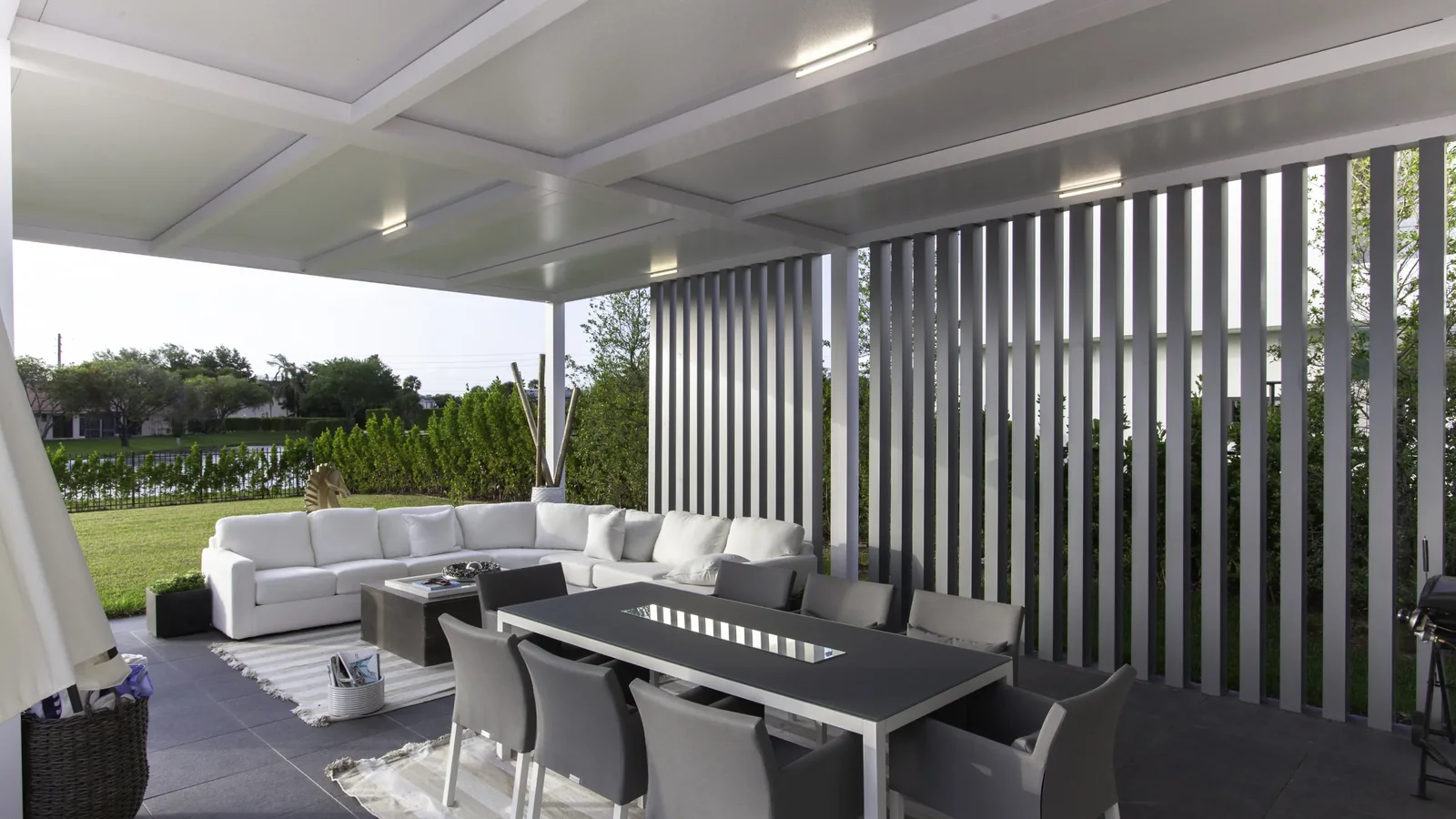
What Does Rain Sound Like Under an Insulated Patio Roof?
A solid patio roof does not make a storm disappear. Light rain may read as a soft, even patter, while a summer downpour will be plainly audible. The useful comparison is not silent versus loud. It is the sharp ringing that can come from rain striking a thin, lightly supported sheet versus the fuller, more damped sound of a thicker insulated roof assembly.
TEMO's current patio-cover guidance describes insulated covers as providing quieter rain protection than non-insulated covers. Azenco identifies R-SHADE as a fixed roof built with insulated sandwich panels for consistent coverage from sun and rain. Those manufacturer descriptions support a general comfort difference, but neither should be turned into a guaranteed sound level for every project.
The actual experience depends on the complete installed room. A low roof above tile beside a brick wall may reflect more sound toward the seating area than a taller roof above a more open patio. A short shower on a sheltered side of the house can also feel very different from wind-driven rain hitting the roof edge, privacy panels, furniture, and nearby windows.
Why Can an Insulated Panel Sound Different From Thin Metal?
A roof panel vibrates when raindrops strike it. Thin single-skin material can flex and resonate more readily, which can create a bright or metallic sound. An insulated sandwich panel combines exterior skins with a core, producing a thicker assembly with different mass and stiffness. That construction can reduce the drum-like character people often associate with a basic metal cover.
Panel thickness alone does not settle the question. The distance between supports, beam layout, fastening method, perimeter details, roof slope, panel joints, and any finished ceiling all influence how the roof responds. Two products that are both called insulated may not have the same panel construction or acoustic behavior.
Ask what exact roof system is being proposed. If quiet performance is a deciding factor, request any available manufacturer test information for that assembly and ask to visit or listen beneath a completed installation when practical. Avoid comparisons based only on tapping a loose sample: a small panel in a showroom is not supported, drained, or surrounded like the final roof.
- Identify the manufacturer, product family, panel construction, and planned thickness.
- Review spans, beams, joints, perimeter trim, and attachment details as one assembly.
- Treat unsupported decibel claims or promises of silence cautiously.
- Compare a finished installation in rain when that opportunity is genuinely available.
What Else Can Make a Covered Patio Sound Loud During Rain?
Water movement can create as much distraction as impact on the roof. An integrated gutter may collect runoff quietly, but a partially blocked channel, a hard turn, or a downspout discharging onto concrete can create rushing, tapping, or splashing beside the seating area. Follow the water from the roof surface to its final discharge point when reviewing the plan.
The outdoor room itself also shapes the sound. Concrete, porcelain tile, glass doors, brick, and solid privacy panels reflect sound. Upholstered furniture, landscaping, open sides, and distance from the house can soften the overall feel. Screens may change wind and rain entry, but they do not turn an open patio into a sound-controlled interior room.
Accessories add their own storm noises. Loose furniture covers, blinds, curtains, screen tracks, grill covers, and decor may flap or rattle before the roof becomes the main concern. Secure or retract accessories according to their instructions, keep drainage clear from safe ground-level access, and have unusual rattling or movement evaluated rather than assuming it is normal rain noise.
- Route downspouts away from seating, doors, walkways, foundations, and post bases.
- Avoid splash points where concentrated water lands on metal, stone, or standing water.
- Check that screens, shades, lighting, fans, and decor are installed and operated as specified.
- Keep gutters and accessible drainage paths clear without climbing onto the roof.
Should Rain Sound Decide Between a Solid Roof and Louvers?
Sound matters, but it should not choose the roof by itself. A fixed insulated roof provides continuous overhead shade and rain coverage. A motorized louvered roof can change the balance of sun, shade, and airflow, then close for weather protection. A fixed-slat roof is primarily an open-air shade structure and should not be evaluated as though it were a watertight solid cover.
Start with how the patio will be used. If the goal is a dependable dining or lounge area that stays covered without operating the roof, a solid insulated system may be the clearest fit. If changing daylight and openness matter more, louvers may better serve the space. The October 5 guide on combining solid roof panels and louvers explains how separate zones can handle different priorities without forcing one roof type to do every job.
For either system, ask where the water goes, how the structure connects to the house or footings, what accessories are approved, and how maintenance is performed. Rain comfort is the sum of overhead sound, wind-driven rain at the sides, drainage noise, splash, and how the patio feels during and after the storm.
What Should Greater Charlotte Homeowners Compare Before Ordering?
Put comfort questions into the design conversation before selecting colors. Record where people will sit, the height and size of the roof, the surfaces below and beside it, the direction of prevailing weather, and where runoff can discharge. Ask whether fans, lighting, heaters, screens, an outdoor kitchen, or a television will add hard surfaces or operating noise beneath the cover.
Review the exact panel and drainage system in writing. If rain sound is a major concern, ask for product-specific documentation rather than a generic statement about aluminum or insulation. A useful proposal should identify the roof family, support layout, gutter and downspout path, attachment or post plan, and the accessories included in the design.
Permit, zoning, engineering, setback, easement, HOA, electrical, and drainage requirements depend on the address and complete scope. Charlotte's current permitting information distinguishes additions and detached accessory structures and coordinates some projects with Mecklenburg County review. Nearby towns, Union County communities, and South Carolina jurisdictions have their own processes. Confirm the current path for the actual project before ordering the structure.
- Compare the exact installed assemblies, not loose samples or generic material names.
- Map the roof, beams, posts, house connection, gutters, downspouts, and discharge route.
- Show dining, lounge, cooking, television, and conversation zones on the same plan.
- Ask how approved fans, lights, screens, or heaters will be mounted and serviced.
- Verify property-specific approvals and utility constraints before finalizing the layout.
Compare patio-cover comfort before choosing the roof
Request a Greater Charlotte patio-cover consultation and project estimate from Unique Patio Concepts.
Request a free estimateFrequently asked questions
Are insulated patio covers quiet in heavy rain?
They are not silent. Insulated panels can make rain sound more muted than it does on a thin single-skin metal roof, but heavy rain remains audible. Panel construction, support spacing, roof height, nearby hard surfaces, gutters, and downspouts all affect what people hear below.
Does a thicker patio-cover panel always mean less rain noise?
Not automatically. Thickness is one factor, but the core, skins, spans, beams, fasteners, joints, perimeter details, and surrounding patio also matter. Compare the complete tested or documented assembly rather than one measurement.
Can gutters make a covered patio noisy?
Yes. Water rushing through a restricted channel, striking a hard elbow, or splashing from a downspout onto concrete can be noticeable. Plan the collection and discharge route and keep accessible drainage paths clear.
Is an insulated patio roof quieter than a louvered roof?
There is no universal answer for every product and storm. A fixed insulated roof and a louvered roof use different panel and drainage designs. Compare manufacturer information for the exact systems and choose based on rain sound together with shade, openness, airflow, drainage, and operating preferences.
Can screens make rain quieter under a patio cover?
Screens may change wind and rain entry, but they do not soundproof an open patio. Tracks, shades, and loose accessories can also rattle in weather, so each accessory should be installed and operated according to its product instructions.
Do insulated patio covers need permits in Charlotte?
They may. The review path depends on the address, dimensions, attachment or freestanding design, foundations, structural and electrical scope, setbacks, easements, and jurisdiction. Confirm current requirements for the complete project before ordering or construction.