
Prepare before the weather arrives. Look up what the manual for your exact pergola says about snow and freezing temperatures, then set the louvers to that position while the system still moves freely and the power is on. Clear leaves from the gutters and post outlets, retract any screens, and move cushions and loose items. Once ice has formed, leave the roof alone. Do not run the motor, crank the louvers, or try to chip ice off the blades. Let it melt, look the structure over from the ground, and operate it again only when the louvers are clear and the manual says conditions allow it.
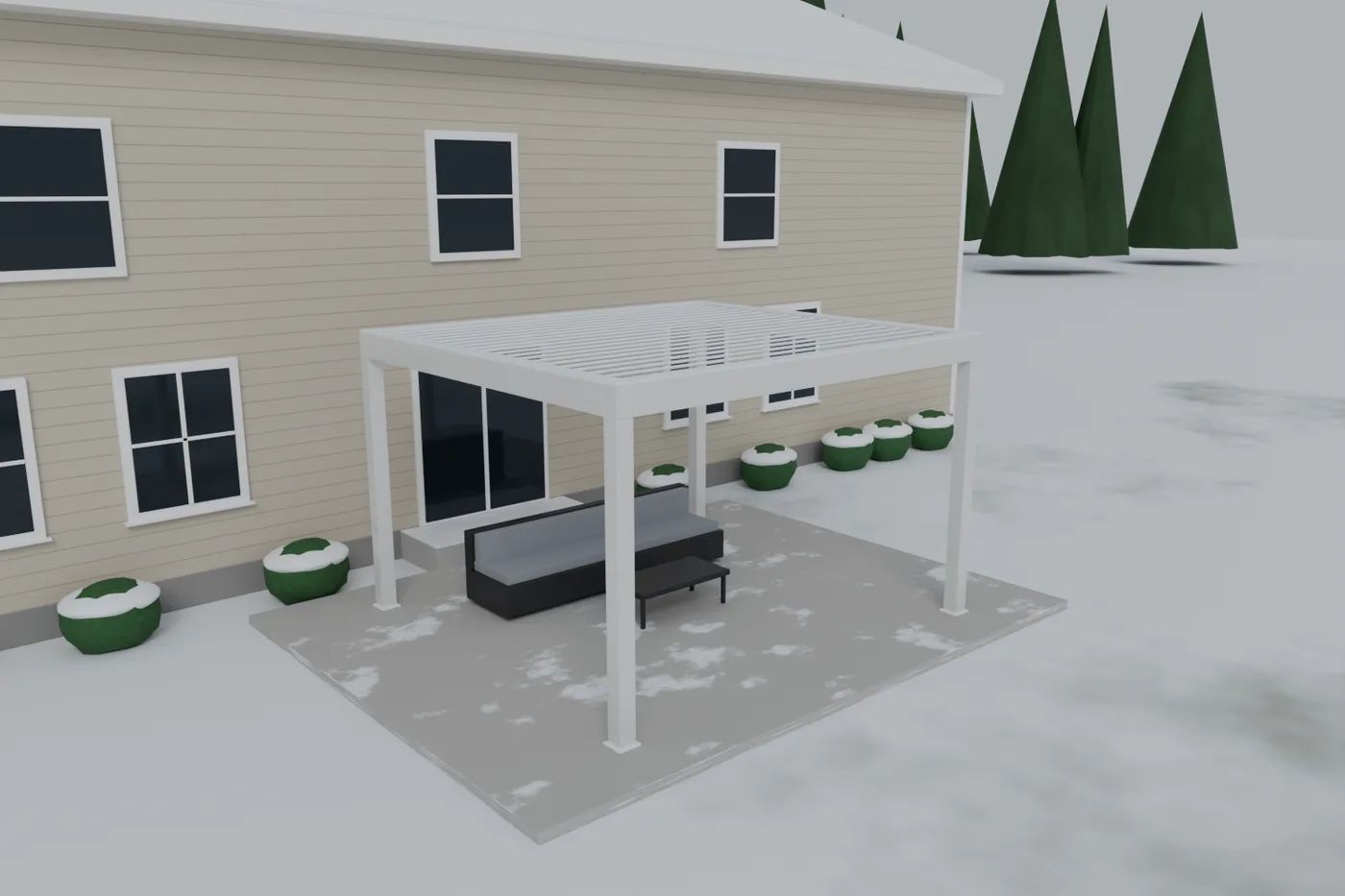
How Much Snow and Ice Does Charlotte Actually Get?
Not much in a typical year, which is part of why winter catches people off guard. The National Weather Service's snowfall records for Charlotte list a normal of about 4 inches for a whole season, and the 2022–23 and 2023–24 winters recorded none at all. Then January 2026 brought 11.8 inches at the airport. A Greater Charlotte pergola can go several years without seeing real snow and then get close to a foot of it in a single month.
Ice can be as much of a problem as snow here. Freezing rain and sleet coat every surface, add weight, and can bond moving parts together. They also tend to arrive with power outages, which matters if your roof has a motor.
So the practical goal is not to winterize a pergola the way you would in a northern state. It is to have a simple plan you can run the day before a forecast storm.
Should the Louvers Be Open or Closed During Snow?
There is no single answer that applies to every louvered roof, and it is worth knowing why. Each manufacturer engineers its louvers, seals, and motors differently, and their published guidance differs to match.
Azenco, which makes the R-BLADE and K-BANA, describes an optional temperature sensor for R-BLADE that watches for freezing conditions and opens the louvers to prevent snow and ice buildup. Answering an owner's question on its blog, Azenco said the roof may be able to stay closed in light to moderate snow, but in heavy snowfall it is generally safer to leave it open. Other manufacturers' operating guides say to set the louvers vertical before snow or strong wind, and at least one advises against running the motor below 35°F.
Those instructions are not interchangeable. Find the manual for your model, or ask the company that installed it, and write down three things: the position it recommends for snow, what it says about operating in freezing temperatures, and whether your system has sensors that act on their own. Use that, not a general rule from the internet, including this article.
How Much Snow Can a Louvered Pergola Hold?
Manufacturers publish snow-load ratings, and they vary a lot between products. Azenco's product pages list the motorized R-BLADE at up to 100 pounds per square foot and the manual K-BANA at up to 25 pounds per square foot. The words "up to" matter: a rating applies to a specific size, configuration, and installation, so your installer's paperwork is the better source for your structure.
Weight depends on what is falling. Wet snow and ice are much heavier than the same depth of dry powder, and Charlotte's winter storms often bring wet snow, sleet, or freezing rain. If a storm leaves heavy, wet accumulation or a thick glaze of ice on the structure, note how much is there and when it started melting, and ask your installer to take a look if anything seems off afterward.
Do not try to measure or clear it from on top of the roof. Louvers are not built to be walked on or leaned on, and an icy patio under a slick aluminum frame is a bad place for a ladder.
What to Do the Day Before a Snow or Ice Forecast
Most of the work happens before the weather turns. Once ice forms, your options shrink to waiting.
Set the louvers to the position your manual specifies while it is still above freezing and the power is on. A motorized roof cannot rotate without electricity, so if an ice storm knocks out power, the louvers stay wherever they were. If your system uses a rain sensor that closes the roof automatically, check how it interacts with any freeze setting so it does not undo the position you chose.
- Look up and follow the snow and freeze guidance for your exact model
- Set the louver position before temperatures drop and while power is available
- Clear leaves and debris from the roof gutters and the outlets at the base of the posts
- Retract motorized or manual side screens unless their manual says otherwise
- Bring in cushions, rugs, and lightweight furniture, and move anything that could be blown into the posts
- Turn off heaters and make sure nothing is stored against the posts or blocking drainage
- Note where post outlets discharge so you know where icy patches may form on the patio
What to Do After Snow or Ice Hits
Be patient. If the louvers are glazed or packed with snow, leave them alone until it melts. Running the motor against frozen blades, cranking a manual roof, or tapping at the ice can damage seals, drive parts, or the finish. Several manufacturers say directly not to operate the roof when ice is present. Pouring hot water on it is also a poor idea, because the water runs off and refreezes on the patio below.
Look the structure over from the ground once things thaw. Check that the louvers look even, the gutters are draining, and nothing struck the frame. Watch the patio near the posts, where meltwater discharges and can refreeze overnight. Azenco notes that keeping runoff from pooling under the pergola helps avoid ice patches, and that only works when the drainage path is open.
When the louvers are clear and the temperature is within what the manual allows, run the roof through a full cycle while you watch. If it hesitates, makes a new grinding or clicking sound, or a blade looks out of line, stop and contact the installer rather than trying again.
Do Sensors Handle Winter for You?
They can help, but they are not a reason to skip the plan. A temperature or freeze sensor only works if it was installed, is programmed for your system, and has power. Ask your installer which sensors you actually have and what each one does in freezing weather. If you are not sure, assume nothing will move on its own.
Retractable screens deserve separate attention. Their fabric, tracks, and motors have their own limits for wind and freezing conditions, and a screen frozen to its track can be damaged if you force it. Follow the screen manual, which often means retracting them before the storm.
If You Are Still Planning a Louvered Pergola
Winter is a good time to ask winter questions. Find out which snow rating applies to the size you are considering, whether a freeze sensor is available and what it does, how the gutters drain, and where the post outlets will discharge on your patio. Ask what the manual says about operating in freezing weather before you choose between a motorized and a manual system.
Those answers do not change how the pergola feels on a June afternoon, but they decide how much attention it needs on the few days a year when Charlotte ices over.
Plan a louvered pergola that fits every season
Request a Greater Charlotte consultation with Unique Patio Concepts to compare motorized and manual louvered pergolas, review drainage and screen options, and ask about winter operation for the system you are considering.
Request a free estimateFrequently asked questions
Should I open or close my louvered pergola when it snows?
Follow the manual for your exact model, because manufacturers differ. Azenco, for example, offers an optional R-BLADE temperature sensor that opens the louvers in freezing conditions and has said heavy snowfall is generally safer with the roof open. Other manufacturers say to set the louvers vertical before snow. Set the position before the storm, while the system still moves freely.
Can I run the motor if the louvers are frozen?
No. Wait until the ice melts and the temperature is within what your manual allows. Several manufacturers say not to operate the roof when ice is present, and forcing frozen blades can damage seals or drive parts.
How much snow can a louvered pergola hold?
It depends on the product and configuration. Azenco lists R-BLADE at up to 100 pounds per square foot and the manual K-BANA at up to 25 pounds per square foot. Your installer's documents are the best source for your specific structure.
Should I clear snow off my pergola?
Not by climbing on it or reaching across it with tools. Louvers are not designed to be walked on, and an icy patio makes ladder work risky. Let light snow melt. If heavy, wet snow or thick ice is sitting on the structure, contact your installer for guidance.
What happens if the power goes out during an ice storm?
A motorized roof stays in whatever position it was in when the power went out. That is why it helps to set the louvers to your manual's winter position before the storm arrives.