
Yes. A motorized louvered pergola needs electricity to operate the roof motor and controls. The exact electrical plan depends on the selected system, its location, the control package, and any accessories. In Greater Charlotte, power is usually coordinated before the posts, beams, patio, and house connection are finalized so conduit and wiring can be concealed. A qualified electrician should size the circuit, choose outdoor-rated components, provide required protection, and handle permits or inspections that apply at the property. Do not assume an existing patio outlet can power the whole project.
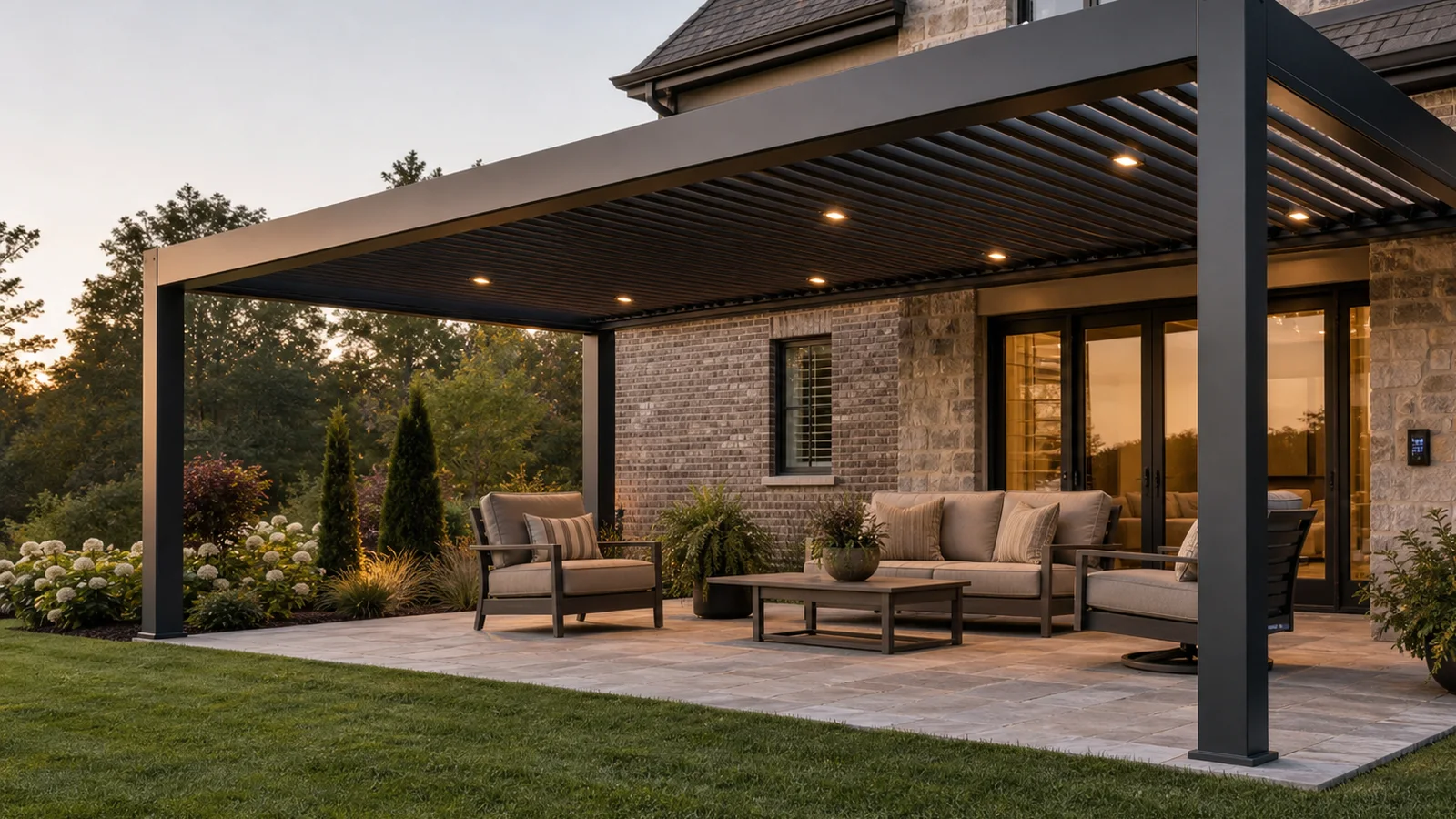
What Parts of a Motorized Pergola Need Power?
The roof motor is the obvious part. It rotates the aluminum louvers between open and closed positions, responding to the control system instead of a hand crank. Azenco describes R-BLADE as a motorized louvered pergola with remote, wall-control, app, and voice-control options. The controls still belong to one coordinated electrical package, even when the command starts on a phone.
Optional features can add more loads. Integrated lighting, retractable screens, ceiling fans, speakers, heaters, and convenience receptacles do not all share the same electrical requirements. A modest lighting package is a different design problem from several motorized screens and high-draw electric heaters.
Start with the way you want to use the patio, not a list of gadgets. If evening dining matters, lighting and outlet placement may come first. If late-day glare is the problem, a compatible powered screen may deserve an early conduit route. Planning the real priorities keeps the electrical scope useful without filling the structure with unnecessary equipment.
Where Does the Pergola's Electricity Come From?
Most projects connect to the home's electrical system through a route planned for the site. That route might pass through an exterior wall, attic, crawlspace, basement, buried conduit, or a combination of those areas. The shortest route is not always the cleanest or most practical once finished rooms, masonry, drainage, footings, and landscaping are considered.
An outlet near the patio does not automatically solve the problem. It may already serve other equipment, lack capacity for the proposed accessories, or sit in the wrong place for a permanent connection. The electrician needs the actual motor, controller, lighting, screen, fan, heater, and receptacle information—not a rough guess based on what is nearby.
For a detached pergola farther into the yard, underground routing often becomes part of the conversation. Utility locations, trench depth, paving, irrigation, tree roots, drainage, and future landscape work all affect that path. Call before digging and settle the route before new concrete or stone makes access harder.
Can the Wiring Be Hidden Inside the Pergola?
Often, much of it can be concealed within planned chases in the posts and beams, but that has to be coordinated with the specific pergola system. Structural aluminum members are not blank boxes that should be drilled wherever it is convenient. Motors, gutters, fasteners, screens, lights, and drainage channels already occupy defined space.
This is why electrical decisions belong in the design phase. The team can identify the preferred power-entry post, controller location, light positions, switch locations, and routes for future accessories before fabrication. Done early, that planning usually produces a cleaner patio with fewer visible surface runs.
Retrofitting is possible in some situations, but it can mean exposed conduit, limited fixture positions, reopened paving, or components that cannot be added neatly to the installed structure. If you think you may want screens, heaters, a fan, or an outdoor kitchen later, say so now. A spare pathway can be more valuable than buying every accessory on day one.
How Do Controls, Sensors, and Power Outages Work?
Control options vary by product and package. A wall control or remote may handle the basic roof movement, while app or voice integration can add convenience. Compatible sensors may automate a response to certain conditions. Those features should be confirmed for the exact system being quoted rather than assumed from a showroom demonstration or another homeowner's installation.
Ask what happens when power is lost. The answer can depend on the motor, controller, louver position, and installed options. Some systems may have a product-specific manual procedure; others require power to resume normal operation. Never force frozen, obstructed, or unpowered louvers. Use the installed manual and dealer instructions for that model.
Also decide where controls make sense in daily life. A switch hidden behind a sectional or across the patio from the back door gets old quickly. Good locations are easy to reach, protected as required, and clear of screen tracks, furniture, grills, and splash zones. If app control matters, confirm the home's network reaches the patio reliably instead of discovering a dead spot after installation.
Will the Electrical Work Need a Permit in Greater Charlotte?
Permit and inspection requirements depend on the address, jurisdiction, wiring scope, structure, and accessories. Charlotte, Mecklenburg County, and surrounding towns may not process every project in the same way. A new circuit, permanent outdoor wiring, lighting, receptacles, heaters, fans, or other equipment can affect the electrical review.
The cleanest approach is to confirm address-specific requirements before construction and have qualified trades coordinate their work. The pergola design establishes equipment and routing needs; the electrician determines circuiting, protection, wiring methods, and connections for the site. Structural and electrical approvals may run alongside HOA, zoning, setback, or other project reviews.
Bring the electrical conversation into the first site visit. Point out the panel, attic or crawlspace access, finished rooms between the panel and patio, irrigation, existing outdoor circuits, and every accessory you are considering. Unique Patio Concepts can help Greater Charlotte homeowners organize the pergola layout and accessory plan for a project-specific estimate.
- Which pergola model, motor, and control package are being proposed?
- Will the project include lights, screens, a fan, heaters, speakers, receptacles, or kitchen equipment?
- Which post should receive power, and can the route stay clear of footings and drainage?
- Where should wall controls, remotes, and app-connected equipment live?
- What does the installed manual say about outages, sensors, and emergency operation?
- Which permits and inspections apply at this specific address?
Plan the power before your pergola reaches the patio
Request a Greater Charlotte site consultation and project-specific motorized louvered pergola estimate from Unique Patio Concepts.
Request a free estimateFrequently asked questions
Can a motorized louvered pergola plug into an outdoor outlet?
Do not assume it can. The permanent connection, circuit capacity, protection, and wiring method depend on the selected motor, controls, accessories, and local requirements. A qualified electrician should review the actual equipment and existing circuit.
Does a louvered pergola need its own electrical circuit?
It may. The answer depends on the equipment specifications, existing loads, and accessories. Lighting and a roof motor present a different load profile from multiple screens, heaters, fans, or outdoor-kitchen equipment, so circuiting should be designed for the complete scope.
Can pergola lights and wiring be hidden?
Much of the wiring can often be concealed when routes and fixture locations are planned with the pergola manufacturer and electrician before fabrication. Unplanned retrofits are more likely to require visible conduit or limited placement.
Will the louvers still work during a power outage?
Normal motorized operation requires power. Product-specific procedures vary, so check the installed manual and dealer instructions. Do not force the roof by hand or improvise a procedure that could damage the motor, linkages, or louvers.
Can I add screens, heaters, or a fan later?
Sometimes, but compatibility, structure, clearances, power, controls, and wiring routes need review. Mention future accessories during the original design so pathways and mounting locations can be reserved even if the equipment is added later.
Who should install the electrical work for a Charlotte pergola?
Use a qualified electrician who can work from the selected equipment specifications and the address-specific requirements. The pergola designer and electrician should coordinate power entry, concealed routes, controls, accessories, grounding, protection, permits, and inspections.