
Not every outdoor kitchen in Charlotte needs plumbing. A simple layout with a grill, storage, prep counter, and weather-rated refrigerator may not need a water supply or drain. Plumbing enters the plan when you add a sink, dishwasher, ice maker, beverage station, or another appliance that uses water. That choice affects far more than the faucet: the route from the house, drainage method, venting, shutoffs, winter protection, cabinet access, electrical coordination, and address-specific permits all need to be considered before the patio, deck, or countertop is finished.
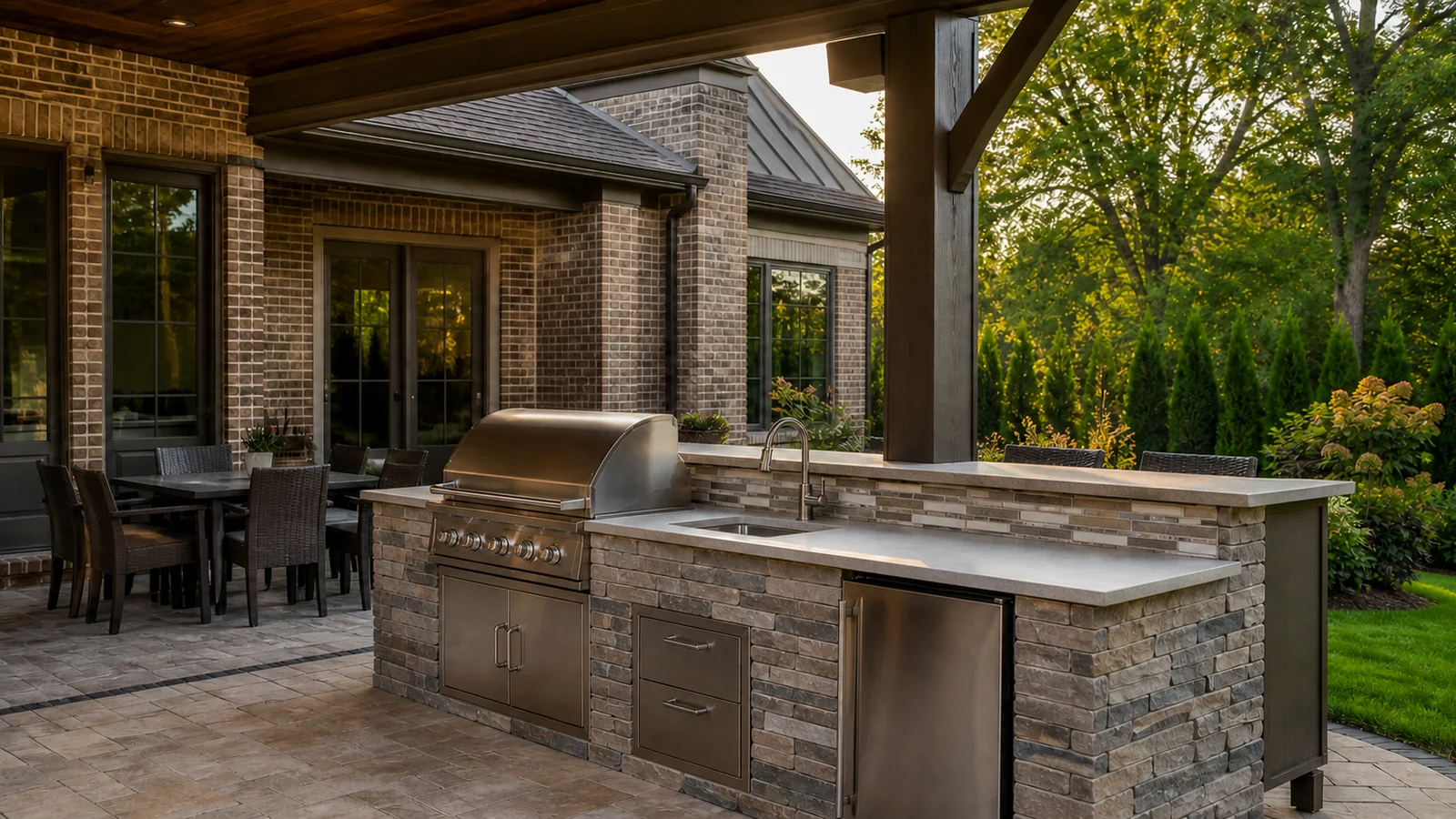
When Can an Outdoor Kitchen Work Without Plumbing?
Think about the trip from your indoor kitchen first. If the patio sits just outside the kitchen door, carrying a tray, rinsing utensils inside, and bringing dishes back may be easier than installing a second sink. A built-in grill, generous counter, drawers, trash pullout, and outdoor-rated refrigerator can handle most everyday cooking without a water line.
Skipping plumbing can also keep the layout flexible. There is no sink base to protect, no exposed supply line to drain before freezing weather, and no wastewater connection taking up cabinet space. But simple does not mean improvised. The grill may still need a properly planned gas connection or fuel storage, the refrigerator needs suitable power, and every appliance needs the clearances and ventilation listed by its manufacturer.
What Changes When You Add an Outdoor Sink?
The faucet is the visible part. Behind it, the project needs a supply route, shutoff valves, service access, a drain, and a plan for the portions of pipe exposed to outdoor temperatures. Hot water is another choice—not an automatic requirement. For a hand-rinsing or prep sink, some homeowners decide that cold water is enough. Others want hot water because they expect to wash greasy cookware outside. That decision changes the distance, equipment, energy use, and installation scope.
Wastewater needs a legitimate destination. Food residue, soap, grease, and cleaning products should not run through a loose hose onto the lawn or into a stormwater path. The correct connection and any venting or backflow details depend on the property and fixture layout. This is where a qualified plumbing professional and the current local review process matter. Get the route settled while the cabinets and patio are still lines on a plan—not after the stone is installed.
- Water supply route and an accessible shutoff
- Approved drain connection and any required venting
- A way to protect or drain vulnerable lines during freezing weather
- Access panels for valves, traps, connections, and future service
- Cabinet materials and floor drainage that can handle splashes
- Clear separation and coordination with gas and electrical components
Which Outdoor Kitchen Appliances Need More Utility Planning?
A dishwasher, ice maker, or plumbed beverage station adds more connections than a basic sink. Each appliance has its own requirements for water pressure, drainage, power, ventilation, clearances, and winter care. An indoor appliance placed under an outdoor counter is not a bargain if moisture, heat, or cold ruins it—or if its installation instructions do not allow the location.
The grill deserves its own utility conversation. A natural-gas grill needs a correctly sized and located gas supply. A propane setup needs safe cylinder storage and ventilation. Electric grills, refrigerators, lighting, receptacles, and ignition systems add electrical loads and outdoor-location requirements. None of those automatically means the kitchen needs plumbing, but they all compete for space inside the same island. Draw the cabinet interiors as carefully as the countertop.
- Sink: water supply, drainage, service access, and cold-weather plan
- Dishwasher: supply, drain, power, approved outdoor location, and winter instructions
- Ice maker: water quality, supply, drainage if required, power, and freeze protection
- Refrigerator: outdoor rating, ventilation, power, door clearance, and shade
- Gas grill: fuel type, line sizing or cylinder location, shutoff, ventilation, and clearances
- Lighting and outlets: outdoor-rated components placed around wet and hot zones
When Should Plumbing Be Planned for a Patio, Deck, or Pergola Project?
Before the hardscape starts. Utility routes may need to pass below a slab, through a deck frame, across a crawlspace, or inside a protected chase. A late sink decision can mean cutting new pavers, drilling finished masonry, sacrificing storage, or accepting a faucet in the wrong spot. Mark the grill, sink, refrigerator, trash, seating, doors, posts, stairs, and roof drainage on one plan so they do not collide.
Covered kitchens need another layer of coordination. Roof posts and footings can block the shortest route from the house. Downspouts should not empty beside the kitchen island. Smoke and heat need room to move away from ceilings, walls, windows, doors, and operable louvers according to the appliance and cover requirements. If a louvered pergola or solid patio cover is part of the project, design the structure and kitchen together instead of treating one as furniture beneath the other.
What Should Charlotte Homeowners Decide Before Requesting an Estimate?
Start with how you actually cook. A family that grills twice a week may value uninterrupted counter space more than a small sink. Someone who hosts large groups might prefer a prep sink, ice maker, refrigerator, and more storage. Walk the path to the indoor kitchen with a tray in your hands. That ten-second test often tells you which outdoor features will earn their space.
Then document the site. Note the house wall closest to the kitchen, crawlspace or slab conditions, electrical panel, possible gas source, hose bibs, existing drains, patio slope, deck framing, doors, windows, rooflines, and the location of utilities that should not be disturbed. Permit, trade, setback, utility, and HOA requirements vary by address and scope across Charlotte, Mecklenburg County, and nearby towns, so confirm the current path before ordering equipment or beginning excavation.
- List the meals you expect to prepare and which tasks truly need water outdoors.
- Choose every appliance before finalizing cabinet widths and utility rough-ins.
- Confirm whether the kitchen will use natural gas, propane, or electric cooking equipment.
- Map supply, drain, gas, power, lighting, roof drainage, and access routes together.
- Plan shutoffs and service panels where they remain reachable after the counters are installed.
- Verify current address-specific approvals and use qualified trades for regulated utility work.
Plan the kitchen and patio as one project
Request a Greater Charlotte site consultation and outdoor-living estimate from Unique Patio Concepts.
Request a free estimateFrequently asked questions
Can I have an outdoor kitchen with no sink?
Yes. A grill, counter, storage, trash pullout, and outdoor-rated refrigerator can make a very capable kitchen without a sink. The closer the patio is to the indoor kitchen, the easier that setup tends to be.
Can an outdoor sink drain into the yard?
Do not assume so. Sink water can contain food, grease, soap, and cleaning products, and it needs an approved drainage plan for the property. Confirm the current local requirements and connection details before construction.
Does an outdoor sink need hot water?
Not every outdoor sink needs hot water. The right choice depends on whether the sink is mainly for rinsing hands and produce or for washing cookware. Hot water adds equipment, energy, routing, and winter-care considerations.
How do you protect outdoor kitchen plumbing in winter?
The design should include accessible shutoffs and a product-specific method for draining or protecting vulnerable lines and appliances. Follow the installed equipment manuals and your plumber's instructions before freezing weather rather than relying on a generic checklist.
Does a gas grill mean the outdoor kitchen needs plumbing?
No. Gas piping and water plumbing are separate systems. A natural-gas grill still needs a properly planned gas line and shutoff, while a propane grill needs a compliant cylinder location and ventilation.
Should utilities go in before a new patio or deck is built?
Usually, the routes and rough-ins should be coordinated before finished hardscape, decking, cabinets, and countertops close the work area. The exact sequence depends on the site, structure, utility type, inspections, and chosen equipment.