
Yes, some composite decking can be pressure washed, but the product's current care guide decides how—not a universal setting copied from another deck. Capped composite boards from different manufacturers and product lines can have different pressure limits, nozzle requirements, spray distances, cleaners, and warranty conditions. Start with the gentlest method that fits the mess: remove loose debris, use an approved soap or deck cleaner, scrub with a soft-bristle brush, and rinse thoroughly. If the manufacturer permits a pressure washer, test a hidden area and keep the fan moving with the nozzle at the required distance. A narrow jet, excessive pressure, harsh chemical, or lingering pass can scar the cap, raise visible streaks, or drive dirty water into joints and against the house.
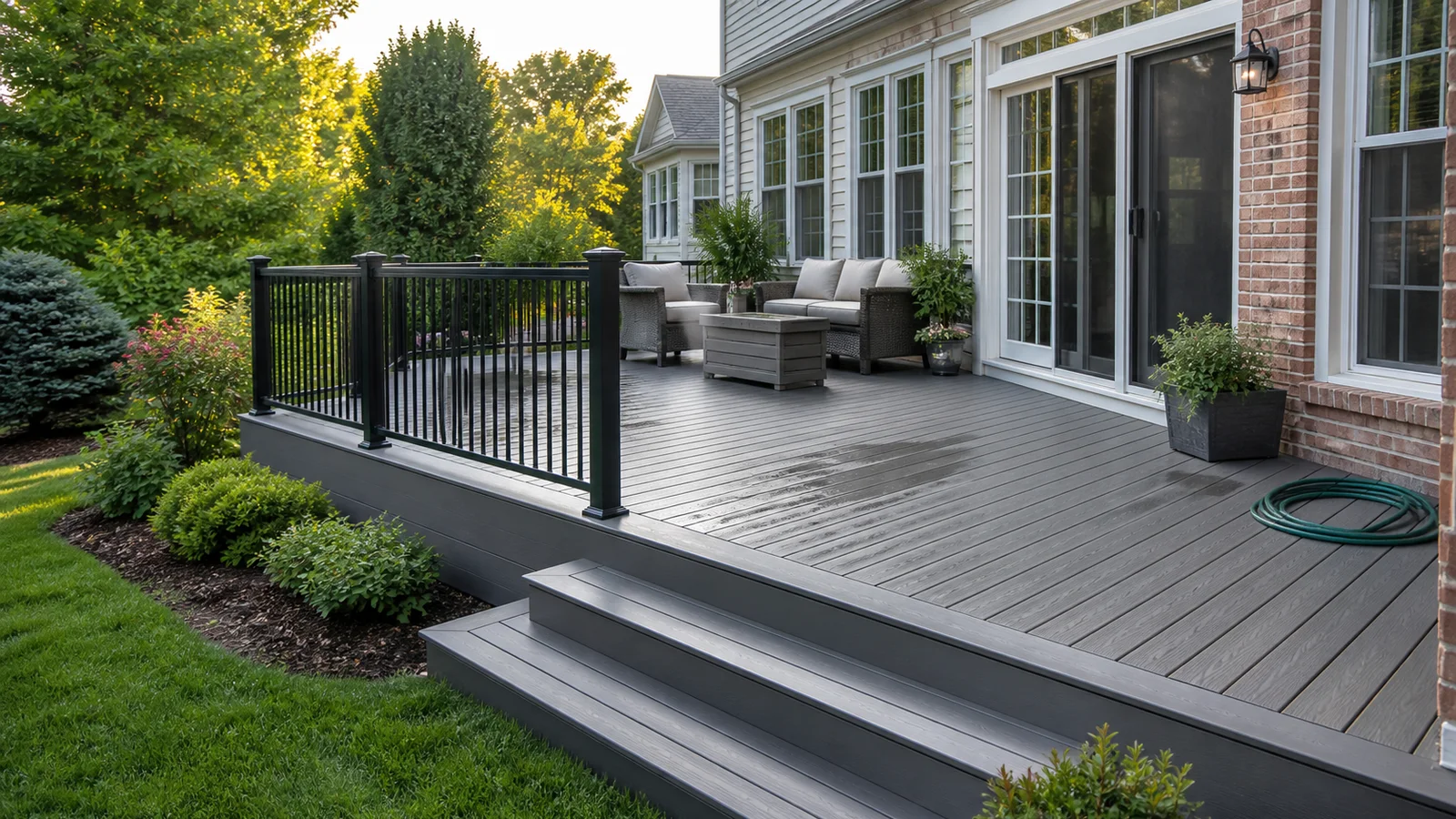
When Is Pressure Washing Composite Decking Safe?
Pressure washing is safe only when the decking maker allows it for the exact board installed and the operator follows that published method. That sounds fussy, but composite decking is not one material. Older uncapped boards, modern capped composites, PVC boards, and different finish lines can react differently to pressure, heat, chemicals, and abrasion.
Trex, for example, publishes pressure-washing directions for certain current high-performance product lines, along with limits for pressure, fan attachments, soap, distance, and rinsing. That is useful guidance for those named products—not permission to copy the same settings onto every deck. Another manufacturer, an older board, or a discontinued line may call for a gentler method. If you cannot identify the product, begin with low-risk hand cleaning and ask the manufacturer or installer before using powered equipment.
Even an approved machine can cause damage when used badly. A zero-degree tip concentrates force into a tiny area. Pausing over one stain can leave a light stripe or etched patch. Spraying into board ends, open seams, siding joints, door thresholds, electrical fixtures, or railing connections can send water where it does not belong. The safest technique uses a broad fan, steady movement, the specified distance, and enough restraint to stop when the stain needs a different treatment rather than more force.
- Find an invoice, spare board label, product stamp, installation photo, or manufacturer profile that identifies the decking.
- Read the current care guide for that exact line, including prohibited cleaners and tools.
- Test the complete method on a shaded, inconspicuous area and let it dry before cleaning the main field.
- Work with the board direction where practical and avoid stopping the spray over one spot.
- Do not aim high-pressure water into gaps, exposed ends, flashing, vents, outlets, or the house wall.
What Is the Safest Way to Clean Charlotte Pollen and Everyday Dirt?
Most spring pollen does not need a pressure washer. Sweep or blow off loose material first, paying attention to corners, stair treads, and the strip beside the house. Then wet a small section, apply a cleaner approved for the board, agitate it with a soft-bristle brush, and rinse before the solution dries. Simple. The goal is to lift the film, not grind it into the texture.
Work on a cooler surface when possible. Direct afternoon sun can dry soap quickly and leave a haze before you reach the rinse. Cleaning in sections also makes it easier to control runoff. Start near the house only when you can keep water out of door thresholds and wall joints, then move toward the deck's safe drainage edge rather than pushing dirty water back against the building.
Pollen returns fast in Greater Charlotte, especially near pines and mature hardwoods. A light rinse during peak season is easier on the deck than waiting for pollen, foot traffic, food spills, and damp leaves to form one stubborn layer. Move planters and outdoor rugs occasionally, too. Trapped debris and slow-drying areas often create the darkest outlines on an otherwise clean deck.
- Remove leaves, twigs, grit, and loose pollen before adding water.
- Use the board manufacturer's approved soap or cleaner and a non-scratching brush.
- Rinse rail bases, stair corners, and board gaps without blasting water into concealed spaces.
- Let the deck dry before returning rugs, planters, grills, or furniture to their usual spots.
Do Grease, Mildew, Rust, and Leaf Stains Need Different Cleaners?
They do. More pressure is not a universal stain remover. Grease from a grill, tannins from wet leaves, mildew growing on surface dirt, rust transferred from a planter, sunscreen, and hard-water deposits are different problems. The cleaner that helps one may discolor the deck, damage nearby metal, or set another stain.
Act quickly on food and grease. Blot or remove the spill without spreading it, then follow the decking maker's soap or stain-treatment guidance. Keep grill mats and drip trays compatible with the board and do not leave greasy runoff in the seams. If the mark remains after the approved first pass, pause. Repeated aggressive scrubbing can make a dull patch that is more noticeable than the original spot.
Mold and mildew usually feed on organic material sitting on the surface rather than on the synthetic board itself. Clear the leaves and dirt, improve drying, and use only a treatment approved for the product. Never mix cleaning chemicals. Rust, mineral deposits, paint, adhesive, and ice-melt residue deserve the same product-specific approach. Photograph the stain and the board identification before trying a specialty chemical; that gives the manufacturer or installer something useful to evaluate.
- Grease and food: clean promptly using the approved soap or stain method.
- Mold or mildew: remove the organic debris, restore airflow, and use the specified treatment.
- Rust or mineral marks: confirm chemical compatibility before spot cleaning.
- Paint, adhesive, or sealant: ask before scraping or using solvents that could soften the cap.
- Unknown stain: test a hidden area and stop if color, sheen, or texture changes.
How Do You Protect Railings, Landscaping, and the House While Cleaning?
Deck cleaning is also a water-management job. Before you begin, close doors and windows, check weather stripping, cover or avoid electrical fixtures as their instructions require, and move anything that blocks the drainage path. Do not force water under siding, through door tracks, behind ledger flashing, or into railing-post sleeves. Those details matter even when the board surface looks waterproof.
Look below the deck. Runoff can carry cleaner, pollen, grease, and grit into planting beds, onto a lower patio, toward a pool, or across a neighbor's property. Follow every cleaner's label for plant protection, containment, dilution, and disposal. More water is not always the answer if it simply moves contamination somewhere worse.
The cleanup can reveal maintenance issues worth fixing. Standing water may point to a blocked gap or a settled area. Dark staining near the house may trace back to a downspout. Loose railing hardware, moving stair trim, popped fasteners, damaged caps, and decayed wood framing below a composite surface need repair—not another cleaning pass. Composite boards reduce some maintenance, but the deck is still a structure with connections, drainage, guards, stairs, and supports.
What Maintenance Routine Works for a Composite Deck in Charlotte?
There is no need to turn deck care into a weekly project. Sweep when leaves and grit collect, rinse heavy pollen before it cakes into corners, and clean spills when they happen. A deeper wash can follow the manufacturer's schedule and the deck's actual exposure. A shaded deck under trees may need attention sooner than an open deck that dries quickly after rain.
Twice a year is a useful time to look beyond the surface. From the ground and other safe, accessible areas, check board condition, fasteners, railings, stairs, flashing, joists, beams, posts, footings, and drainage. Do not crawl into unsafe spaces or dismantle trim just to inspect. Movement, persistent moisture, corrosion, or structural concerns deserve a qualified review.
If you are planning a new deck, maintenance starts in the design. Sensible board spacing, good drainage, accessible edges, grill placement, planter protection, and enough room to move furniture all make cleaning easier. Unique Patio Concepts can help Greater Charlotte homeowners plan a deck and any future patio cover or pergola as one outdoor room, with water, shade, traffic, and upkeep considered before construction begins.
- Keep leaves and grit from building up in corners and around posts.
- Move mats, planters, and furniture so covered areas can dry and be inspected.
- Manage grill grease and protect the surface with compatible accessories.
- Trace recurring wet spots to gutters, downspouts, grade, plumbing, or blocked drainage.
- Save the board care guide and product information with the deck records.
- Get qualified help for loose guards, unstable stairs, framing movement, decay, or persistent leaks.
Plan a deck that is easier to enjoy—and easier to care for
Request a Greater Charlotte deck and outdoor-living consultation from Unique Patio Concepts.
Request a free estimateFrequently asked questions
What pressure should I use to wash composite decking?
Use only the maximum pressure and setup published for the exact decking brand and product line. There is no safe universal PSI. The required fan tip, distance, soap, direction, and rinsing method matter along with the number on the machine.
Can a pressure washer leave marks on composite boards?
Yes. Excessive pressure, a narrow tip, spraying too close, or pausing in one area can leave streaks, scarring, or a changed sheen. Test a hidden area, use the approved method, and stop if the dried surface looks different.
What is the best way to remove pollen from composite decking?
Sweep away loose pollen, wash a manageable section with an approved mild cleaner and soft-bristle brush, then rinse before it dries. During Charlotte's heaviest pollen weeks, a light rinse can prevent a thicker film from building up.
Can I use bleach on composite decking?
Do not assume household bleach or a bleach-based mix is safe. Follow the exact board manufacturer's current stain and mold guidance plus the cleaner label. Never mix chemicals, and protect nearby metal, plants, soil, and water features.
Do I need to seal composite decking after cleaning?
Most capped composite decking is not maintained like unfinished wood, but products differ. Do not apply a sealer, stain, wax, or coating unless the decking manufacturer specifically approves it for that line and the surface condition.
How often should a composite deck be cleaned in Charlotte?
Clean spills promptly and remove leaves or grit as they collect. Schedule deeper cleaning around the manufacturer's guidance and the site. Trees, shade, pollen, grill use, drainage, outdoor rugs, and how quickly the deck dries all affect the interval.