
Yes. Motorized retractable screens can be added to many louvered pergola designs, and Azenco lists motorized screens among the available R-BLADE options. The cleanest result comes from planning the screens with the structure: each opening needs a compatible span, straight side tracks, a clear landing surface, protected power and controls, and enough room for furniture and doors when the screen is down. Screens can improve afternoon shade, privacy, and insect control, but the exact result depends on the selected mesh, the open sides, wind exposure, and how the patio will be used.
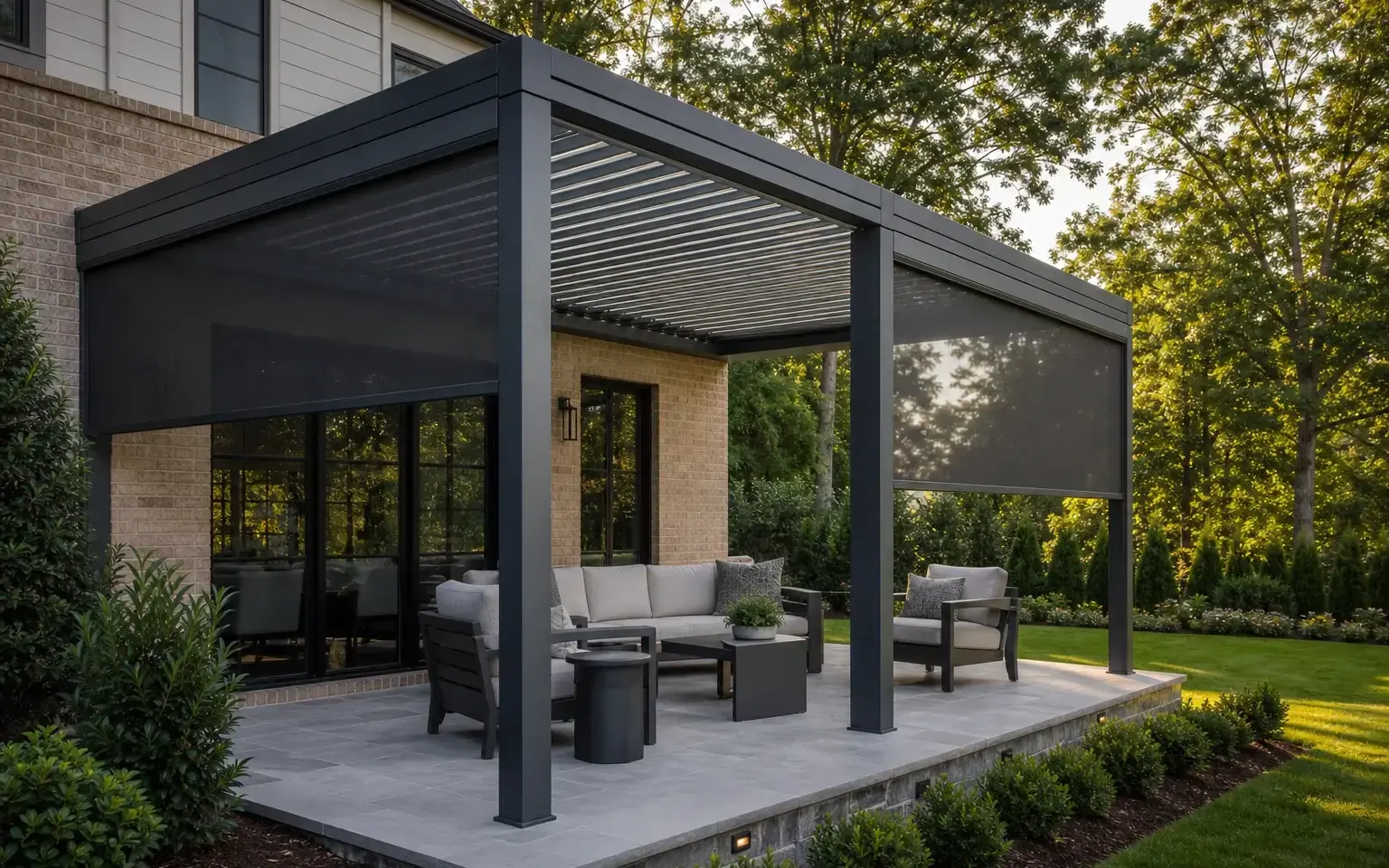
How Do Retractable Screens Fit a Louvered Pergola?
A pergola screen typically rolls into a cassette near the top beam and travels vertically in side tracks. When raised, it leaves the opening clear. When lowered, it creates a flexible side barrier without changing the roof position. The screen and the louvers do separate jobs: the roof manages overhead sun and rain, while the screen helps with conditions arriving from the side.
Azenco presents motorized screens as an available R-BLADE feature and describes the pergola's lighting, screens, and louver positions as controllable parts of its smart outdoor-living system. That confirms the combination is an intended option, not an improvised add-on. The actual screen model, controls, mesh, and opening size still need to be selected for the specific project.
Good integration is mostly invisible. Cassettes align with the beams, tracks sit neatly against posts, wiring stays protected, and the lowered screen meets a planned floor edge. Those details are much harder to resolve after posts, pavers, railings, and electrical finishes are already in place.
Do Pergola Screens Help With Shade, Privacy, and Mosquitoes?
They can, but one fabric does not maximize every benefit. A denser or darker screen can cut glare and make a west-facing patio feel more private, while a more open mesh may preserve the view and airflow. Insect-focused mesh needs suitable openings and tight edge details; a wide gap at the floor or an unscreened side can limit the result.
For a Charlotte patio, the most useful screen may be the one facing the low afternoon sun rather than a full four-sided package. A poolside lounge may prioritize glare and privacy. A dining area near landscaping may put more weight on insect control. The right answer comes from identifying when the patio is uncomfortable and which direction the problem arrives from.
Screens also change the feel of the space. Lowering several sides can reduce cross-breeze and make the pergola feel more enclosed. That may be welcome on a bright evening, but it matters around heat-producing appliances. Screens should never be used in a way that conflicts with a grill or outdoor appliance manufacturer's clearance and ventilation instructions.
What Layout Details Should Be Planned Before Installation?
Start with every opening between posts. The width, height, post alignment, beam depth, patio edge, and floor level determine whether a screen can travel cleanly. A sloped patio, raised deck, railing, retaining wall, or step may require a different screen boundary than the prettiest elevation drawing suggests.
Then test the furnished layout with the screens down. Leave a sensible route between the house, seating, pool, yard, and outdoor kitchen. A chair, door swing, cabinet, television, or grill lid should not occupy the screen's travel path. If one opening is the main exit, decide whether it should remain open or use a separate passage strategy.
Finally, coordinate the screen package with louver zones, gutters, drainage outlets, lights, fans, heaters, sensors, and controls. One tidy drawing can prevent a screen cassette from competing with a light, a side track from landing on a drain outlet, or furniture from blocking a necessary exit.
- Measure each clear opening after accounting for beams, posts, trim, and finished floor height.
- Map the low afternoon sun, neighboring sightlines, prevailing breeze, and insect-prone landscaping.
- Mark doors, steps, railings, cabinets, appliances, seating, and primary walking routes.
- Choose which openings genuinely need screens instead of enclosing every side by default.
- Coordinate power, wall controls, remotes, sensors, lighting, and protected wiring routes.
- Confirm how the lower edge meets pavers, decking, concrete, or another finished surface.
Can Retractable Screens Stay Down in Charlotte Wind and Storms?
Do not treat a retractable screen as a fixed wall. Wind can load the fabric and tracks, and gusts around a house corner can be stronger than conditions in the middle of the yard. The safe operating range and required response to changing weather depend on the installed screen system, opening size, and manufacturer instructions.
Before a Charlotte thunderstorm or strong-wind event, follow the product manual and dealer guidance for the screens and pergola. That may mean raising the screens, securing loose furniture, placing the louvers in the specified storm position, and disconnecting or protecting power as directed. Do not rely on a general blog post to override the installed system's instructions.
If a screen binds, wrinkles sharply, leaves its track, or stops unevenly, stop operating it. Check only what is safely visible from the ground. Do not pull on powered fabric, open the cassette, bypass a control, or force the screen through an obstruction.
Is It Easier to Add Screens to a New or Existing Pergola?
A new pergola gives the designer the most control. Post spacing, beam configuration, electrical service, patio edges, accessories, and screen landings can all be coordinated before fabrication. It is usually the best path when screens are a daily-use priority rather than a feature you may add someday.
An existing louvered pergola may still accept screens, but it needs a field review. The team should identify the exact structure and screen compatibility, measure the finished openings, inspect posts and beams, locate power, and check whether furniture, stairs, railings, outlets, or uneven floors interfere. A screen that fits the opening on paper can still be awkward in real use.
Avoid assuming that a screen package from one pergola brand or model fits another. Hardware, controls, tracks, spans, wind guidance, and mounting details can differ. Use components approved for the installed system and get project-specific direction from the manufacturer or qualified dealer.
How Should You Plan a Screened Pergola for a Charlotte Backyard?
Begin with the problem, not the product list. Note whether late-day sun, mosquitoes, neighbor sightlines, wind-driven rain, or an exposed television is reducing patio time. Record when it happens and from which side. You may discover that two well-placed screens solve more than four screens chosen without a site study.
Next, compare those priorities with the patio plan. An R-BLADE can provide adjustable overhead sun, shade, and airflow, while coordinated screens handle selected side exposures. If dependable fixed shade is the bigger need, compare a solid patio cover before locking the structure. If a more enclosed room is the goal, a screen room or porch enclosure may be the better category.
Permit and review requirements vary by property, structure, electrical scope, and jurisdiction. Charlotte, unincorporated Mecklenburg County, Concord, Matthews, Mooresville, and Fort Mill may not follow the same path. Confirm the current requirements for the actual address, and treat HOA or architectural review as a separate approval when it applies.
Unique Patio Concepts can evaluate the sun, views, openings, floor, electrical needs, and furniture plan, then prepare a site-specific pergola and screen estimate. That conversation is the right place to choose mesh, controls, opening locations, and the product-specific operating guidance you will use after installation.
Plan the roof, screens, and patio as one outdoor room
Request a Greater Charlotte site consultation and project-specific R-BLADE screen estimate from Unique Patio Concepts.
Request a free estimateFrequently asked questions
Can motorized screens be added to an R-BLADE pergola?
Yes. Azenco lists motorized screens among the available R-BLADE options. Plan them with the pergola whenever possible so cassettes, tracks, power, controls, posts, and finished floor edges work together.
Will retractable screens keep all mosquitoes out?
They can significantly improve insect control when the selected mesh and all screened edges fit tightly, but results still depend on open sides, doors, floor gaps, landscaping, and how often people move through the space. Retractable screens make an open pergola more comfortable; they do not turn it into a completely sealed room.
Do screens block the view from under a pergola?
Every mesh changes the view to some degree. Openness, color, lighting, and the distance to the landscape affect visibility. Compare real samples from both sides in daylight before choosing between stronger shade or privacy and a clearer view.
Can pergola screens be controlled with the louvers?
Azenco describes smart control options for R-BLADE features including lighting, screens, and louver positions. The exact app, remote, wall-control, sensor, and automation behavior depends on the selected equipment and installed configuration.
Should retractable screens be raised during a storm?
Follow the manual and dealer instructions for the exact screen system. Retractable screens should not be treated as permanent wind walls, and severe weather may require them to be raised along with other product-specific storm preparations.
How much do pergola screens cost in Charlotte?
A reliable estimate needs the number and size of openings, mesh and control choices, electrical access, existing structure compatibility, floor conditions, and installation access. Request a site-specific quote instead of relying on a generic per-screen figure.