
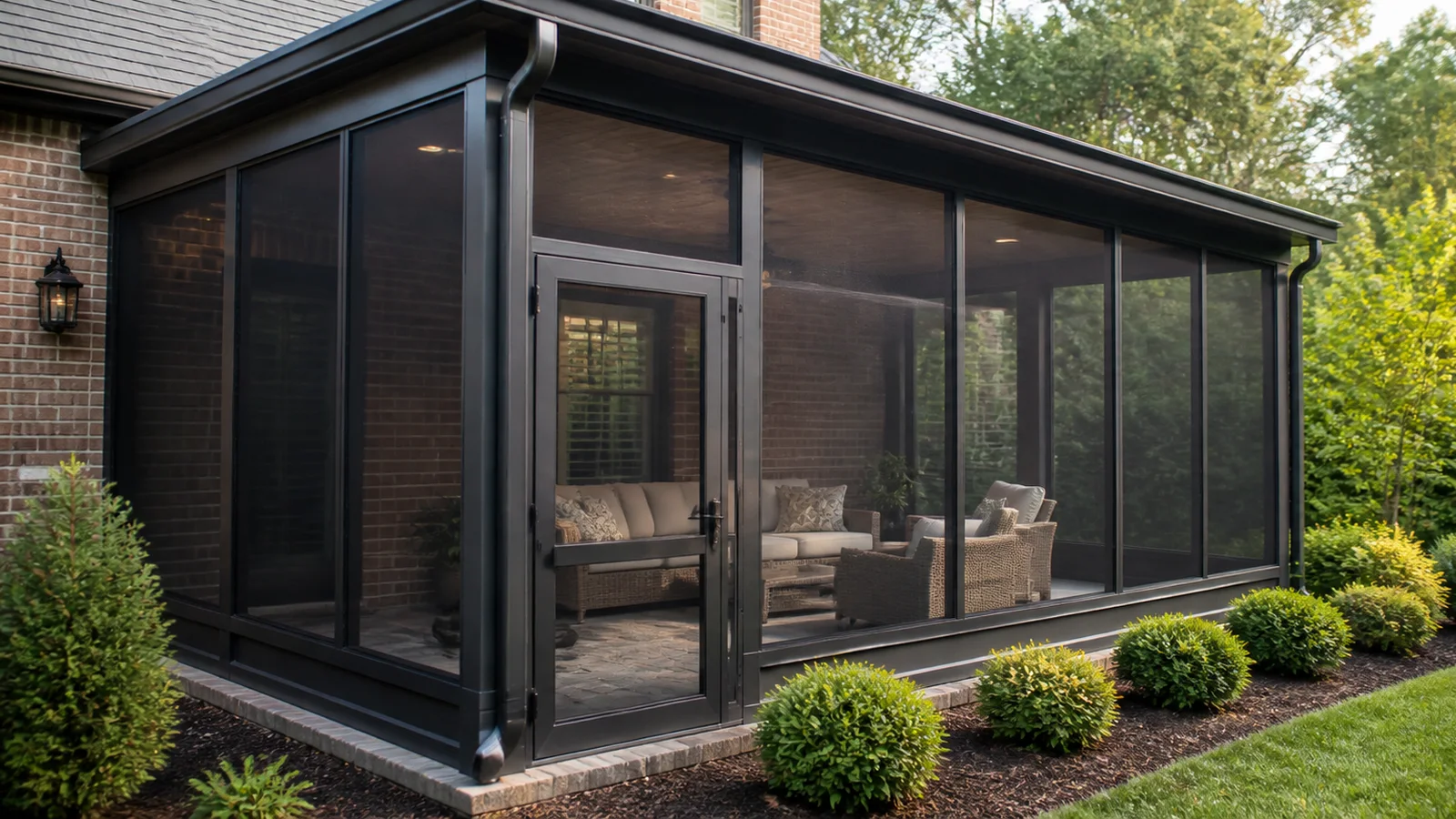
You cannot keep every grain of pollen out of an open-air screen room. Standard insect screen blocks bugs and larger debris, not the finest airborne particles. The best approach in Greater Charlotte is to reduce what settles, make the room easy to clean, and remove buildup before it turns sticky: keep nearby gutters and drainage clear, choose washable cushions and smooth finishes, cover small electronics, vacuum gently, wipe hard surfaces with a damp microfiber cloth, and rinse approved screen panels according to the enclosure manufacturer's care instructions.
Why Does Pollen Get Through a Screen Room?
A screen room is designed to keep out insects and larger yard debris while preserving airflow. That airflow is exactly why the room feels comfortable—and why some pollen still arrives. Fine airborne particles can pass through ordinary insect screen, drift through the door, or ride in on shoes, pets, cushions, and anything carried outside.
Charlotte's yellow spring coating is the obvious offender, but it is not the only season that matters. Trees, grasses, and weeds release pollen at different times. Dry, breezy weather can move it across a clean patio in hours. A thunderstorm may rinse the air, then leave a damp film that grabs the next round of dust and pollen.
So the realistic goal is not a perfectly sealed bubble. It is a room that collects less mess, cleans up quickly, and does not trap moisture. If pollen-free conditioned space is the priority, a screen room may not be the right enclosure type; a sunroom or another more enclosed design deserves a separate conversation.
Which Screen Room Choices Make Pollen Cleanup Easier?
The easiest room to maintain is planned for cleaning before it is furnished. Smooth powder-coated aluminum frames, accessible screen panels, a washable hard floor, sensible roof drainage, and enough space to reach the perimeter all help. Deep ledges and crowded corners look harmless on a drawing but become pollen shelves in April.
Furniture matters just as much. Choose outdoor cushions with removable, washable covers and quick-drying inserts. A tightly woven outdoor rug is usually easier to vacuum than a deep pile. Fewer tiny accessories mean fewer pieces to wipe down, and storage boxes can protect blankets, remotes, games, and serving items when they are not in use.
Think about the door, too. A self-closing or reliably latching screened door will not stop pollen, but it can reduce the time the opening stands wide. Place a washable mat outside and another just inside. It is a small detail that catches grit and yellow dust before it reaches the seating area.
What Is the Best Way to Clean Pollen From a Screen Room?
Start dry and gentle. On a calm day, remove or cover delicate items, then use a vacuum with a soft brush attachment on frames, corners, furniture, and accessible screen surfaces. Work from the top of the room toward the floor. That keeps loosened dust from landing on something you already cleaned.
Next, wipe hard surfaces with a damp microfiber cloth. Plain water may be enough for a light coating. For heavier soil, use only a mild solution that is allowed by the frame, finish, screen, sealant, furniture, and flooring manufacturers. Test it in a small hidden spot first. More soap is not better; leftover film can catch the next wave of pollen.
Screen panels need a light touch. Support the material rather than pushing hard against it, and avoid sharp tools or abrasive pads. If the installed product's care instructions allow rinsing, use low pressure and keep water moving toward intended drainage—not into doors, electrical equipment, wall penetrations, or the house. Let the room and soft furnishings dry fully before closing it up.
- Pick a calm, dry window so fresh pollen is not blowing onto wet surfaces.
- Photograph or note any loose spline, torn mesh, failed sealant, stains, or drainage issues before cleaning.
- Vacuum frames, corners, screens, furniture, and floors with nonabrasive attachments.
- Damp-wipe hard surfaces using product-approved cleaners and soft cloths.
- Rinse only where the installed care instructions permit it, using low pressure and controlled water flow.
- Dry cushions, rugs, tracks, and corners completely before replacing covers or stored items.
What Should You Avoid When Removing Pollen?
A pressure washer can turn a quick cleanup into damaged mesh, stripped finish, forced water, or failed seals. Do not use one on the enclosure unless the manufacturer of the exact installed system provides a specific approved method. The same caution applies to bleach, strong solvents, abrasive powders, stiff brushes, and magic-eraser-style products on coated aluminum.
Do not climb on furniture, screens, roof panels, or enclosure framing to reach a high spot. Use safe ground-level tools for what is accessible and arrange appropriate professional help for anything beyond that. Roof drainage, high exterior panels, and the house connection are not worth an improvised ladder setup over a patio.
And do not force a screen panel, door, track, or fastener that seems stuck. Pollen may be hiding a mechanical issue, torn screen, shifted frame, or blocked weep path. Cleaning should not require dismantling the enclosure. Record the problem and refer to the product manual or the company responsible for that specific system.
A Simple Charlotte Pollen-Season Plan
During the heaviest pollen stretch, a five-minute reset beats one exhausting deep clean. Keep a covered basket for cushions and blankets, wipe the table before meals, vacuum the walking path and seating area, and empty the outside mat. After storms, look from ground level for overflowing gutters, standing water, damp corners, or fresh debris along the enclosure base.
Once the visible coating eases, do a fuller top-to-bottom cleaning and inspect the room in daylight. Look for small screen tears, loose door hardware, worn sweeps, gaps, damaged finish, and places where water is not draining as expected. Catching those issues early helps the room stay pleasant through summer gatherings and the next leaf season.
Planning a new enclosure? Unique Patio Concepts can help Greater Charlotte homeowners compare a screen room with more enclosed outdoor-living options and design the structure around the property, exposure, drainage, and everyday use. The right answer depends on how much airflow, weather separation, temperature control, and maintenance you actually want.
Plan an outdoor room that fits how you want to use it
Request a Greater Charlotte site consultation and project-specific outdoor living estimate from Unique Patio Concepts.
Request a free estimateFrequently asked questions
Will a screen room block all pollen?
No. Standard insect screen is meant to preserve airflow while blocking insects and larger debris. Fine pollen can pass through the mesh, enter at doors, and ride in on shoes or furnishings. A screen room can reduce outdoor mess, but it is not an airtight or filtered interior room.
Can you hose pollen off screen room panels?
Sometimes, but follow the care instructions for the exact installed enclosure. Where rinsing is allowed, use low pressure, support the screen, and direct water toward intended drainage. Keep water away from electrical equipment, house penetrations, and areas that are not designed to get wet.
Can you pressure-wash a screen room?
Do not pressure-wash the enclosure unless the manufacturer of that specific system provides an approved method. High pressure can stretch or tear mesh, damage finishes and seals, and drive water into tracks, walls, or electrical components.
How often should a Charlotte screen room be cleaned during pollen season?
There is no single schedule. During a heavy stretch, quick dry cleaning once or twice a week may be easier than waiting for a thick layer. Wind, nearby trees, rain, door use, furnishings, and the room's exposure all affect how fast pollen returns.
Do tighter screens stop more pollen?
A finer mesh may reduce some particles, but it can also change airflow, visibility, wind load, and how the enclosure performs. Do not swap screen material based on mesh size alone. Confirm compatibility with the enclosure manufacturer and the structural design first.
Is a sunroom better than a screen room for pollen control?
A more enclosed sunroom can provide greater separation from outdoor pollen than insect screen, especially when it uses closed windows and an appropriate conditioned or filtered-air strategy. It is also a different project with different cost, comfort, permitting, and construction considerations.