
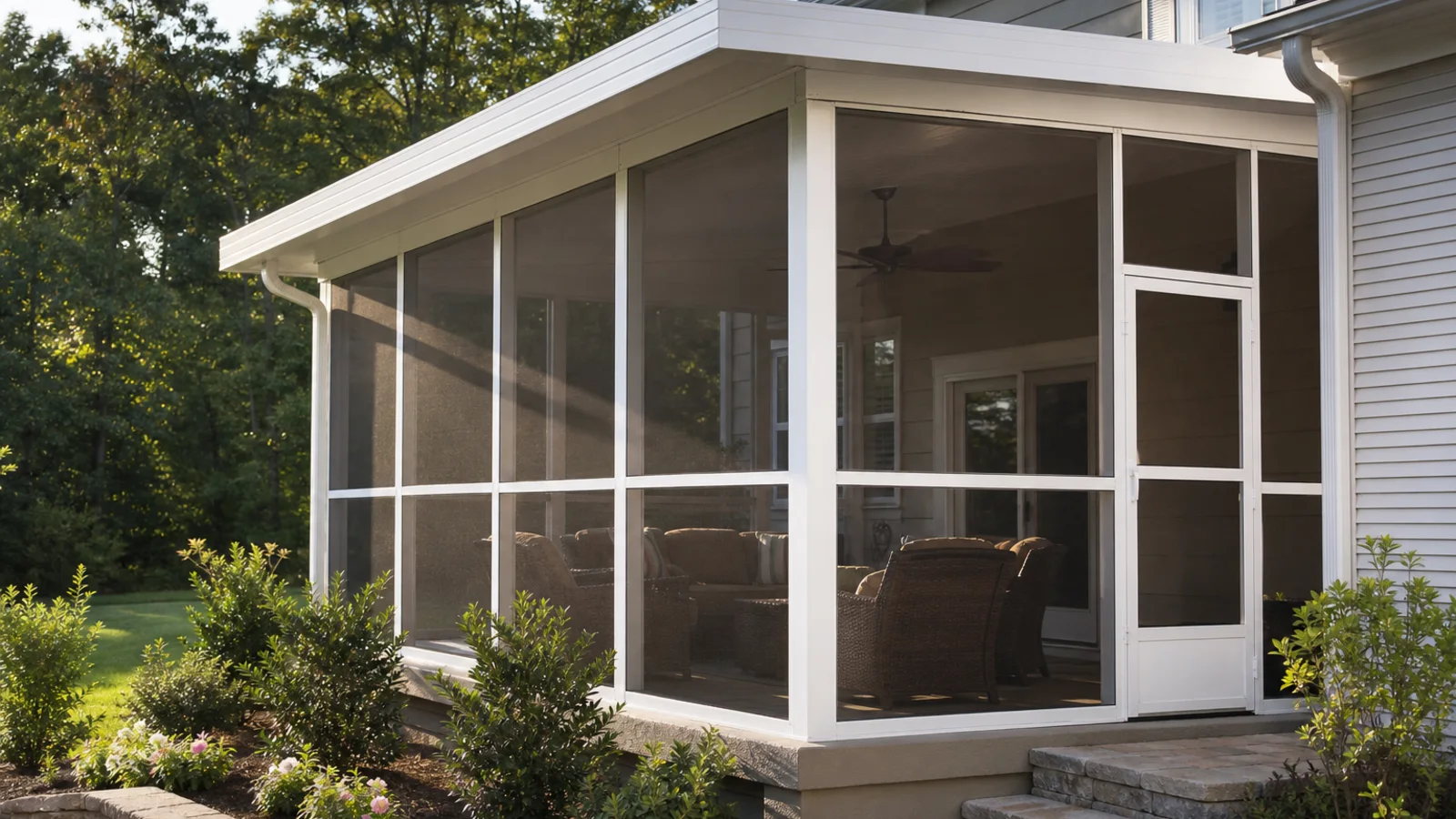
A well-designed screen room can keep most straight-down rain off the covered floor, but it will not keep the room completely dry in every Charlotte storm. The solid roof, gutters, flashing, and downspouts manage water from above. Rain driven sideways by wind can still pass through insect mesh or enter around the screened door. The practical goal is a weather-tolerant outdoor room: use quick-drying furnishings, choose a floor that can handle occasional moisture, keep drainage paths open, and plan the roof overhang and screen layout around the property's exposure.
What Kind of Rain Does a Screen Room Stop?
Start with the roof. A solid, properly flashed roof blocks rain falling from above and directs that water toward its edge or gutter system. That is the biggest difference between a roofed screen room and an uncovered screened structure. Chairs, tables, and the main walking area stay far more protected during an ordinary shower.
The walls work differently. Insect mesh has thousands of openings so air can move through the room. Those openings also allow fine droplets through when wind pushes rain sideways. A calm summer shower may leave the room mostly dry, while a fast thunderstorm from the exposed side can wet the first several feet of floor and furniture.
That is normal outdoor-room behavior, not proof that every damp spot is acceptable. Water entering evenly through an exposed mesh wall during strong wind is different from a concentrated drip at flashing, a roof seam, a door header, or the house connection. Note where the water starts and what the weather was doing before deciding what needs attention.
Which Design Details Help a Screen Room Stay Drier?
Roof projection matters. An overhang can move the drip line beyond the screen wall and reduce the amount of water falling directly beside the mesh. It cannot block low, wind-driven rain from every direction, and making it deeper affects structure, shade, appearance, gutters, setbacks, and the view from inside the house.
The most exposed wall deserves special attention. A west-facing opening may take the force of late-day storms, while another property may be protected by the house, trees, or a neighboring structure. Screen panel size, room height, sill details, door location, roof pitch, and the relationship to the grade all influence where spray lands and how quickly the room dries.
Some homeowners consider compatible retractable shades or weather screens for an exposed side. These can reduce certain wind, glare, or spray conditions, but they are product-specific accessories—not storm shutters or waterproof walls. Their operating limits, tracks, electrical needs, and wind instructions should be confirmed before they are added to the design.
Where Should Roof Water Go During a Charlotte Downpour?
Keeping rain off the furniture is only half the job. The roof collects water and concentrates it at edges, gutters, and downspouts. If that water empties beside the enclosure, it can splash through low screen panels, soak a door landing, erode soil, stain the base, or collect near the house foundation.
A complete drainage plan follows the water from roof panel to final discharge. Gutters need appropriate slope and outlets. Downspouts need a route that stays clear of steps and doorways. The surrounding patio or landscape should move surface water away rather than creating a low pocket along the screen wall.
Look at the site during real rain. Overflow at one corner may point to debris, a limited outlet, an improper slope, or more roof area than the discharge point can comfortably handle. Check only what is safely visible from the ground and follow the installed system's care instructions. Do not climb on roof panels or lean a ladder against screen framing.
- Identify where each gutter and downspout releases water.
- Keep discharge clear of door landings, steps, foundations, and enclosure posts.
- Preserve a drainage path across the patio and surrounding grade.
- Watch for splashback, washed mulch, standing water, and damp base trim after storms.
- Arrange a qualified inspection for loose panels, recurring overflow, failed flashing, or concealed leaks.
How Should You Choose Flooring and Furniture for Occasional Moisture?
Treat the screen room as protected outdoor space. A concrete, paver, tile, or approved deck surface should be detailed for the enclosure, remain slip-conscious when damp, and have a way to dry. Rugs should be outdoor-rated and easy to lift so trapped moisture and pollen do not sit beneath them.
Quick-drying cushions with removable covers are easier to live with than indoor upholstery. Keep small electronics, paper goods, and untreated wood away from exposed screen edges. If a television, receptacle, fan, or light is planned, its rating, location, mounting, wiring, and protection need to fit the actual exposure—not simply the fact that a roof is overhead.
Leave breathing room around furniture. A sectional packed against the mesh can stay damp and block inspection of the lower panel. A few inches of clearance, washable surfaces, and a covered storage spot for blankets make storm cleanup much easier. After heavy weather, let wet items dry fully before closing the room for days at a time.
How Can You Tell a Leak From Wind-Driven Rain?
Wind-driven rain usually appears on the storm-facing side. You may see fine droplets across the mesh, a damp strip of floor near that wall, or water around the screened door after gusts. The pattern should make sense with the wind and often changes when the storm arrives from another direction.
A leak is more likely when water returns at the same roof joint, wall connection, fastener, light, or frame corner even in gentle rain. Staining, swelling, a musty odor, water inside a panel, or a drip that continues after the storm also deserves attention. Photograph the first wet spot before wiping it up, then record the rain intensity and wind direction.
Avoid the temptation to caulk every visible seam. Factory-made aluminum enclosures use planned joints, flashing, sealants, gutters, channels, and weep paths. Blocking the wrong opening can trap water and hide the original route. Use the installed product documentation and have the enclosure or roofing connection evaluated when the source is unclear.
What Should Charlotte Homeowners Plan Before Building a Screen Room?
Walk the proposed space after a hard rain. Note the storm-facing side, roof runoff, low spots, splashback, door locations, and how water moves between the house and yard. Bring those observations to the design conversation along with photos, a survey if available, and the furniture layout.
Decide what “dry enough” means for the way you live. A casual dining room with outdoor furniture may handle occasional spray easily. A space intended for a television, electronics, rugs, or frequent shoulder-season use needs more careful placement and product selection. If you truly want sealed, conditioned space, compare a sunroom instead of expecting insect mesh to behave like glass and insulated walls.
Permit, engineering, electrical, setback, and HOA requirements depend on the address and project scope across Charlotte, Mecklenburg County, and nearby municipalities. Confirm the current requirements before ordering or construction. Unique Patio Concepts can help Greater Charlotte homeowners compare a screen room, porch enclosure, sunroom, or covered patio around the site's weather exposure and everyday use.
- Photograph the patio during and after rain from more than one direction.
- Mark roof edges, gutters, downspouts, doors, steps, and low areas on the plan.
- Choose flooring, furniture, electrical equipment, and finishes for the expected exposure.
- Keep important furniture and electronics away from the most exposed screen wall.
- Verify address-specific permits, engineering, setbacks, utilities, and HOA review.
- Review written care, drainage, wind, and warranty information for the exact enclosure system.
Plan a screen room around Charlotte's real weather
Request a Greater Charlotte site consultation and project-specific screen room or outdoor enclosure estimate from Unique Patio Concepts.
Request a free estimateFrequently asked questions
Will rain come through screen room mesh?
Yes, wind-driven droplets can pass through insect mesh. A solid roof blocks overhead rain, while roof overhang, room orientation, nearby shelter, and the storm's wind direction affect how much moisture reaches the interior.
Should the floor of a screen room get wet?
Some moisture near an exposed screen wall can occur during a strong storm, so the floor should tolerate occasional dampness and dry properly. Standing water, repeated puddles, or water entering from a roof joint, wall connection, or foundation should be investigated.
Can retractable shades keep rain out of a screen room?
A compatible shade or weather screen may reduce some wind-driven spray, but it does not turn a screen room into a waterproof enclosure. Follow the product's wind and weather operating instructions and raise or secure it when required.
Can I put indoor furniture in a screen room?
Outdoor-rated, quick-drying furniture is the safer choice because humidity and wind-driven rain can reach the room. Indoor upholstery, paper products, untreated wood, and electronics may not tolerate the exposure even beneath a solid roof.
Why does water collect by my screen room door?
Possible causes include wind-driven rain, splashback, a low landing, blocked drainage, gutter overflow, downspout discharge, or a threshold or seal issue. Record when the water appears and have persistent ponding or a concentrated entry point evaluated.
Is a sunroom better if I want the space to stay dry?
A properly designed sunroom provides more separation from rain and outdoor air because it uses glazed walls and a more enclosed assembly. It is also a different type of project with different comfort, ventilation, foundation, energy, permitting, and cost considerations.