
Yes. A Charlotte-area screen room can be comfortable on many mild winter days, especially when a solid roof blocks precipitation and the enclosure reduces direct wind. But insect screens do not insulate or hold conditioned air, so the room will usually track outdoor temperature. Compatible vinyl sashes or another manufacturer-designed enclosure option may extend the season, while homeowners who want predictable year-round comfort should compare a thermally designed sunroom. If portable heat is considered, use only equipment specifically listed for the exact location and exposure, follow its clearance and electrical instructions, and never treat screens as permission to use a fuel-burning heater in a partially enclosed space.
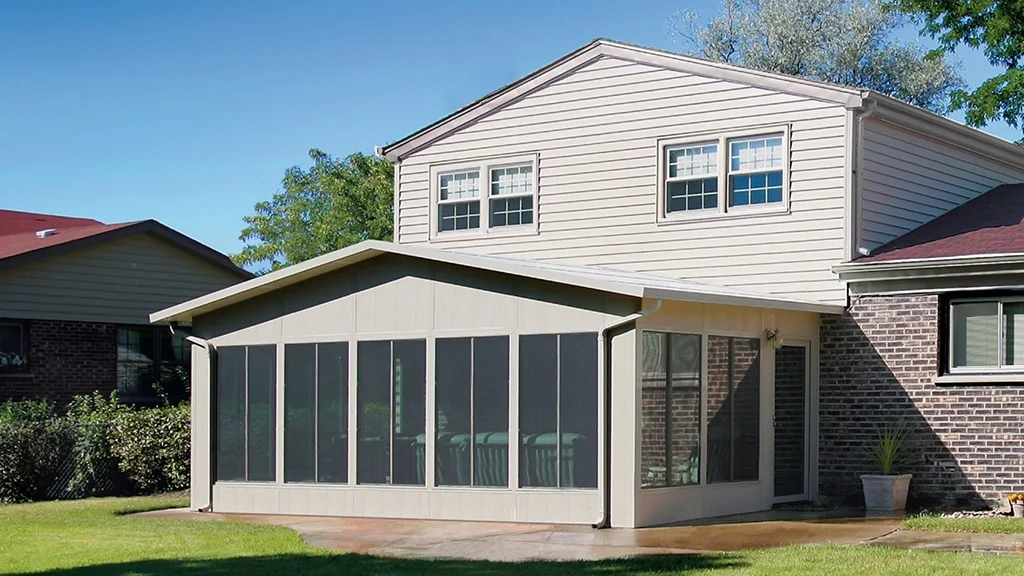
What Does Winter Use Actually Feel Like in a Screen Room?
A screen room removes several things that make an open patio uncomfortable: direct rain, falling leaves, much of the wind-driven debris, and the full force of a breeze. On a sunny Charlotte afternoon, that shelter can make the space pleasant for coffee, reading, or a short gathering even when the yard feels cooler.
The screens are still open to outdoor air. They do not create an insulated boundary, and the room's temperature will move with the weather. A cold morning, cloudy day, or strong breeze can make the enclosure feel nearly as cool as the patio outside. The solid roof also limits direct solar warming from above, so winter comfort depends on the hour, orientation, wind, and surrounding shade.
Set the right expectation before choosing furniture or accessories: a screen room extends outdoor use; it does not become conditioned living space merely because it has walls and a roof. That distinction helps homeowners choose practical winter upgrades without asking the enclosure to perform like a four-season room.
Which Screen Room Features Help in Cooler Weather?
Start with the enclosure itself. A sound solid roof keeps seating and flooring dry. Well-fitted screen panels, a door that closes squarely, intact sweeps, and sealed perimeter joints reduce obvious drafts and gaps without eliminating necessary outdoor airflow. Furniture placed away from the most exposed wall can feel more comfortable than a chair directly beside a large screen bay.
Some systems offer vinyl sashes, retractable windows, or other compatible panels that reduce direct wind and rain. TEMO describes screened-porch options with thermal roofs and vinyl sashes, and it distinguishes seasonal enclosures from fully conditioned sunrooms. The exact wall system matters: adding temporary plastic sheeting to a screen room can trap moisture, load the screen frames, interfere with doors, and create an appearance or performance the structure was not designed to provide.
Orientation also matters. A south- or west-facing exposure may receive useful afternoon sun, while a shaded north-facing room may remain cool. Existing trees, fences, the house wall, and nearby buildings can either block winter wind or keep sunlight from reaching the enclosure. Observe the room during the hours you actually want to use it rather than judging winter potential from a summer visit.
- Keep the roof, gutters, downspouts, door, sweeps, screens, and floor drainage in good condition.
- Place seating away from the most exposed screen wall when practical.
- Use weather-tolerant rugs and cushions that can dry instead of trapping moisture against the floor.
- Ask whether the selected wall system has manufacturer-designed seasonal panels or operable sashes.
- Preserve door operation, ventilation, and safe exit paths when arranging furniture or accessories.
Can You Use a Portable Heater in a Screen Room?
Possibly, but the appliance label and the room conditions control the answer. A screened enclosure is not automatically an approved heater location. The heater must be listed for the exposure and placement, sit on a stable level surface, remain where it cannot be knocked over, and maintain every required clearance from screens, curtains, cushions, rugs, furniture, siding, ceiling materials, and traffic paths.
The U.S. Consumer Product Safety Commission advises keeping portable heaters at least three feet from anything that can burn. It also says portable electric heaters should be plugged directly into a wall outlet—not a power strip—and should never run unattended in a confined space. Those are baseline safety rules, not a substitute for the appliance manual or a project-specific electrical review.
Do not use charcoal or improvise with a fuel-burning appliance to warm the room. Carbon monoxide is colorless and odorless, and screens do not guarantee that combustion gases will leave a partially enclosed space safely. Follow the heater manufacturer's indoor-or-outdoor listing literally. If the required clearance, ventilation, weather protection, electrical supply, or supervision cannot be maintained, do not use the heater there.
- Read the exact heater label and manual before purchase or placement.
- Keep at least three feet of clearance from combustible items and protect the unit from tip-over and water.
- Plug a portable electric heater directly into a suitable wall outlet; do not use a power strip or run the cord under a rug.
- Keep children, pets, doors, and the main walking path away from the heater.
- Turn the unit off when no responsible adult is present.
- Never use a grill, charcoal, generator, or unapproved fuel-burning heater as a screen-room heat source.
What Should Be Planned Before the Screen Room Is Built?
If cool-weather use matters, mention it during design rather than adding equipment after the enclosure is finished. Show where people will sit, how the door swings, which walls face prevailing wind, where rain can reach, and whether seasonal panels are part of the selected system. That information affects the wall layout, furnishings, outlets, lighting, and circulation.
Electrical capacity and location deserve an early review. A portable heater can be a substantial load, and an outdoor or damp-location room may require equipment, receptacles, covers, protection, and wiring methods suited to the exposure. A qualified electrician should determine the project-specific solution. An outlet that is convenient for a lamp is not automatically an appropriate heater supply.
Permanent overhead or wall-mounted heating requires even more coordination. The selected structure needs a manufacturer-approved mounting location, and the heater's listed clearances must work with the roof, wall panels, doors, screens, furniture, and electrical route. Do not drill through roof panels, beams, or aluminum framing based on appearance alone.
- Define whether the goal is occasional mild-day comfort or frequent winter use.
- Map seating, doors, traffic, screen openings, and likely wind direction.
- Identify compatible seasonal wall options before the final panel layout is ordered.
- Have heater loads, outlets, controls, weather exposure, and mounting reviewed before construction.
- Confirm address-specific electrical, structural, permit, and HOA requirements for the complete scope.
How Do You Avoid Moisture Problems During Winter Use?
Winter comfort upgrades should not block the room's drainage or drying paths. Wind-driven rain can still pass through mesh, and wet shoes, damp cushions, or condensation on seasonal panels can add moisture. Keep floor drains, weep paths, thresholds, and the bottom of wall panels clear. Let fabrics dry before storing them in closed containers.
If vinyl sashes or operable panels are used, follow the manufacturer's instructions for position, cleaning, storage, and ventilation. A tightly closed room can collect moisture from people, plants, wet furnishings, or a nearby door from the house. Open approved panels when conditions allow rather than assuming a warmer room should always be sealed as tightly as possible.
Inspect screens, splines, door sweeps, sealants, roof joints, gutters, and downspouts before cold and wet weather. Small maintenance issues are easier to address before furniture is arranged for the season. Do not climb on roof panels or dismantle structural components; use the installed-product guidance and qualified service where access is not safe from the ground.
When Is a Sunroom the Better Choice?
Choose a screen room when fresh air, insect protection, shade, and seasonal outdoor use are the priorities. It can be an excellent spring-through-fall space and remain useful on selected winter days, especially when the design manages wind and rain. Its simplicity is part of the appeal.
Compare a sunroom when you want predictable winter temperatures, daily conditioned use, finished-room furnishings, electronics, or work-from-home comfort. A four-season room needs the glass, thermally broken wall system, insulated roof, floor or foundation, air sealing, doors, and heating and cooling strategy to work as one enclosure. Adding a larger heater to a screen room does not create that thermal envelope.
Unique Patio Concepts can help Greater Charlotte homeowners compare a screen room, seasonal enclosure, and sunroom around the actual use pattern, site, and home. The useful question is not whether one option is universally better; it is whether you want protected outdoor air or conditioned indoor-style comfort during the coldest weeks.
Choose the right enclosure for every season
Request a Greater Charlotte screen room or sunroom consultation from Unique Patio Concepts.
Request a free estimateFrequently asked questions
Will a screen room stay warm in winter?
Not on its own. Screens block insects and some debris but do not insulate or stop outdoor air. A solid roof and reduced wind can improve comfort on mild days, while compatible seasonal panels may extend use. Predictable winter temperature control generally calls for a thermally designed sunroom.
Can you use an electric space heater in a screened porch?
Only if the exact heater is listed for that environment and every clearance, electrical, moisture, supervision, and placement instruction can be followed. CPSC advises keeping portable heaters at least three feet from combustible items, plugging electric units directly into a wall outlet, and never leaving them unattended.
Can you use a propane patio heater in a screen room?
Do not assume so. A screen room is a partially enclosed space, and combustion equipment can create carbon-monoxide and fire hazards. Use a fuel-burning heater only if its manufacturer explicitly lists the exact type of location and all ventilation, clearance, installation, and local requirements are satisfied; otherwise choose another approach.
Can clear vinyl panels make a screen room usable in winter?
Manufacturer-designed vinyl sashes or seasonal panels can reduce wind and rain and extend the usable season, but they do not automatically create a four-season room. Avoid improvised plastic coverings that can overload frames, trap moisture, block doors, or interfere with ventilation.
Does a screen room need special electrical outlets for a heater?
The correct circuit, receptacle, cover, protection, and wiring method depend on the heater load and the room's exposure. Have a qualified electrician review the exact equipment and site. Do not assume an existing convenience outlet or extension cord is suitable for portable heat.
Is a screen room or sunroom better for year-round use in Charlotte?
A screen room is better for fresh-air seasonal use; a properly designed four-season sunroom is the clearer choice for dependable year-round conditioned comfort. Compare the complete roof, walls, glass, floor, air sealing, doors, and HVAC plan rather than relying on a heater alone.