
Sunroom condensation happens when humid air touches glass, aluminum framing, or roof surfaces that are cooler than the air's dew point. Greater Charlotte's humid summers, cool winter mornings, rain, plants, wet towels, and frequent door openings can all add moisture. Start by measuring indoor humidity, using gentle airflow, running any approved dehumidification or conditioned-air system, and removing obvious moisture sources. If water appears in one isolated spot, returns after rain, stains finishes, or collects inside framing, treat it as a possible leak or drainage issue—not ordinary condensation—and arrange a product-specific inspection.
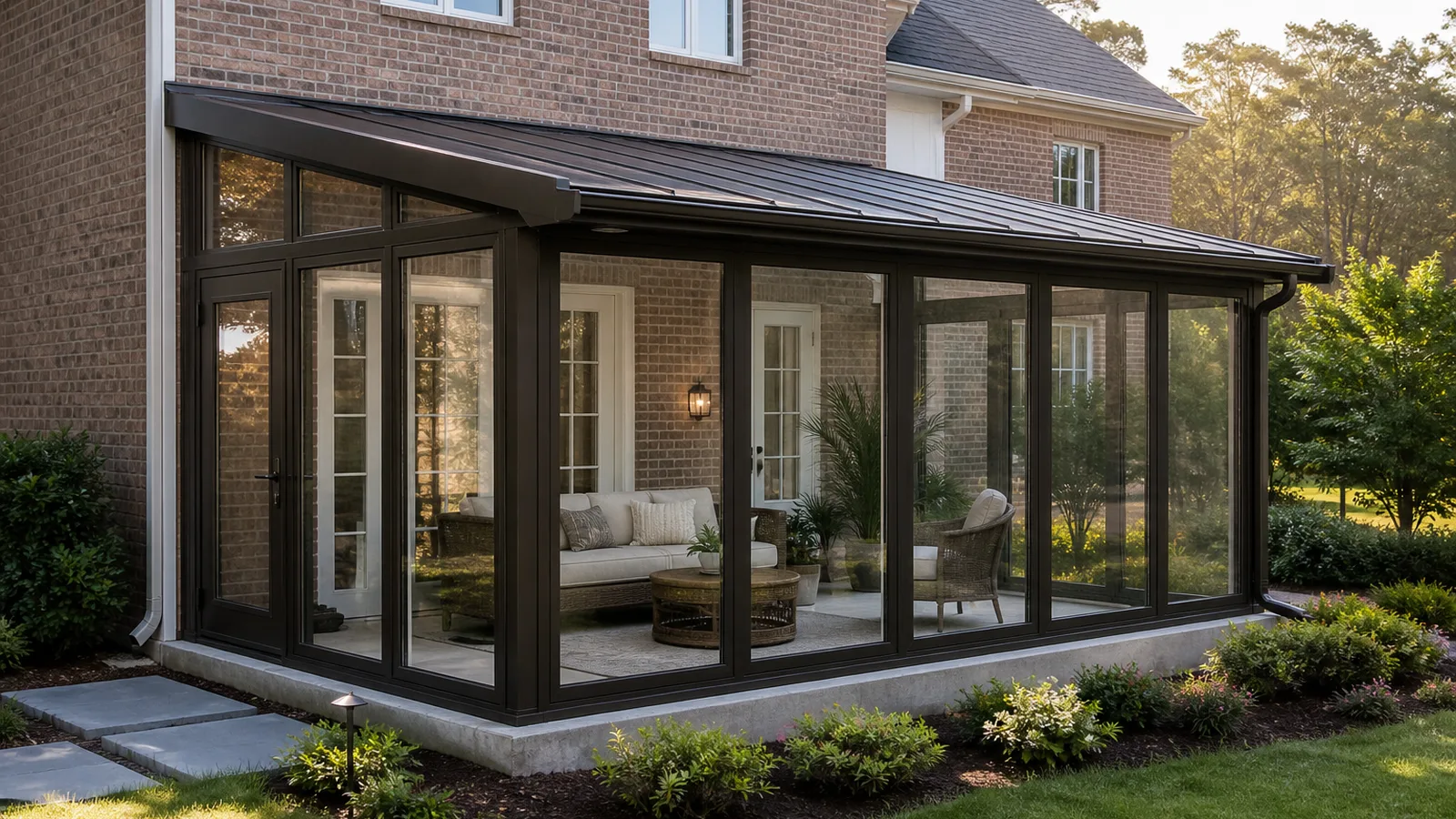
Why Does Condensation Form in a Sunroom?
Condensation is a surface-temperature problem as much as a humidity problem. Air can hold water vapor without looking damp. When that air reaches a cool pane of glass, aluminum frame, threshold, or roof panel, the air next to the surface cools. If it drops below the dew point, some vapor turns into liquid water.
Sunrooms make this especially visible because they have more glass and exterior-facing framing than a typical interior room. On a chilly Charlotte morning, the room's glass may be the coldest surface in the house. In summer, a strongly cooled room can meet hot, humid outdoor air every time a door opens. Either direction can create temporary fogging or droplets.
A little moisture after an unusual temperature swing does not automatically mean the room was built incorrectly. Persistent water, however, deserves attention. The goal is to identify whether the room simply reached the dew point or whether rainwater, blocked drainage, damaged seals, or another building issue is involved.
How Can You Tell Condensation From a Leak?
Condensation often appears as a fairly even haze or fine droplets across several cool panes or frame sections. It usually tracks indoor humidity and outside temperature, and it may fade as the room warms or airflow improves. You may see it first at glass edges and metal components because those areas can run cooler.
A leak tends to behave differently. Watch for water that starts during or soon after rain, follows one seam, appears beneath a roof connection, returns in the same corner, or leaves a stain. Water trapped inside a panel, between panes, or within a frame cavity is also different from moisture you can wipe from the room-side surface.
Do not diagnose solely by where a puddle lands. Water can travel along framing before it drips. Photograph the first wet area, note the weather and indoor humidity, and record whether the water is on the interior surface, between panes, or emerging from a joint. That evidence is more useful than adding caulk before the source is known.
- Even mist on several cold surfaces: more consistent with condensation.
- One recurring drip or stain after rain: investigate a leak or drainage path.
- Moisture between sealed glass panes: contact the window or enclosure provider.
- Water at a threshold after wind-driven rain: check door closure, seals, weeps, and exterior drainage according to the installed manual.
- Musty odor, swelling, discoloration, or persistent dampness: stop treating it as a cosmetic issue and arrange an inspection.
What Is the Safest Way to Reduce Sunroom Humidity?
First, measure it. An inexpensive digital hygrometer shows whether humidity rises overnight, after rain, when the room is full of plants, or when doors stay open. Compare the sunroom reading with an adjacent conditioned room rather than relying on how the air feels. Comfort and condensation thresholds change with surface temperature.
Next, remove easy moisture sources. Bring in wet cushions, avoid drying laundry in the room, empty standing water, and reduce or relocate dense plant groupings if the soil stays damp. Keep exterior gutters and ground drainage working so the slab and perimeter are not constantly wet. If an outdoor kitchen or hot tub is nearby, do not let steam drift into a closed room without an appropriate ventilation plan.
Use the room's designed ventilation, HVAC, mini-split, or dehumidification equipment as directed for that installation. A portable dehumidifier may help in some rooms, but it needs safe electrical service, clear airflow, and a controlled condensate path. Emptying a bucket onto the patio beside the enclosure simply moves the water rather than solving the site condition.
Do Airflow and Temperature Changes Help?
Gentle, steady airflow helps keep one pane or corner from becoming a cold, stagnant pocket. Open interior shades enough for air to reach the glass, keep furniture from sealing off the perimeter, and use approved ceiling or circulation fans at a comfortable setting. If the room has operable windows, use them only when outdoor conditions are actually drier than the room.
Avoid dramatic shortcuts. A portable heater aimed at cold glass can create strong temperature differences and may violate the product instructions. Likewise, opening the room on a muggy afternoon can add far more water vapor than it removes. Gradual temperature control usually works better than alternating between sealed-and-cold and wide-open-and-humid.
A three-season room and a conditioned four-season room also have different expectations. Glass package, roof assembly, thermal breaks, connection to the home, and mechanical systems all affect interior surface temperatures. If year-round comfort is the goal, discuss it during design rather than assuming every enclosure can be operated like a conventional conditioned room.
What Should You Avoid When Water Appears?
Do not drill new weep holes, seal every visible gap, or pack a drainage channel with caulk. Factory-made aluminum rooms depend on specific joints, gaskets, flashing, channels, and weep paths. Blocking the route intended to carry water out can trap it inside the assembly and make the original problem harder to find.
Do not climb on roof panels or lean ladders against enclosure framing. Check what you can safely see from the floor or ground, including window closure, door latches, visible debris, and accessible drainage openings described in the installed manual. Leave roof connections, concealed channels, electrical equipment, and high exterior work to qualified professionals.
And skip harsh cleaners. Strong solvents, abrasive pads, and aggressive pressure can damage powder-coated aluminum, glazing films, seals, screens, and caulk. Use the care instructions for the exact TEMO or other installed system; general advice cannot replace its product manual.
How Do You Plan a Sunroom That Manages Moisture Better?
Moisture management begins before the room is ordered. The site needs a plan for roof runoff, gutters and downspouts, slab height and slope, perimeter drainage, wall connections, door thresholds, and the way the new room meets the house. Shade and orientation matter too because they change how quickly glass and framing heat and cool.
Inside, decide how the room will really be used. A plant-filled retreat, dining room, exercise space, pool-adjacent lounge, and conditioned family room create different moisture loads. That use should inform glazing, ventilation, electrical planning, shade controls, flooring, and whether dedicated heating, cooling, or dehumidification is appropriate.
Unique Patio Concepts can help Greater Charlotte homeowners compare enclosure options and discuss a site-specific TEMO sunroom plan. Bring up condensation concerns early—especially if the property has heavy shade, a pool, drainage history, or a large temperature difference between the home and patio.
Plan a sunroom around Charlotte's real weather
Request a Greater Charlotte site consultation and project-specific outdoor living estimate from Unique Patio Concepts.
Request a free estimateFrequently asked questions
Is condensation normal in a Charlotte sunroom?
Occasional surface condensation can occur when humid air meets cool glass or framing, especially during sharp weather changes. Frequent dripping, stains, trapped moisture, or water that tracks rain is not something to dismiss; document it and investigate the source.
Should I open sunroom windows when the glass fogs?
Only when the outdoor air is drier than the room and conditions allow safe ventilation. Opening windows during a muggy Charlotte afternoon may add moisture. A hygrometer and local humidity reading are more useful than automatically opening the room.
Will a dehumidifier stop sunroom condensation?
It may reduce condensation when excess indoor humidity is the cause, but it will not repair a roof leak, blocked drain, failed seal, or insulated-glass problem. Use equipment that fits the room and follow safe electrical and condensate-drainage requirements.
Why is there moisture between my sunroom window panes?
Moisture between panes can indicate a problem with the sealed glass unit rather than room-side condensation. Do not drill the glass or frame. Record the affected unit and contact the window, enclosure, or installation provider for product-specific guidance.
Can I add caulk where my sunroom is dripping?
Not until the water path is understood. Aluminum enclosure systems use designed joints, flashing, seals, channels, and weeps. Caulking the wrong gap may block drainage and trap water. Have the source identified before making a repair.
Does a four-season sunroom get less condensation?
A properly designed conditioned room may keep interior surfaces warmer and control humidity more consistently, but no room is immune to condensation. Glazing, framing, insulation, air sealing, mechanical design, occupancy, and outdoor conditions all matter.