
A properly oriented louvered pergola can provide broad overhead shade when its blades are closed and filtered light or open sky as they rotate. It is not a fixed percentage all day. Charlotte's sun changes by hour and season, and low morning or late-afternoon light can enter beneath the roof from the sides. Roof size, height, blade direction, house placement, trees, and optional screens all shape the result. The best way to predict comfort is to map shade on the actual patio before choosing the pergola footprint and orientation.
How Do Pergola Louvers Control Sunlight?
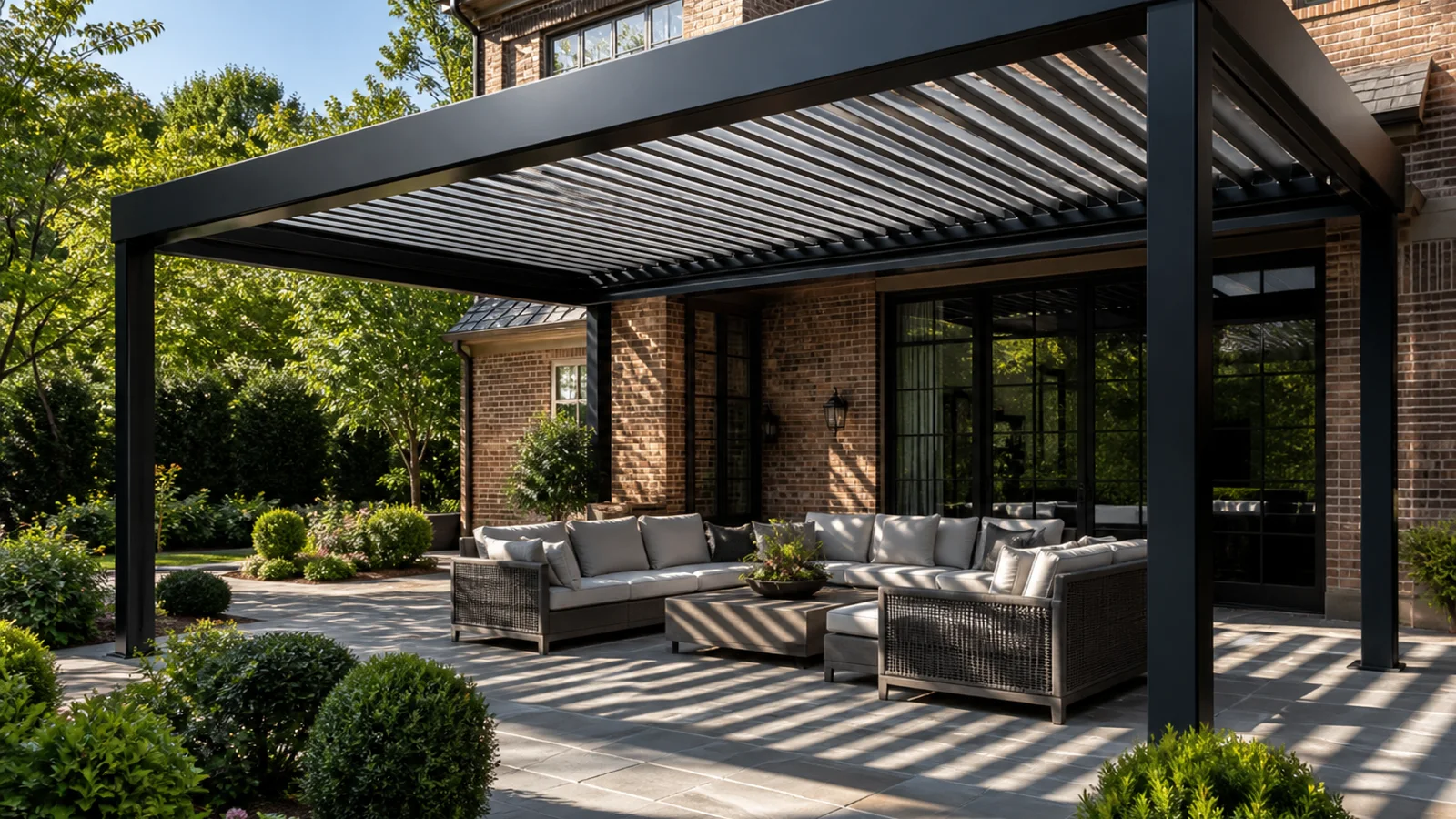
A louvered roof uses rows of rotating aluminum blades instead of a permanently open lattice or a fixed solid roof. When the blades rotate toward the open position, sunlight and sky are visible between them. At intermediate angles, they interrupt direct rays and create stripes of light and shade. When closed, the roof provides broad overhead shade and is designed to manage rain according to the installed system.
That adjustability is the main advantage. You can open the roof on a mild winter afternoon, reduce direct light during lunch, or close it when summer sun is high. The louvers do not manufacture shade beyond the roof's physical footprint, though. Sun arriving below the roofline can still reach the seating area from an open side.
Blade angle also affects brightness rather than simply switching between bright and dark. Light can bounce off pale paving, brick, glass, and nearby walls. A comfortable design considers reflected glare and the view from inside the house, not just the shadow directly beneath the blades.
Why Does Patio Orientation Matter in Charlotte?
The sun rises in the east and sets in the west, but its path shifts through the year. Summer sun climbs higher across the sky, while winter sun stays lower. A south- or west-facing patio can receive strong afternoon exposure. An east-facing space may be bright at breakfast and calmer later in the day. Trees and neighboring homes can change that pattern again.
An overhead louvered roof is especially effective against high midday sun. Low rays are trickier because they travel beneath the perimeter beam. If your dining table sits near the west edge, for example, closing the roof may not stop late-day glare from crossing the patio. Moving the table inward, extending the roof in the right direction, or adding a compatible side screen may work better than simply ordering a taller structure.
Charlotte homeowners should also look at deciduous trees. A canopy that shades the patio in August may lose its leaves in January. That can be useful—summer shade and winter warmth—but it means one quick observation does not tell the full story.
How Can You Predict Shade Before Installation?
Start with the patio at the times you actually plan to use it. Take photos in the morning, around midday, and late afternoon on a clear day. Note where direct sun reaches the seating, grill, doors, and windows. A phone compass can help document direction, but it should not replace a measured site plan.
Next, compare summer and winter sun paths. Digital sun-path tools can provide a useful concept, but trees, slopes, roof overhangs, chimneys, and neighboring structures need to be included. During design, ask to review the proposed roof outline in relation to the furniture plan. A shade solution for a sofa may miss the outdoor kitchen beside it.
A practical review should answer five questions:
- Which hours matter most for how your family uses the patio?
- From which side does uncomfortable low-angle sun arrive?
- Will the roof shade the important seats without blocking a valued interior view?
- Can doors, windows, grills, and walkways operate comfortably beneath and around it?
- Would a compatible retractable screen solve a side-light problem more cleanly than increasing the roof footprint?
How Do Size, Height, and Blade Direction Change the Result?
Footprint determines the maximum overhead area the pergola can cover. If furniture sits at the very edge, shifting shadows will reach it sooner than furniture placed well inside the posts. Plan around the real arrangement, including chair pullback, cooking clearances, circulation, and the path from the house to the yard.
Height matters too. A very tall roof can feel open and airy, but it also gives low-angle sunlight more room to enter. A lower roof may contain shade better, yet it still needs suitable clearances, proportions, door operation, and attachment details. The right height is a design and engineering decision—not a shortcut for making more shade.
Blade direction influences how direct sun passes through while the roof is partially open. It also belongs to a complete product layout that includes spans, beams, motors, drainage, house attachment, and structural requirements. Choose it with the system designer rather than treating it as a decorative preference after the footprint is fixed.
When Do Retractable Screens or Side Shades Help?
Side screens can be helpful when the main comfort problem is glare from one open edge. They may also add privacy and reduce some wind-driven debris or insects, depending on the mesh and installation. They do not turn an open pergola into a sealed or conditioned room.
Screens need to be compatible with the selected pergola and planned with the beam, post, electrical, and control layout. Wind exposure matters. Follow the manufacturer and dealer instructions for when a screen should be raised, and never rely on it as a guardrail or storm barrier.
Landscaping can play a supporting role as well. Carefully placed trees or shrubs may soften low sun without enclosing the patio, but allow for mature size, roots, leaf drop, and drainage. The best result often combines adjustable overhead control with one targeted side treatment rather than covering every opening.
What Should You Decide Before Requesting a Pergola Estimate?
Write down your top two use periods—perhaps weekend afternoons and weekday dinners. Then mark the furniture, cooking area, television, hot tub, or doors that need protection. Be honest about whether your priority is deep shade, changing light, rain management, an open view, or a balance of all four.
Bring photos that show the patio from the yard and from inside the house. Mention drainage, existing slabs or decks, buried utilities, property constraints, and any future screens, lighting, heaters, or outdoor-kitchen plans. Those details affect far more than appearance and should be coordinated early.
Unique Patio Concepts can help Greater Charlotte homeowners compare louvered pergola layouts and develop a site-specific outdoor living plan. A thoughtful consultation connects the sun path to the structure, furniture, controls, drainage, and the way you want to use the space.
Plan shade around your Charlotte backyard
Request a Greater Charlotte site consultation and project-specific louvered pergola estimate from Unique Patio Concepts.
Request a free estimateFrequently asked questions
Does a louvered pergola provide full shade?
Closed louvers provide broad overhead shade within the roof footprint, but low-angle sun can still enter from open sides. The amount and location of shade change with the hour, season, roof dimensions, height, and patio orientation.
Which direction should pergola louvers face?
There is no single direction that fits every site. Blade direction should be selected with the pergola layout, sun path, house connection, spans, drainage, and product engineering in mind. A site-specific design review is the safest approach.
Will a louvered pergola shade a west-facing patio?
It can block high overhead sun very effectively, but late-afternoon western light may pass beneath the roof edge. Footprint, furniture placement, nearby obstructions, and a compatible west-side screen can all improve comfort.
Can I leave the louvers partly open for filtered shade?
Yes, adjustable systems are designed to offer intermediate blade positions. Use the controls and operating guidance supplied with the installed product, especially around wind, freezing conditions, obstructions, and weather sensors.
Do retractable screens make a pergola cooler?
A screen can reduce direct low-angle sun and glare from a targeted side, which may make the seating area feel more comfortable. Results depend on mesh, color, airflow, orientation, and conditions; it is not the same as air-conditioning an enclosed room.
How large should my louvered pergola be for shade?
Size it around the actual furniture and use zones, then account for sun direction, walkways, doors, views, foundations, drainage, and structural requirements. A measured site plan and sun review are more reliable than choosing from furniture dimensions alone.