
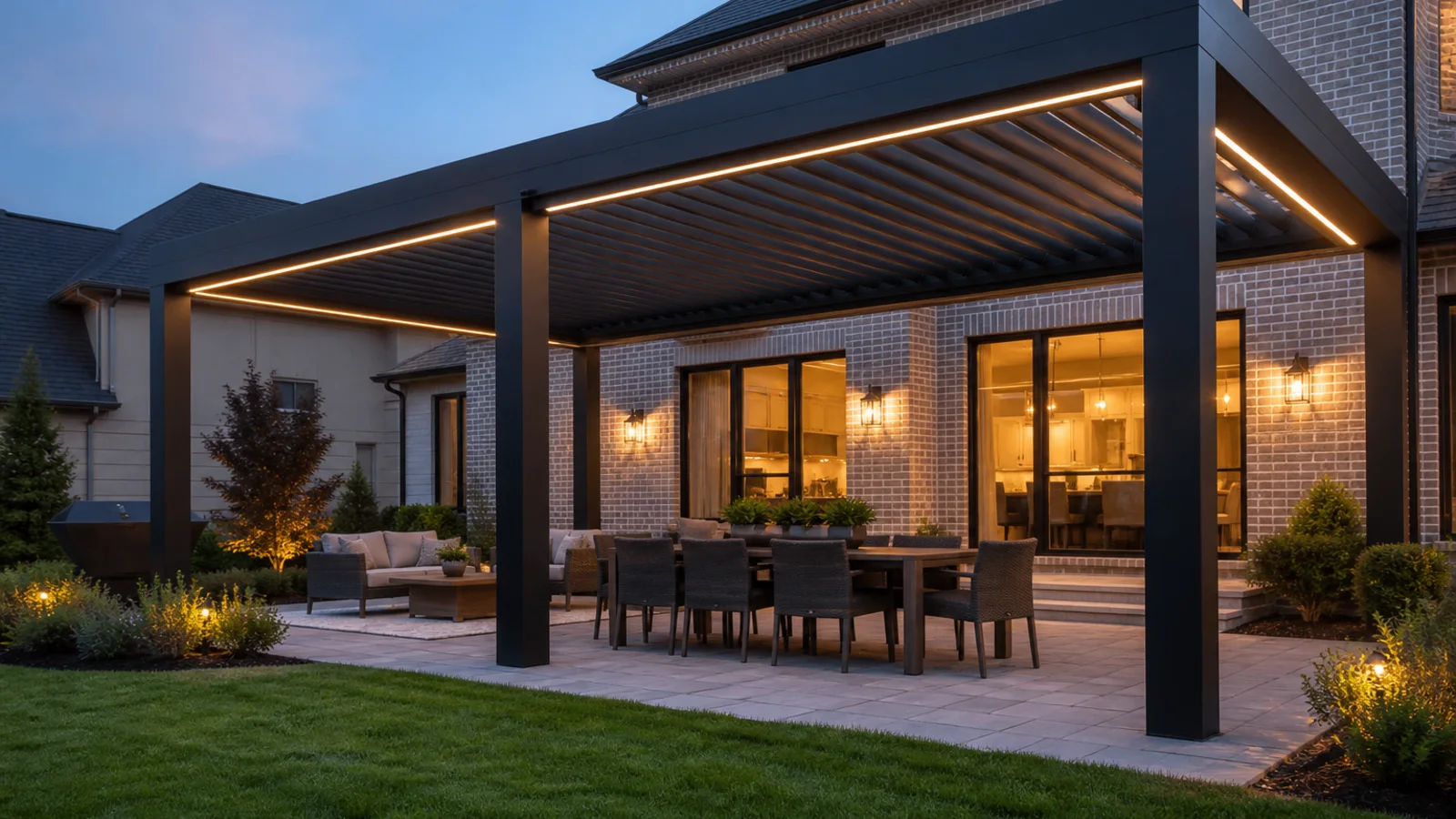
For most Greater Charlotte patios, the best louvered-pergola lighting is layered and dimmable. Start with integrated, outdoor-rated LED lighting in approved fixed beams for even ambient light. Add focused task lighting at a grill, kitchen, counter, steps, or door only where it is useful, then use restrained landscape or wall lighting for depth. The fixtures, drivers, wiring, controls, and mounting details must suit the actual outdoor exposure and stay clear of moving louvers, motors, screens, gutters, and drainage paths.
Which Types of Pergola Lighting Work Together?
A comfortable patio rarely comes from one bright light. Think in three layers instead. Ambient light lets people move, dine, and talk without sitting under a spotlight. Task light helps at the grill, outdoor kitchen, serving counter, steps, or door. Accent light picks up a brick wall, planting bed, or the pergola structure itself.
Integrated LED strips or recessed fixtures in approved fixed beams can provide the ambient layer with a clean look. Azenco currently presents lighting as an available R-BLADE feature, but the exact fixture locations and control options depend on the selected roof layout. The product plan—not a photo from another backyard—should show where lighting can safely go.
Then add only what the patio needs. A narrow fixture over a prep counter is more useful than flooding the whole roof with extra brightness. Small landscape lights outside the pergola can also keep the yard from turning into a black backdrop after sunset.
How Bright Should Pergola Lights Be?
Brightness is easier to live with when it can change. Dinner may call for clear, even light; a quiet evening needs much less. Separate dimmable zones give you both without making every fixture come on at full power. If a fixture or driver is not designed to dim, pairing it with a random dimmer can cause flicker, noise, or poor performance.
Warm-white light usually feels at home around brick, wood, stone, and outdoor furniture. More important than chasing one color-temperature number is keeping neighboring fixtures reasonably consistent. A warm pergola beside icy blue wall lights tends to look accidental.
Glare is the common miss. Sit in every important chair and look toward the proposed fixtures, TV wall, doors, and windows. Bare diodes or strong downlights directly above eye level can be uncomfortable even when the patio looks impressive from the lawn. Shielding, fixture spacing, beam angle, and dimming matter as much as total output.
Where Can Lights Mount on a Louvered Pergola?
Lights belong on fixed, approved parts of the structure. Operable louvers rotate, so they should not carry improvised fixtures, clips, or loose wires. Never drill into a beam simply because it looks hollow from below. Motors, linkage, reinforcement, wiring, fasteners, gutters, and concealed drainage can occupy that space.
Map the roof in every position—open, angled, and closed. A fixture, pendant, cable, or junction point must remain clear throughout the full movement. Do the same check with retractable screens, fans, heaters, speakers, cabinets, and doors. Features that fit one at a time can still collide when they share the same beam or corner.
Pendants can look inviting over a dining table, but an open patio adds wind and moisture to the equation. Use a mounting detail and fixture specifically suited to that location, keep required clearances, and consider how the fixture will move in a storm. In many pergola layouts, low-profile integrated lighting is the simpler answer.
What Should You Know About Wiring and Smart Controls?
Outdoor lighting is a system, not just a row of fixtures. Drivers, transformers, junction boxes, connectors, switches, receptacles, and cable routes all need to match their exposure. Wind-driven rain can reach an open-sided pergola even when the louvers are closed, so equipment selected for a dry interior ceiling is not automatically appropriate.
Decide how the lights should behave before choosing controls. Useful options might include separate ambient and task zones, wall controls near the house, dimming, scheduled shutoff, or integration with selected pergola controls. Keep a manual way to operate the essential lights, and verify that every dimmer, driver, fixture, and smart component is compatible with the others.
Coordinate the electrical plan with the pergola motor, sensors, screens, fans, heaters, kitchen equipment, outlets, and speakers. That load belongs on a real circuit plan—not a chain of extension cords added later. A qualified electrician can also keep wiring out of drainage channels and provide service access without dismantling finished parts.
A Practical Charlotte Pergola Lighting Checklist
Walk the patio at dusk before the final layout is approved. Mark the table, lounge chairs, grill, steps, doors, pool edge, and paths. Then note where glare would hit seated eyes or shine toward a neighbor. This five-minute exercise often changes the plan for the better.
Electrical permits and inspections can depend on the address and scope. Charlotte, Mecklenburg County, nearby municipalities, and South Carolina communities do not all follow the same review path. Confirm current electrical, building, zoning, engineering, HOA, and inspection requirements before work begins.
Unique Patio Concepts can plan the roof, lighting zones, controls, and other comfort features as one outdoor room. That early coordination usually produces a cleaner result—and far fewer compromises than trying to hide wires in a finished pergola.
- Sketch furniture, counters, doors, steps, paths, pool or spa edges, and the areas that actually need light.
- Choose ambient, task, and accent layers, then put each useful group on an appropriate control or dimming zone.
- Confirm outdoor-location ratings and compatibility for fixtures, drivers, dimmers, controls, boxes, and wiring methods.
- Use only approved fixed mounting locations and protect the full travel of louvers, screens, fans, and doors.
- Keep wiring and penetrations away from motors, reinforcement, gutters, downspouts, and concealed drainage paths.
- Verify electrical capacity, permits, inspections, engineering, HOA rules, and product-specific instructions for the property.
Design the pergola for the way evenings really work
Request a Greater Charlotte site consultation and project-specific outdoor living estimate from Unique Patio Concepts.
Request a free estimateFrequently asked questions
Can LED lights be built into a louvered pergola?
Yes. Integrated LED lighting is available with some louvered-pergola systems, including approved R-BLADE configurations. Fixture style, beam location, wiring, dimming, and controls depend on the selected layout, so lighting should be specified with the pergola rather than improvised after installation.
Can lights mount directly to moving pergola louvers?
No. Operable louvers need to rotate freely and may be part of the weather-management system. Lights and wiring should use approved fixed beams or mounting points without interfering with movement, motors, gutters, or concealed drainage.
What color light is best for an outdoor pergola?
Warm-white light is a comfortable starting point for dining and lounging, especially around brick, wood, and stone. Keep nearby fixtures reasonably consistent, use dimming where supported, and judge samples on the actual patio after dark before locking the full package.
How do you avoid glare under a pergola?
Use shielded or recessed fixtures, spread the ambient light across more than one point, and keep strong beams out of seated sightlines. Test the proposed locations from chairs, doors, windows, and any outdoor TV position, then divide brighter task lights from softer lounge lighting.
Can pergola lights use smart-home controls?
Often, yes, when the selected pergola, fixtures, drivers, dimmers, and control system are compatible. Confirm the exact equipment and wiring plan first, include a practical manual control, and follow the installed product instructions rather than assuming every smart switch works outdoors.
Do pergola lights need an electrical permit in Charlotte?
They may. New circuits, permanent outdoor wiring, controls, structural penetrations, and related pergola work can trigger permits or inspections depending on the property and scope. Check the current requirements with the authority responsible for the exact address before installation.