
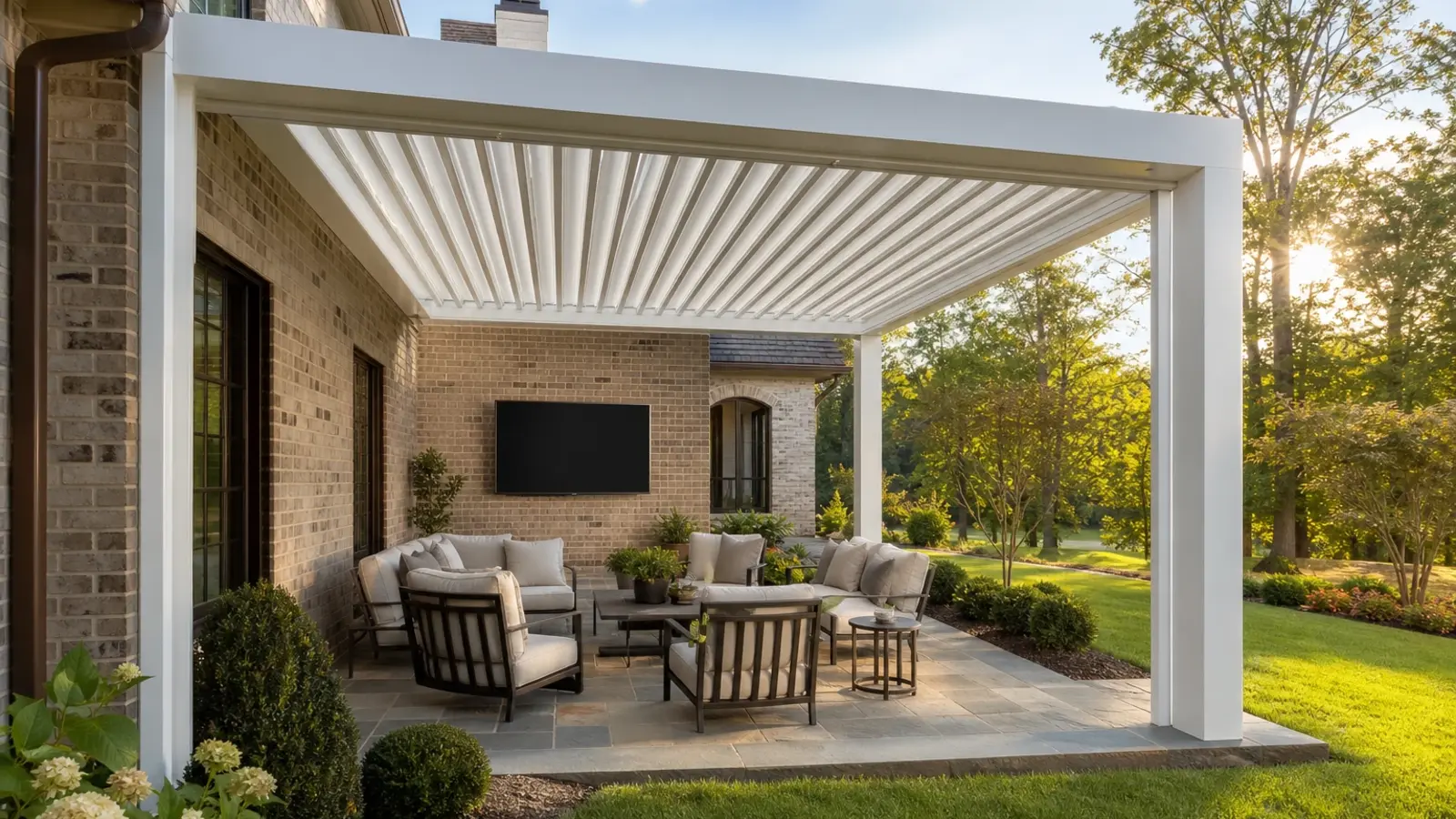
Yes, a TV can work under a louvered pergola in Greater Charlotte. The reliable approach is to choose a television specifically rated for the exposure it will receive, mount it to a fixed wall or approved structural support, and keep it clear of moving louvers, drainage paths, screens, heaters, and direct weather. Plan the screen location, glare, viewing distance, electrical service, cable routing, ventilation, sound, and storm protection as one project. A standard indoor television beneath a roof is not automatically an outdoor television.
Do You Need a True Outdoor TV?
Usually, yes. A louvered pergola provides adjustable shade and useful weather management, but it is still an open outdoor structure. Wind can carry rain through the sides, humidity can reach the electronics, pollen can settle in vents, and Charlotte temperatures can swing well beyond a typical indoor living room. Closing the louvers does not turn the patio into conditioned interior space.
Outdoor televisions are built and listed for specific exposure and temperature conditions. Some are intended for deeply shaded locations, while others are designed for brighter or more exposed areas. Read the current installation manual for the exact model. Terms such as “covered,” “partial sun,” and “full sun” are product categories, not guesses to make from a marketing photo.
Putting an indoor TV outside may seem like a shortcut, especially beneath a roof. The problem is that the television, power connection, remote, streaming device, and sound equipment all have to survive the real environment. Product labeling, warranty terms, and electrical instructions should drive the decision—not how dry the patio looked on one calm afternoon.
Where Should the TV Be Mounted?
A fixed masonry wall is often the cleanest option because it keeps the screen away from moving roof parts and can simplify cable concealment. A purpose-designed fixed post or structural panel may also work when the pergola manufacturer and project engineer approve the detail. Either way, the mount has to support the television and resist the loads and movement expected at that location.
Never attach a TV or bracket to an operable louver. Also, do not drill into an apparently empty pergola beam until the internal layout is confirmed. Aluminum frames can contain motors, drive parts, wiring, fasteners, reinforcement, and concealed drainage channels. One misplaced penetration can interfere with the roof or create a leak path.
Leave the clearances and ventilation space required by the TV and mount manufacturers. Then test the full arrangement: louvers open, angled, and closed; retractable screens raised and lowered; nearby doors open; chairs occupied; and any mount extension or swivel fully deployed. The screen should not collide with a beam, shade, screen track, cabinet, or walking route.
How Do You Control Glare and Get a Comfortable View?
Sunlight can matter more than screen size. Before picking the wall, stand in the proposed seating area during the afternoon and early evening. Watch how light moves through the open louvers and across the screen plane. A position that looks perfect in the morning may catch a bright reflection at kickoff or movie time.
The louver direction and pergola orientation can help manage daylight, but they should not be treated as a permanent blackout shade. A west-facing yard may still need a different TV location, a brighter outdoor display, or a compatible retractable screen. Trees and neighboring windows can add reflections, too.
Keep the screen near a natural seated eye line rather than pushing it high just to clear the furniture. Measure the actual sofa and dining positions, then mark the proposed screen corners on the wall. That quick mock-up makes neck strain, blocked sightlines, and an undersized picture obvious before holes are drilled.
What Should You Plan for Power, Sound, and Streaming?
Outdoor power deserves the same early planning as the structure. The receptacle, enclosure, wiring method, disconnects or controls, surge protection, and branch circuit need to suit the actual location and selected equipment. A licensed electrician can coordinate the TV with pergola motors, lighting, screens, heaters, fans, kitchen equipment, and other patio loads instead of extending whatever circuit happens to be nearby.
Cable routing should stay out of louver travel, screen tracks, gutters, downspouts, and drainage outlets. Avoid loose extension cords and exposed low-voltage leads across walking surfaces. If the mount swivels, leave only the controlled service loop specified by the equipment installer so the cable does not pinch or rub against sharp aluminum edges.
Built-in TV speakers can sound thin in an open yard, but more equipment is not always better. Decide whether you need a soundbar or outdoor speakers, then give each component a compatible mounting location and weather rating. Test Wi-Fi at the patio before relying on streaming; exterior masonry, metal framing, and distance from the router can weaken an otherwise fast home connection.
How Should the TV Be Protected During Charlotte Weather?
Follow the installed TV and pergola manuals when severe weather approaches. The correct louver position can depend on the pergola model and conditions, while the television may have separate instructions for power, covers, storage, or operating temperature. Do not assume a fitted cover makes an indoor television outdoor-rated, and never wrap operating electronics in a way that blocks ventilation.
Ground-level checks are useful after heavy rain: look for water near the screen, outlet, cable entries, wall penetrations, or mount. If you see moisture, a damaged enclosure, a loose bracket, or a cable problem, stop using the equipment and call the appropriate professional. Do not climb onto the pergola, open electrical boxes, or probe concealed drainage paths.
Permit and inspection needs vary across Charlotte, Mecklenburg County, nearby towns, and South Carolina communities. New circuits, structural supports, wall penetrations, or broader patio work may trigger review depending on the address and scope. Confirm current electrical, building, zoning, engineering, and HOA requirements before the installation is scheduled.
Outdoor TV and Pergola Planning Checklist
Bring the TV model, mount, and planned accessories into the pergola conversation early. A simple elevation showing the screen, seating, roof, posts, screens, doors, and equipment locations can prevent most conflicts. It also gives the electrician and installer something concrete to coordinate.
Unique Patio Concepts can help shape the pergola layout around how the patio will really be used. The goal is a comfortable view and a clean installation without compromising the moving roof, integrated drainage, weather protection, or circulation through the outdoor room.
- Select a TV listed for the actual shade, moisture, and temperature exposure at the proposed location.
- Confirm an approved fixed mounting surface and the mount manufacturer's required fasteners and clearances.
- Test glare, viewing height, screen size, and sightlines from every important seat at the intended viewing time.
- Check all louver positions, screens, doors, cabinets, heaters, fans, speakers, and walking paths for conflicts.
- Coordinate outdoor-rated power, controls, cable routes, Wi-Fi, sound, drainage, and service access.
- Verify current electrical, building, engineering, HOA, permit, and inspection requirements for the property.
Plan the screen and pergola as one outdoor room
Request a Greater Charlotte site consultation and project-specific outdoor living estimate from Unique Patio Concepts.
Request a free estimateFrequently asked questions
Can I use a regular indoor TV under a covered pergola?
A roof alone does not create an indoor environment. Wind-driven rain, humidity, pollen, heat, cold, and condensation can still reach the equipment. Use a television whose current instructions and listing match the real outdoor exposure, and follow its mounting and electrical requirements.
Can a TV mount directly to a pergola beam?
Only when the pergola manufacturer and project design approve that exact fixed structural location. Do not mount to moving louvers or drill into a beam without confirming hidden motors, wiring, reinforcement, fasteners, and drainage channels.
Will closed louvers keep an outdoor TV completely dry?
No open-sided pergola should be treated as a completely sealed room. Closed louvers can manage overhead rain, but wind-driven moisture can enter from the sides. The television and every connected component still need ratings appropriate for their installed exposure.
Which direction should an outdoor TV face?
Choose the direction after checking sun and reflections at the times you expect to watch. A shaded wall opposite comfortable seating is often practical, but roof orientation, western sun, nearby windows, screens, and trees can change the best answer.
Can retractable screens reduce TV glare?
They can reduce some low-angle sunlight and improve viewing comfort when the screen system is compatible with the pergola layout. Keep the TV, mount, cables, and speakers clear of the screen cassette, tracks, fabric, and travel path in every position.
Does an outdoor TV installation need a permit in Charlotte?
It may. New electrical work, structural mounting, wall penetrations, or related construction can require permits or inspections depending on the property and scope. Confirm the current rules with the applicable jurisdiction before work begins.