
Often, yes. A patio heater can work under a louvered pergola in Greater Charlotte when its current installation manual specifically allows the covered outdoor location and the complete design preserves every required clearance. The heater should attach only to an approved fixed beam or bracket—never to a moving louver—and its heat path must stay clear of the roof, screens, fans, lights, furniture, and the house. Fuel or power, ventilation, weather exposure, controls, permits, and safe service access all need to be settled before the pergola is ordered.
Which Type of Patio Heater Works Best Under a Pergola?
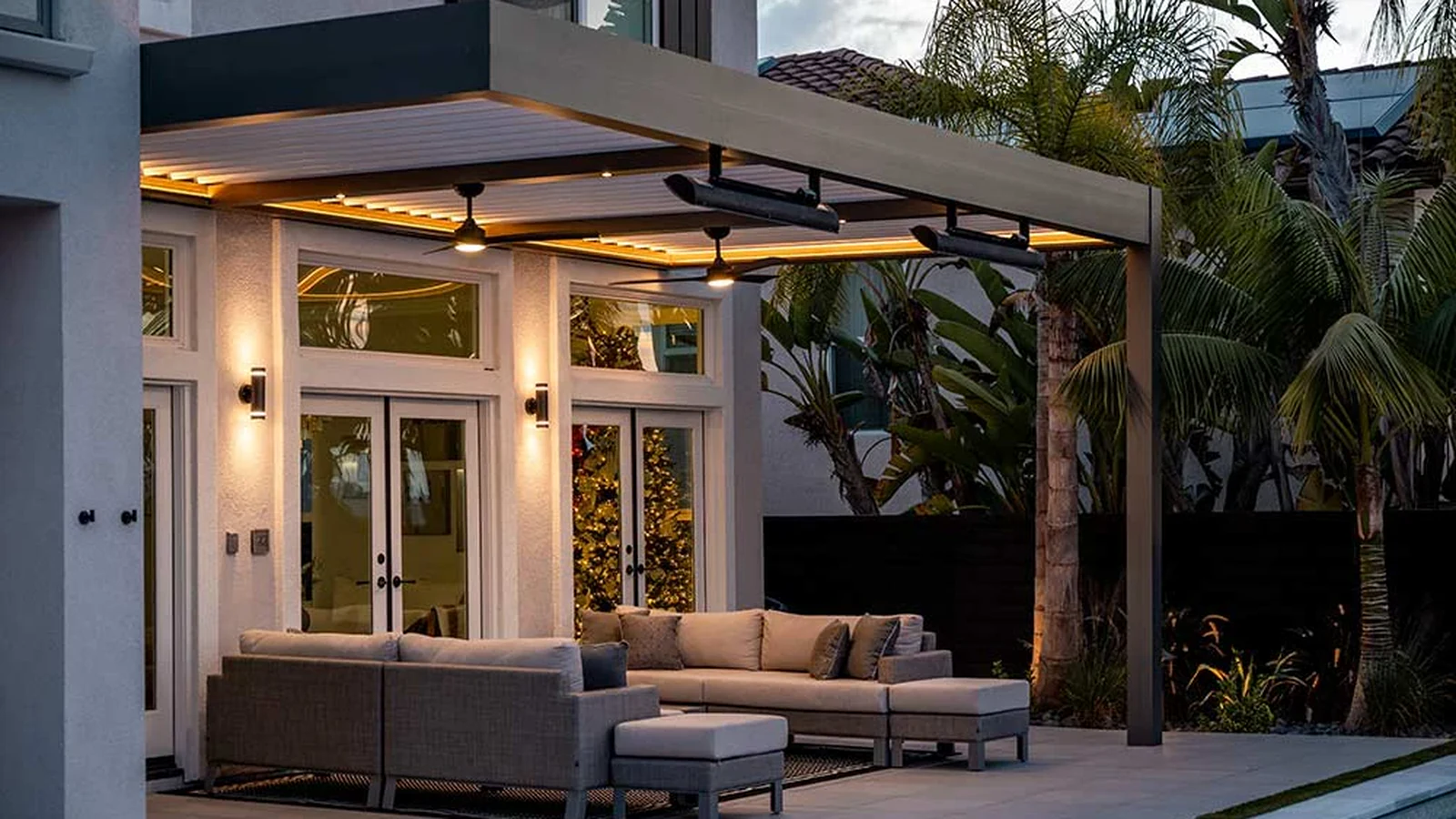
Start with the heater, not an empty spot beneath the roof. Mounted electric radiant heaters are common in covered outdoor rooms because they can direct warmth toward a seating zone without putting a freestanding base in the walkway. Azenco also shows integrated heating as an available comfort feature in R-BLADE projects. Still, that does not make every heater compatible with every pergola layout.
Gas-fired and portable propane heaters need a separate, product-specific review. Fuel storage, open-air ventilation, ignition sources, combustible clearances, tip-over risks, and the manufacturer's rules for covered locations can change the answer completely. A unit marketed for outdoor use is not automatically approved beneath a roof or beside lowered screens.
The practical choice comes down to the listed installation conditions, available power or gas service, roof height, seating layout, and how much of the patio you want to warm. Save the exact manual before design begins. Product family names and showroom photos are not substitutes for those instructions.
Where Can a Heater Be Mounted on a Louvered Pergola?
A mounted heater needs a fixed, approved support. Operable louvers rotate and are part of the weather-management system, so a heater, bracket, conduit, or cord should never attach to them or block their travel. The right detail may use a fixed perimeter beam, accessory beam, wall, or another location approved for the selected pergola and heater.
Clearance is three-dimensional. Check above, behind, beside, and in front of the heater—not just the gap visible from the floor. Then compare the radiant path with every louver position, LED strip, fan blade, screen cassette, shade fabric, speaker, door, window, cushion, and nearby tree branch.
Roof height can make or break the idea. A heater mounted too close to overhead materials may violate its listing, while one set too high or aimed poorly may not warm the occupied area as intended. Use the heater's mounting-height range and clearance diagram alongside the engineered pergola layout before choosing the final position.
How Do Louvers, Screens, and Weather Change the Plan?
A louvered roof changes position, and the heater layout has to remain safe whether the blades are open, angled, or closed. The pergola's installed operating guidance should determine roof position during heater use. Do not assume that opening the louvers cures a clearance or ventilation conflict.
Retractable screens deserve the same attention. Lowering one or more screens changes airflow and moves fabric closer to the heated area. Keep screen tracks, cassettes, mesh, and bottom bars outside the heater manufacturer's required clearances, and follow both products' operating instructions. An open pergola with screens down is still not a conditioned or completely sealed room.
Charlotte weather adds wind-driven rain, humidity, and quick temperature changes. The heater, controls, junction boxes, connectors, and wiring method must suit their actual exposure. Rain sensors or automatic louvers should not create a new conflict by moving the roof while the heater is operating; controls need a deliberate, project-specific sequence.
What Power, Controls, and Permit Questions Matter?
Electric radiant heaters can represent a meaningful dedicated load. The circuit, disconnecting means, controls, wiring, mounting box, and weather protection should be designed for the chosen equipment instead of added to an existing patio circuit by guesswork. Coordinate that work with pergola motors, lighting, fans, screens, outlets, and any smart-home controls.
A fuel-fired heater brings a different set of questions, including fuel supply, shutoffs, combustion clearances, ventilation, and the manufacturer's restrictions for overhead structures. Never convert, relocate, or connect a gas appliance outside its instructions. Portable heaters also need stable placement away from traffic, furnishings, pools, and screen travel.
Mecklenburg County identifies building, electrical, plumbing, and mechanical permits as part of its code-enforcement process, but the actual review path depends on the property and work. Charlotte, nearby towns, unincorporated Mecklenburg County, and South Carolina communities can differ. Confirm current building, electrical, fuel-gas, zoning, fire-safety, and HOA requirements for the address before installation.
A Practical Pergola Heater Planning Checklist
Sketch the patio as it will really be used. Show chairs pulled out, sofas and cushions, doors open, fans turning, screens lowered, and every walking route. Mark the exact heater model, mounting height, aiming direction, controls, and service access. That simple exercise catches conflicts that disappear on an empty roof plan.
Unique Patio Concepts can compare heater-ready layouts with the actual pergola system, patio dimensions, house, and accessory package. The goal is not to squeeze in the most features. It is to create useful warmth without compromising the louvers, drainage, screens, electrical design, or the way people move through the outdoor room.
- Save the current heater installation manual and verify that the planned covered outdoor location is allowed.
- Confirm every listed clearance and mounting-height requirement on the measured pergola design.
- Use only an approved fixed mounting support, with no interference in the full louver travel path.
- Check screens, fans, lights, speakers, doors, windows, furniture, cushions, plants, and roof drainage.
- Coordinate circuits or fuel service, controls, weather exposure, shutoffs, sensors, and service access.
- Verify permits, inspections, engineering, HOA rules, and product-specific operating guidance before installation.
Plan warmth into the outdoor room from day one
Request a Greater Charlotte site consultation and project-specific pergola estimate from Unique Patio Concepts.
Request a free estimateFrequently asked questions
Can an electric patio heater mount directly to pergola louvers?
No. Moving louvers are not a heater support. A mounted heater needs an approved fixed beam, bracket, wall, or other structural location that preserves the louver path, drainage, wiring, and all heater clearances.
Can you use a propane patio heater under a louvered pergola?
Only when the exact heater's current instructions allow that covered outdoor location and every fuel, ventilation, overhead, side, and combustible clearance requirement is met. Many portable heaters have restrictions that make a particular pergola layout unsuitable, so do not assume outdoor-rated means roof-approved.
Should pergola louvers be open while a heater is running?
Follow the installed heater and pergola instructions. Roof position can affect heat clearance, airflow, weather exposure, and automatic controls. One operating rule does not fit every heater, roof height, or pergola model.
Can retractable screens stay down with a patio heater on?
That depends on the heater, screen system, spacing, airflow, and both manufacturers' guidance. Screen fabric, cassettes, tracks, and bottom bars must remain outside the required heat clearances, and lowered screens must not create an unsafe enclosure condition.
Can a heater be added after the pergola is installed?
Sometimes. First verify fixed mounting options, structural capacity, clearances, concealed motors and drainage, wiring or fuel routing, weather exposure, and product requirements. Retrofitting should not involve drilling into moving louvers or guessing where concealed components run.
Does a pergola heater need a permit in Charlotte?
It may. Electrical circuits, fuel-gas work, structural mounting, and related changes can require permits or inspections depending on the address and scope. Confirm the current requirements with the applicable jurisdiction before ordering or installing the equipment.