
For most Charlotte sunrooms, porcelain tile is the most forgiving floor. It handles strong sun, heat, temperature swings, and tracked-in water without warping or fading, as long as it is installed over a flat, sound base with proper movement joints. Luxury vinyl plank, engineered wood, and laminate can work in a sunroom that is heated and cooled like the rest of the house, but many of those products limit or exclude sunrooms in their installation and warranty documents. Decide first whether the room will be conditioned year-round, then read the documents for the exact floor you like before you buy it. Check the slab or subfloor for moisture and flatness, and plan the finished floor height at the house door before the room goes up.
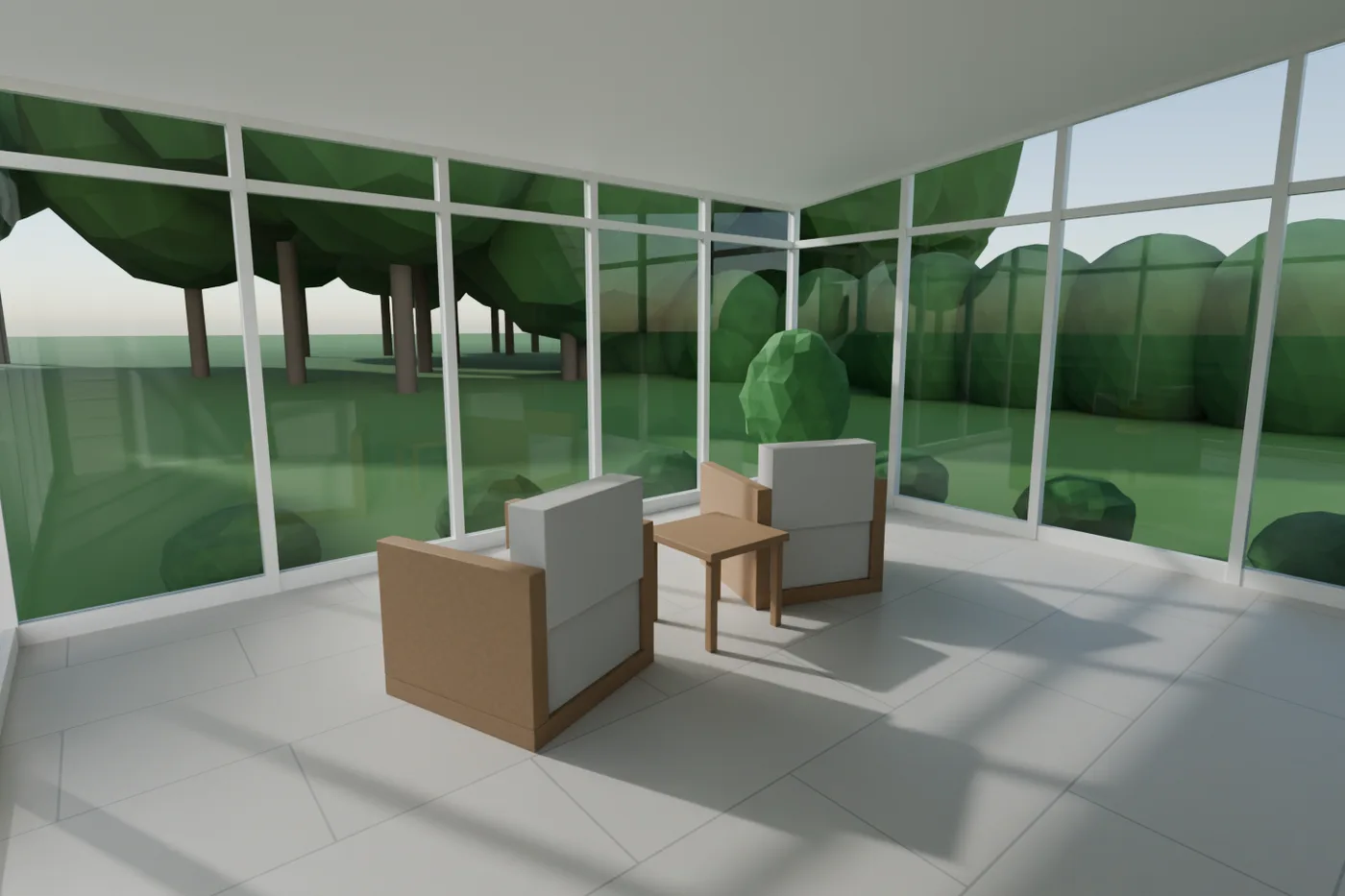
Why Sunroom Floors Take More Abuse Than Indoor Floors
A sunroom floor sits under far more glass than any other room in the house. On a clear afternoon, sunlight lands directly on the same boards or tiles for hours, heating the surface well above the air temperature and fading anything that is sensitive to UV. One vinyl flooring maker's installation guide warns that sun through windows can push surface temperatures past 140°F.
The room also changes temperature faster than the rest of the house. Glass gains heat quickly in a Charlotte summer and loses it on a clear January night, and many sunrooms are not on the home's main heating and cooling system. Floors that expand, shrink, or soften with temperature feel those swings directly.
Then there is moisture. Sunrooms often sit on a concrete slab poured at or near grade, people walk in from wet grass and pool decks, and humid summer air meets cool surfaces. A floor that is perfectly happy in a living room can cup, gap, fade, or come loose in a sunroom when those conditions are ignored.
Is Porcelain Tile a Good Choice for a Sunroom?
Usually, yes. It is the material most likely to shrug off everything a sunroom throws at it. The Tile Council of North America defines porcelain tile as tile with water absorption of 0.5 percent or less, which makes it dense and very resistant to moisture. Sunlight does not fade the fired surface the way it can fade vinyl or wood finishes, and porcelain does not swell and shrink with humidity the way wood does.
The tradeoffs are comfort and installation. Tile is hard, and it feels cold underfoot on winter mornings if the room is not heated. Rugs and a comfort plan help. Tile is also only as good as what is under it. It needs a flat, stable base, a setting method suited to the substrate, and movement joints at the perimeter and in the field so expansion of the slab and tile does not crack grout or pop tiles. Over a concrete slab with existing cracks, ask the installer whether a crack-isolation membrane is appropriate.
Near exterior doors, choose a tile with slip resistance suited to wet feet. If the room may ever be left unheated in a hard freeze, check the manufacturer's literature for frost resistance rather than assuming every porcelain tile qualifies.
- Ask for porcelain rated for floors, with the slip resistance listed for wet areas near doors
- Confirm the base is flat enough for the tile size you choose; large tiles need flatter floors
- Plan perimeter and field movement joints instead of grouting tight to the walls
- Use rugs or a heating plan if cold floors in winter will bother you
Can You Put Luxury Vinyl Plank in a Sunroom?
Sometimes, and the answer is in the product's paperwork, not the category. Luxury vinyl plank is popular because it is warm, quiet, and water-resistant, but heat and sun are its weak points. Vinyl expands as it warms, and a floating floor that grows in direct sun can buckle or separate at the seams.
Manufacturers treat sunrooms very differently. Some installation guides say not to install in sunrooms, solariums, or any room that is not temperature controlled, and warn that direct sun can discolor or warp the planks. Others publish wider temperature ranges for three-season rooms, sometimes only for floating installs and not glue-down. Warranty language often excludes fading and damage from excessive heat or sunlight.
If you love the look of vinyl plank for a sunroom, narrow it to products whose current installation guide and warranty specifically allow sunrooms or three-season rooms, and follow the temperature range, expansion gap, and installation method they list. Window treatments or UV-reducing glass help, but they do not override a manufacturer exclusion.
What About Hardwood, Engineered Wood, or Laminate?
Wood can be beautiful in a sunroom that is part of the living space, but it is the most demanding option. The National Wood Flooring Association says wood floors perform best when the home stays between 60 and 80°F and 30 to 50 percent relative humidity year-round. A sunroom that drifts outside those ranges for weeks at a time puts solid wood at risk of gapping, cupping, and finish problems. Strong sun also changes the color of many species over time.
Engineered wood is more dimensionally stable than solid wood, and many engineered products are approved for installation over concrete slabs where solid wood is not. It still has a real wood surface, so it still wants a conditioned room and protection from long hours of direct sun. Laminate brings its own moisture and temperature limits. With both, follow the manufacturer's rules for slab moisture testing, vapor protection, and approved rooms.
As a practical test: if the sunroom will be heated, cooled, and used like any other room in the house, wood products become reasonable candidates. If it will be closed off for part of the year, choose something else.
Can the Concrete Slab Be the Finished Floor?
It can, and for some sunrooms a sealed, stained, or coated slab is a simple, durable floor that tolerates sun and temperature swings. The catch is that an existing patio slab was poured to be a patio. Patios are usually sloped to drain water away from the house, they may have cracks or uneven sections, and their surface was not finished to be an interior floor.
Before treating an old patio as the finished sunroom floor, look at the slope, cracks, edges, and surface texture with the contractor. Some slabs can be ground and coated; others need leveling or a different plan. Whether the slab can support the sunroom structure itself is a separate question from whether it makes a good floor, and it should be answered first.
How Heating and Cooling Change the Right Answer
The single biggest factor is whether the room will be conditioned. A four-season sunroom that is heated and cooled with the house opens up the most choices, because many flooring products are designed for exactly that environment. A three-season room that is closed up in winter or summer needs a floor that tolerates the whole outdoor temperature range, which usually points to porcelain tile or finished concrete.
Heat sources matter too. If you are considering radiant floor heat, choose the floor and the heating system together, because each flooring product has its own limits on surface temperature. Portable heaters set close to vinyl or wood can cause localized damage.
Window treatments, glass selection, and ceiling fans affect how much heat the floor absorbs, so they are worth planning at the same time as the floor rather than after it fails.
Sunroom Flooring Checklist for Charlotte Homeowners
Use this list before you fall in love with a particular plank or tile. It will save you from choosing a product the room cannot support.
- Decide whether the room will be heated and cooled year-round, part of the year, or not at all
- Read the installation guide and warranty for the exact floor, and look for sunroom, solarium, and temperature-control language
- Note which parts of the floor get direct afternoon sun
- Have the slab or subfloor checked for moisture, flatness, cracks, and slope as the flooring manufacturer requires
- Plan the finished floor height so it meets the house door threshold without an awkward step
- Choose slip-resistant finishes near exterior doors and pool or lawn entries
- Coordinate the floor with glass, shades, fans, and any heating so they work together
Plan the sunroom and the floor together
Request a Greater Charlotte sunroom consultation with Unique Patio Concepts to talk through foundation, floor height, glass, and comfort options for your patio, so the floor you choose has the right base and conditions.
Request a free estimateFrequently asked questions
What is the best flooring for a sunroom?
For most sunrooms, porcelain tile is the most forgiving choice because it is dense, resists moisture, does not fade in sun, and stays far more stable in heat and humidity than vinyl or wood. In a sunroom that is heated and cooled like the rest of the house, engineered wood or vinyl plank can also work when the product's documents allow it.
Will vinyl plank warp in a sunroom?
It can. Vinyl expands as it heats, and long hours of direct sun can cause buckling, gapping, or fading. Some manufacturers exclude sunrooms and rooms that are not temperature controlled, while others allow them within listed temperature ranges. Follow the installation guide for the exact product.
Can I put hardwood floors in a sunroom?
Only if the room is kept close to house conditions. The National Wood Flooring Association recommends 60 to 80°F and 30 to 50 percent relative humidity year-round. Engineered wood is more stable than solid wood, but both still need a conditioned room and protection from long hours of direct sun.
Is tile too cold for a sunroom in winter?
Tile feels cold underfoot when the room is cold. In a heated four-season sunroom it is usually comfortable, and rugs help. If the room will be unheated in winter, expect a cold floor, and check that the tile is rated for the conditions.
Can I use my existing patio slab as the sunroom floor?
Sometimes. Patio slabs are usually sloped for drainage and may have cracks or a rough surface, so they often need grinding, leveling, or a different finish plan. Confirm first that the slab and foundations are suitable for the sunroom structure itself, then decide how to finish the floor.